A practical local guide to cooking classes in Montepulciano: where to learn pici pasta, which formats work for families and groups, and what to ask before booking.
Cooking Classes in Montepulciano: Are They Worth Booking?
Yes — if you choose the right format.
A cooking class is one of the safer paid experiences around Montepulciano because it works in bad weather, gives a relaxed shape to the day, and does not depend on everyone in the group caring about wine.
The best version is not a staged “Tuscan experience” with too many dishes and too much theatre. It is usually simpler: pici pasta, a sauce, maybe crostini, seasonal vegetables, tiramisù or cantucci, then lunch or dinner together.
For villa groups, families and couples who want one proper food experience during the trip, I would usually put a pici class near the top of the list.
What Is Pici?
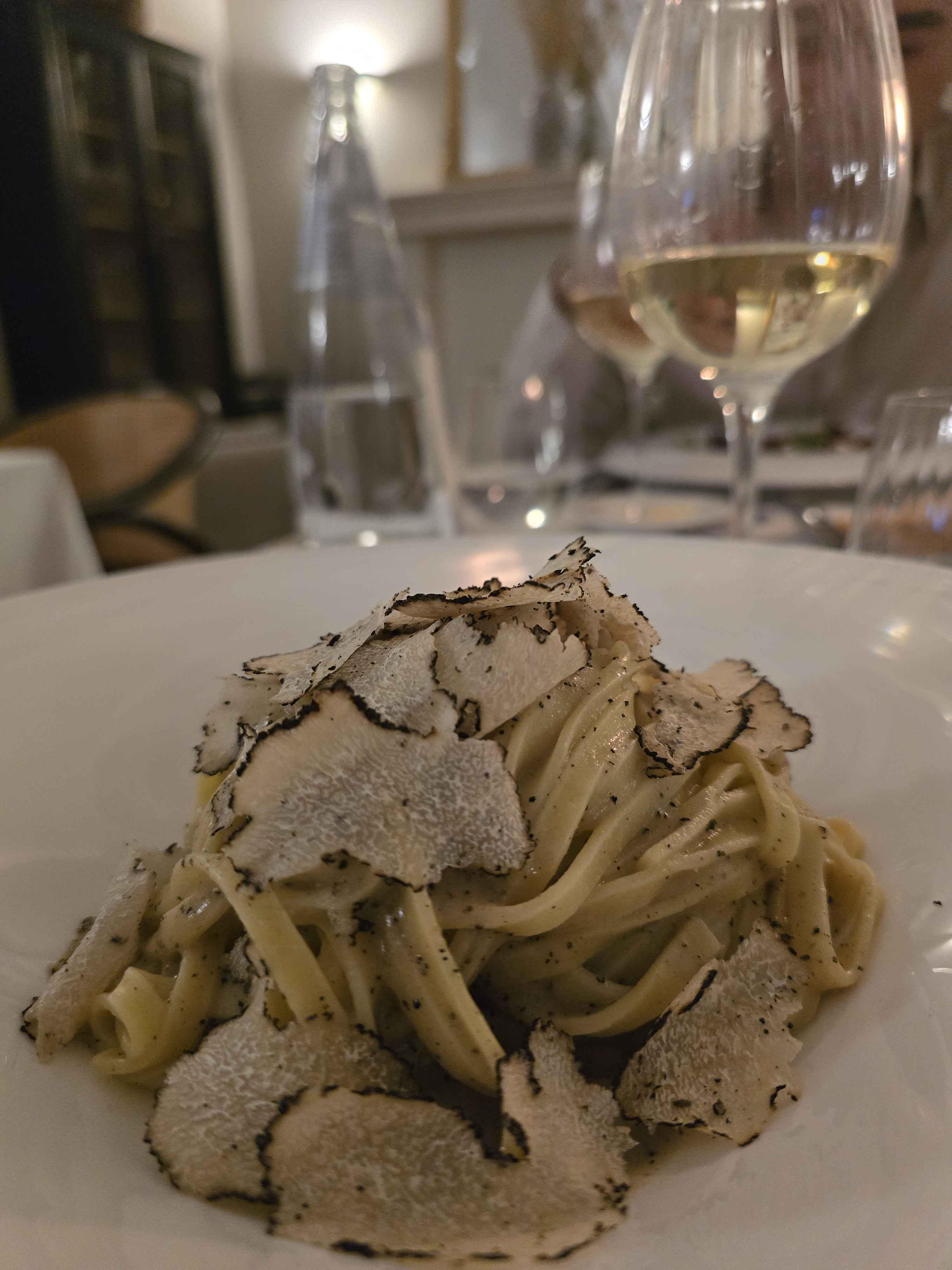
Pici is the pasta you should learn here.
It is thick, hand-rolled pasta from southern Tuscany. No machine is needed. The dough is simple, the technique is physical, and the result is forgiving enough for beginners. That makes it ideal for a cooking class because people actually participate rather than watching someone else cook.
In Montepulciano, you will usually see pici served with ragù, aglione, breadcrumbs, or other simple local sauces. The point is not complexity. The point is learning how the dough feels, how to roll it, and how a few good ingredients become dinner.
If a class near Montepulciano says “fresh pasta” but does not mention pici, ask what you will actually make.
Quick Picks: Which Cooking Class Should You Choose?
If you only want the short version, this is how I would compare them:
- Best polished farmhouse option: Cooking Classes Le Caggiole — hands-on classes near Montepulciano with Giacomo, a chef and sommelier.
- Best private Montepulciano option: Ciao Fabry Tuscan Cooking Classes — pasta or pizza formats, useful for couples, families and small groups.
- Best home-cooking network: Cesarine Montepulciano cooking classes — local hosts, shared or private formats, with several pasta-focused options around Montepulciano.
- Best grain / farm-to-table angle: Mulino Val d'Orcia experiences — guided tours, tastings, lunch and cooking classes connected to flour, ancient grains and fresh pasta.
- Best villa-group format: an in-villa cooking class or private chef, especially if nobody wants to drive after dinner.
For most visitors, I would book one cooking class during the week, not three. Then use what you learned for a simple villa dinner later in the trip.
Why Pici Classes Work So Well for Groups
Pici is social food.
People can stand around a table, roll dough, compare their terrible first attempts, drink something, and still feel useful. It is much better group material than a technical dish where one person does the real work and everyone else watches.
This is why pici classes are good for couples, families with children old enough to participate, multi-family villa stays, friend groups, rainy days, and first or last nights of a holiday.
It is also a good equaliser. You do not need to be a good cook. In fact, the people who are bad at rolling pici often enjoy the class more.
Cooking Classes Le Caggiole
Cooking Classes Le Caggiole is one of the more serious local options.
The classes are held at Podere Le Caggiole, a family farmhouse just outside Montepulciano. The experience is led by Giacomo, who presents himself as both a professional chef and a sommelier. The two main formats are a fuller Tuscan cooking class and a focused fresh pasta class.
This is a good fit if you want a proper hosted experience with wine pairing and a farmhouse setting, rather than a quick tourist class in town.
What stands out:
- small-group format;
- hands-on cooking;
- local and seasonal ingredients;
- wine-pairing element;
- farmhouse setting close to Montepulciano;
- suitable for people who care about both food and wine.
I would consider this one first for adults, couples and food-focused groups.
Google Maps: Cooking Classes Le Caggiole
Ciao Fabry: Pasta or Pizza in Montepulciano
Ciao Fabry is useful because the offer is clear: you can choose between a pasta class and a pizza class.
The pasta class is the one I would look at for this article: a private-style homemade pasta experience in Montepulciano, with dough, sauces, a shared meal, and wine pairing. The pizza class is more lively and takes place at Lieviti Pizzeria in the historic centre, which may be better for families with teenagers or groups who want something less slow.
How I would choose:
- choose pasta if you want a calmer, more personal meal;
- choose pizza if you want a livelier class in town;
- choose private if you have children, dietary needs, or a group that does not want to mix with others.
This is one to contact directly with your date, group size, and whether you want a family-friendly pace.
Google Maps: Lieviti Pizzeria and Ciao Fabry Tours
Cesarine Cooking Classes Around Montepulciano
Cesarine is a platform for cooking in local homes, and it usually has several Montepulciano-area listings.
This can work well if you want a home-cooking feel rather than a formal school. At the time of checking, the Montepulciano search page showed many cooking-class options, including fresh pasta, tiramisù, pici, tagliatelle and countryside formats around Montepulciano and nearby towns.
The advantage is choice. The disadvantage is that you need to read carefully.
Check the exact location, whether the class is shared or private, what pasta you will make, whether children are welcome, the language, cancellation terms, and whether transport is included.
For a villa group, I would prioritise a private class or a host very close to Montepulciano. A “near Montepulciano” class can still mean a meaningful drive.
Mulino Val d'Orcia: Pasta, Flour and Ancient Grains
Mulino Val d'Orcia is slightly different from a normal cooking class.
Their experiences are built around grain, flour, pasta production, tastings, guided tours and lunch. Formats include production-plant visits, castle mill visits, a cooking class with guided tour and lunch, and farm-to-table experiences.
This is a good fit if you want to understand the food chain a little more: not just “make pasta,” but where the flour and products come from.
It also works well as part of a Val d'Orcia day because you can combine it with Pienza, Bagno Vignoni, San Quirico d'Orcia or a countryside drive.
Book direct where possible. Local producers like this often appear inside packaged tours, sometimes with a convenience markup.
Google Maps: Mulino Val d'Orcia
In-Villa Cooking Classes
For a group staying in a villa, an in-villa cooking class may be better than driving somewhere.
Nobody has to park, nobody has to stay sober for the return drive, children can drift in and out, and the evening uses the house you paid for.
This works especially well if the villa has a good kitchen, a large table, outdoor dining space, and enough room for people to gather without crowding the cook.
Keep the menu simple. Pici, sauce, crostini, seasonal vegetables and a dessert is plenty. If the proposed menu has ten courses, three pastas and a dramatic timetable, I would be careful. You are on holiday, not staging a cooking show.
At Molino Nobile, private chef support can be arranged on request. For many groups, I would choose either the first night or the last night.
Cooking Classes With Children
Cooking classes can be excellent with children, but not every class is child-friendly.
Pici is usually the safest option because rolling pasta is tactile, forgiving and easy to explain. Pizza can also work well, especially for older children. Long adult classes with wine pairing, detailed technique and a slow lunch are less reliable.
Before booking, ask:
- are children welcome?
- is there a minimum age?
- can the class be shortened?
- is the kitchen safe for younger children?
- can children make their own pasta or pizza?
- is there a simpler sauce option?
- what time does the meal actually start?
With younger children, I would avoid late evening classes. A morning class followed by lunch is usually easier.
Cooking Classes for Couples
For couples, I would choose a slower, more personal format.
A farmhouse class with wine pairing or a private pasta class in Montepulciano makes more sense than a large group class unless you actively want to meet people.
A good couples' class should feel like a relaxed meal with structure, not a performance. Look for small group size, a proper meal at the end, wine pairing or local wine included, a setting you actually want to spend time in, and clear start and finish times.
If the class finishes in the early afternoon, keep the rest of the day light: walk Montepulciano, go back to the pool, or do a short aperitivo later. Do not book a major dinner the same night unless you are sure you will want it.
Cooking Classes for Larger Villa Groups
For larger villa groups, logistics matter more than the menu.
A class that looks charming for two people can become awkward for ten if the space is small, parking is limited, or the format is too slow. Ask whether the provider regularly handles groups of your size.
For groups, I would usually compare three options: go to a farmhouse class if everyone wants the outing, book an in-villa class if you want comfort and no driving, or book a private chef dinner if the group prefers eating to cooking.
If half the group wants to cook and half does not, choose the in-villa option. People can participate, watch, help with wine, or disappear for ten minutes without ruining the rhythm.
Lunch Class or Dinner Class?
I usually prefer lunch classes.
A class that starts in the morning and ends with lunch gives the day a natural shape. You can return to the villa in the afternoon, rest, swim, and keep dinner simple.
Dinner classes can be lovely, but they create more practical questions: who is driving back, whether the road will be dark, whether children will last until the meal, and whether everyone still wants a late dinner after a full day out.
If wine is included and nobody wants to drive, arrange transport before booking. Montepulciano has taxis and private drivers, but you cannot assume one will be available at the exact time you need.
What to Ask Before You Book
Before booking any cooking class near Montepulciano, ask these questions:
- What exactly will we cook?
- Will we make pici or another pasta?
- Is the class hands-on or mostly demonstration?
- How many people will be in the class?
- Is it private or shared?
- How long does it really last, including the meal?
- Is wine included?
- Are children welcome?
- Can dietary needs be handled?
- Where exactly is the meeting point?
- Is parking easy?
- Do we need a driver?
- What happens in very hot weather?
- What is the cancellation policy?
Do not be embarrassed to ask practical questions. The good local providers are used to them.
What a Good Pici Class Should Include
A good pici class should teach the part you cannot learn from a restaurant menu: how the dough behaves.
Ideally, you should mix or handle the dough, learn how long it rests, roll pici by hand, understand why thickness matters, make or help with the sauce, cook the pasta, and eat together at the end.
The class does not need to be complicated. In fact, the simpler versions are often better because you can repeat them at home.
If you leave knowing how to make one pasta and one sauce properly, that is more useful than half-learning five dishes.
How to Combine a Cooking Class With the Rest of the Day
The best combinations are simple.
Good pairings include a morning cooking class followed by a pool afternoon, a pasta class followed by a Montepulciano walk, Mulino Val d'Orcia followed by Pienza or Bagno Vignoni, an in-villa cooking class followed by a slow evening at home, or a pizza class in town followed by gelato.
Bad pairings are cooking class plus big winery lunch, cooking class plus three hill towns, cooking class plus late formal dinner, cooking class after a heavy wine tasting, or a countryside class without solving transport.
One booked experience per day is usually enough. Tuscany looks small on a map, but parking, rural roads, heat and meal timing make over-planning tiring.
Where to Stay if You Want Food Experiences
If cooking classes, winery lunches and food experiences are part of the trip, location matters.
Staying in Montepulciano town is convenient for restaurants, wine bars and some in-town activities, but parking and luggage can be awkward. Staying far out in the Val d'Orcia is beautiful, but you may spend more time driving than expected.
For a group, a countryside villa close to Montepulciano is often the best compromise.
Molino Nobile works well for this style of trip because it gives you the villa setting — pool, jacuzzi, outdoor space, private grounds and room for a chef dinner — while staying close to Montepulciano, Pienza, wineries and food experiences.
You can also browse the full Montepulciano villa directory if you are comparing group size, pool, location and price.
My Practical Recommendation
For most guests, I would book one of these: a hands-on pici class near Montepulciano, an in-villa cooking class if you are staying with a group, Mulino Val d'Orcia if you like the grain and farm-to-table angle, or a private pasta class if you are travelling as a couple or family.
Do not book a cooking class just because it fills a gap in the itinerary. Book it because you want a slower meal, a local host, and something you can bring home.
The best result is not only lunch that day. It is being able to make pici again later, badly at first, then better.
Frequently Asked Questions
What pasta is Montepulciano known for?
Montepulciano and the surrounding area are strongly associated with pici, a thick hand-rolled pasta from southern Tuscany. It is one of the best dishes to learn in a local cooking class because the technique is simple, physical and hands-on.
Are cooking classes in Montepulciano good for children?
Yes, if you choose the right format. Pici and pizza classes are usually the safest choices for families. Ask about age limits, class length and whether children can actively participate before booking.
Should I book a cooking class or a winery tasting?
If this is your first time in Montepulciano, I would try to do both during a one-week stay: one Vino Nobile winery experience and one food experience. If you have to choose one for a mixed group or family, a cooking class is often easier.
Can I book a cooking class without a car?
Sometimes, but check the exact location. Some classes are in or near Montepulciano town, while others are at farmhouses or nearby villages. If wine is included and you do not want to drive, arrange a taxi or private driver before booking.
Is an in-villa cooking class better than going out?
For groups, often yes. An in-villa class removes the driving and parking problem, works well with children, and lets you use the house properly. For couples, a farmhouse or home-hosted class may feel more special.
How long do cooking classes near Montepulciano last?
Most proper classes take around three hours or more once you include cooking, eating and arrival time. Some shorter pizza formats may be closer to two or two and a half hours. Always check the real start and finish time before planning the rest of the day.
What should I ask before booking a pici class?
Ask whether you will actually make pici by hand, whether the class is hands-on, how many people are in the group, whether wine is included, whether children are welcome, and where exactly the class takes place.
Should I book direct or through a tour platform?
Book direct where possible, especially with small local providers. Platforms can be useful for availability and reviews, but direct booking often gives clearer communication and may avoid unnecessary markup.
Related Reading
Planning a trip to Montepulciano?
Browse our handpicked villas — pools, vineyard views and everything on your list within easy reach.