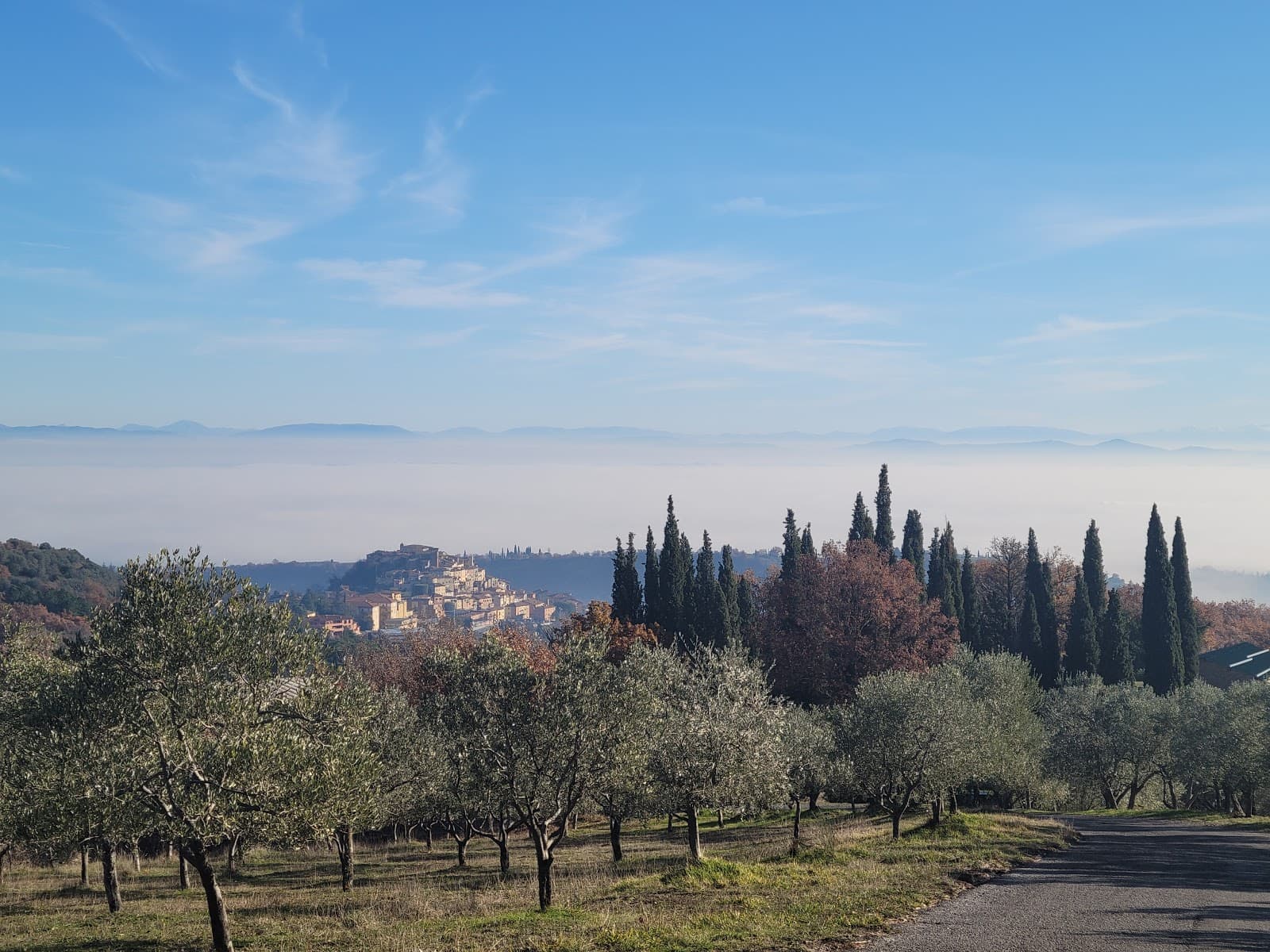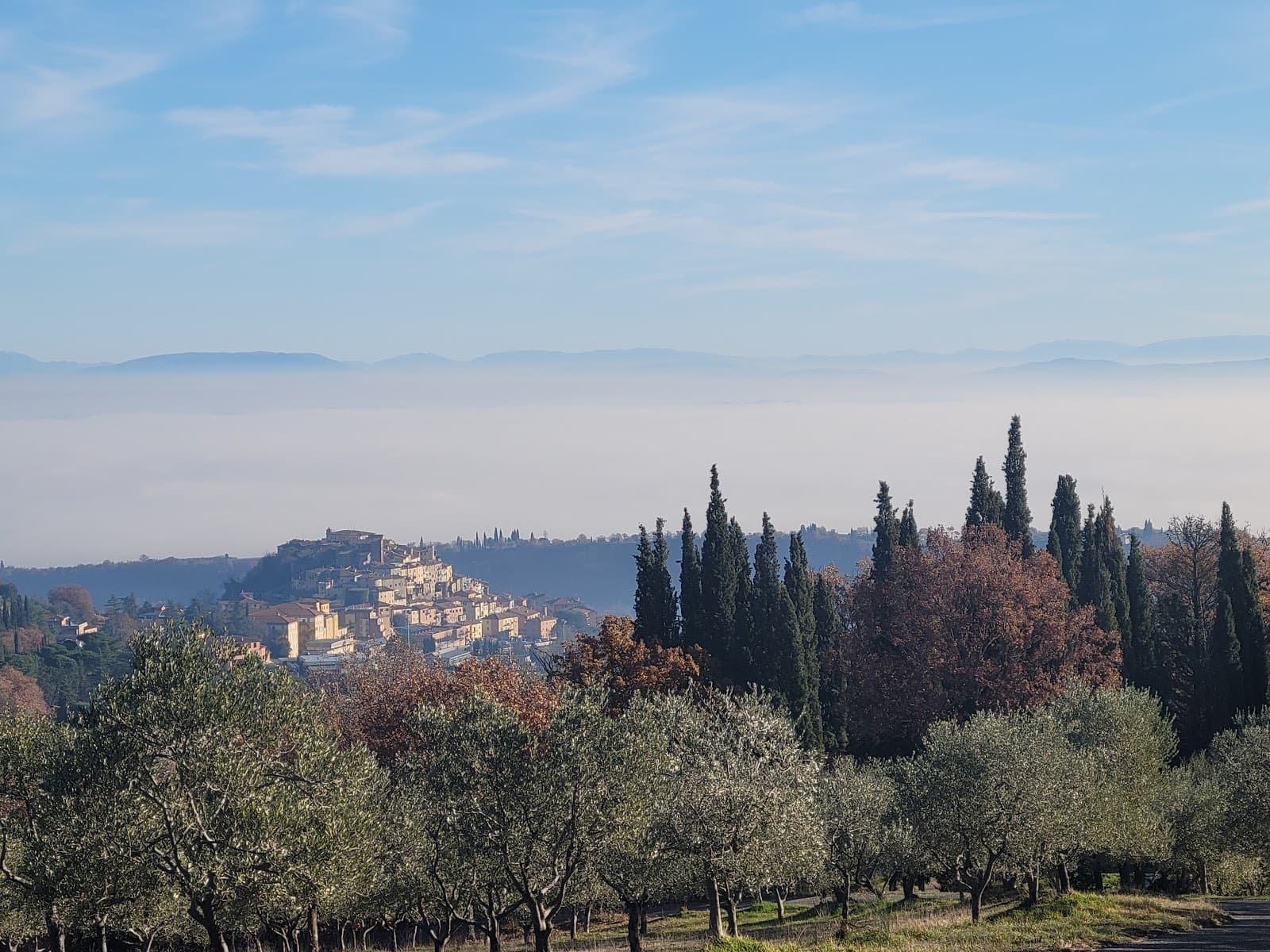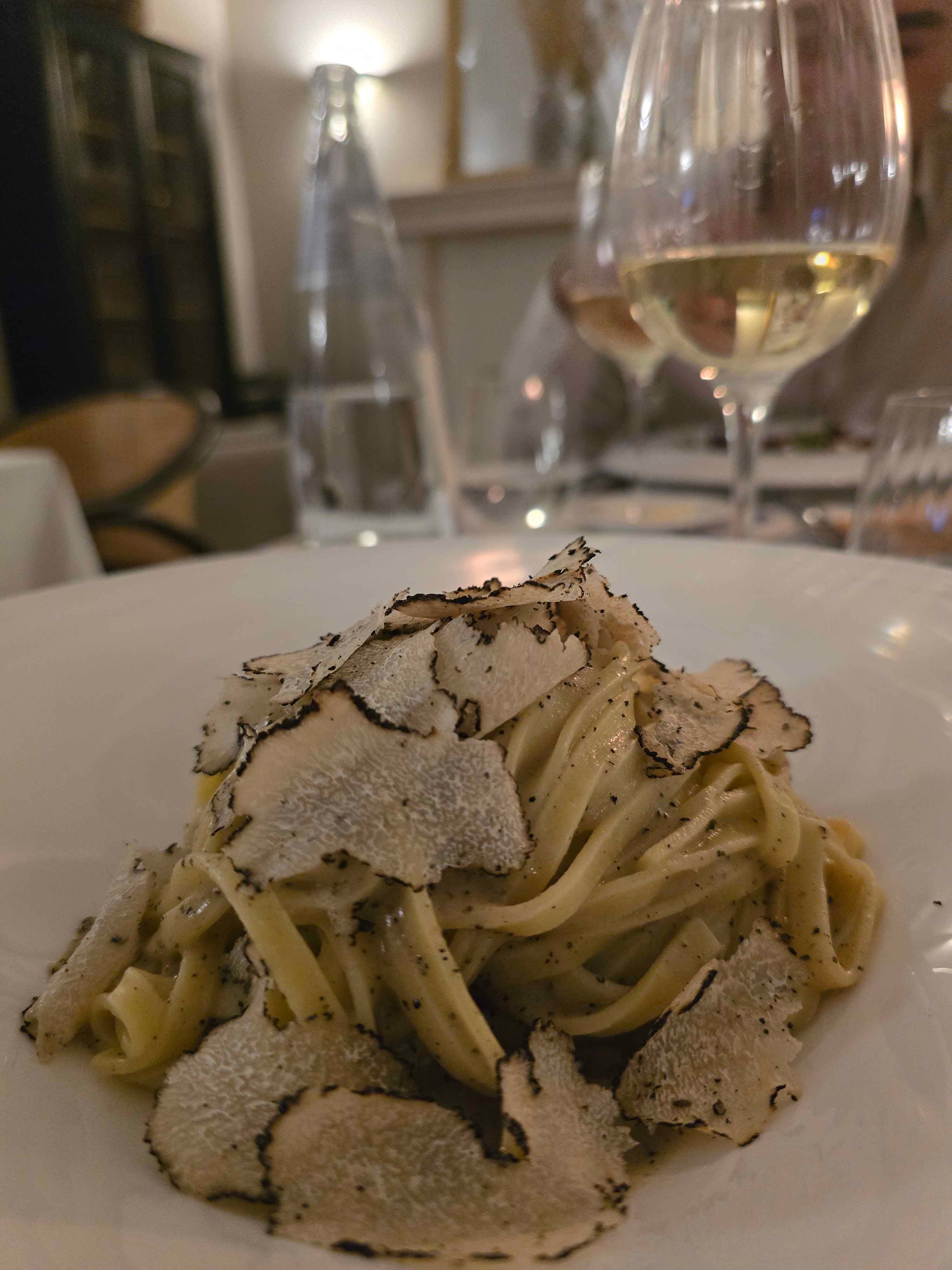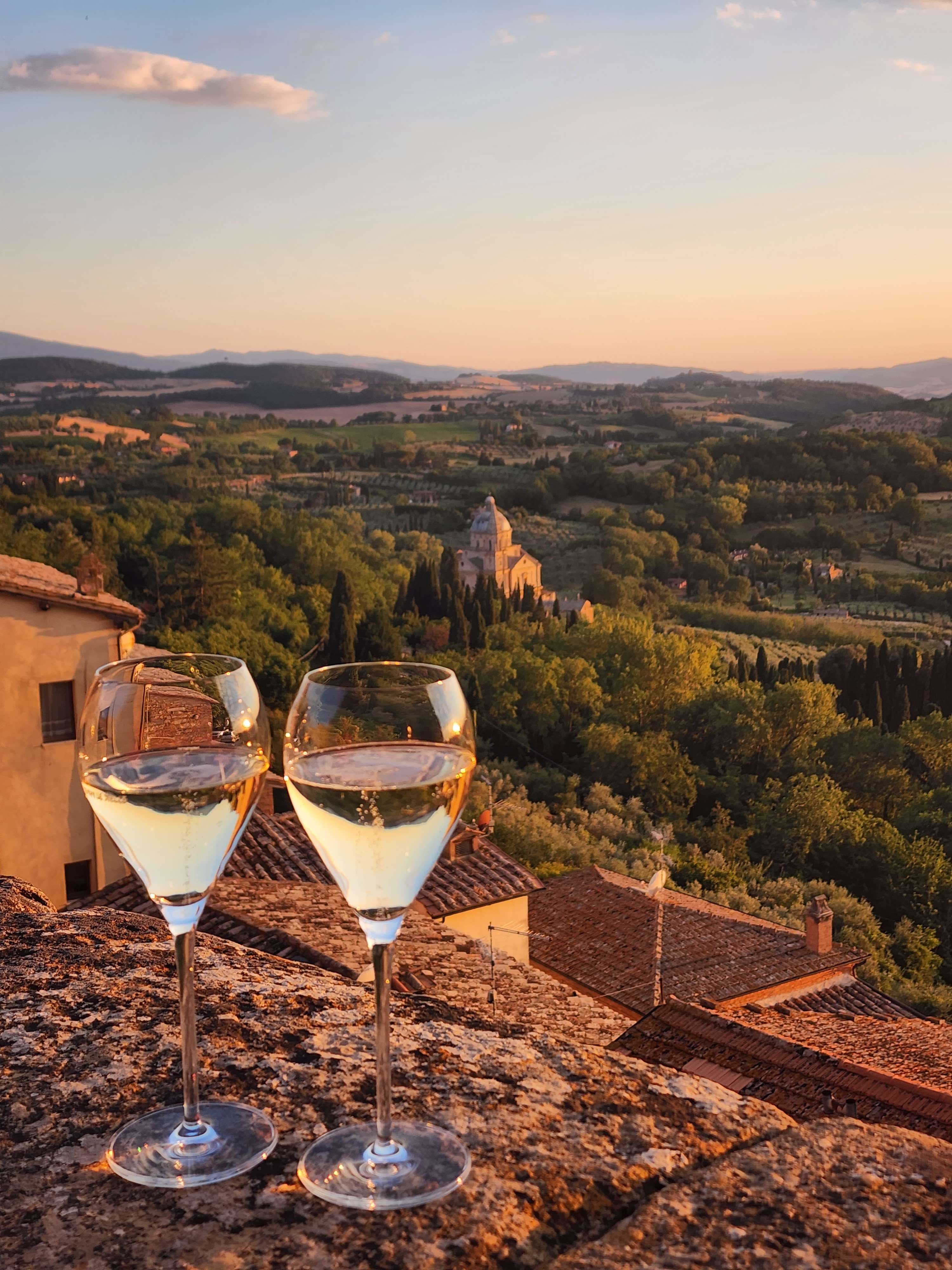
Vino Nobile di Montepulciano is one of Italy's great wines. Here's where to taste it best — from ancient city-centre cellars to hilltop estates with panoramic views.
The Short Version: Where I Send Guests First
If you only have time for one wine experience in Montepulciano, make it a proper Vino Nobile tasting outside town, not a rushed glass at a shop counter. My first choices are usually Dei or Bindella. Dei is my favourite for the wine itself and the calm, personal feel. Bindella is the easiest estate to turn into a full lunch-and-wine afternoon. Carpineto is the one I would add when you want a clear menu of bookable formats — simple tasting, Tuscan light lunch, broader Tuscan wine tour, Cru tasting, or vineyard picnic.
If you are staying in town without a driver, start with the historic cellars: De' Ricci, Contucci, Ercolani, or Crociani. They give you the underground Montepulciano experience without needing the car again.
Do not try to visit five wineries in one day. Two is plenty. One, done properly with lunch, is often better.
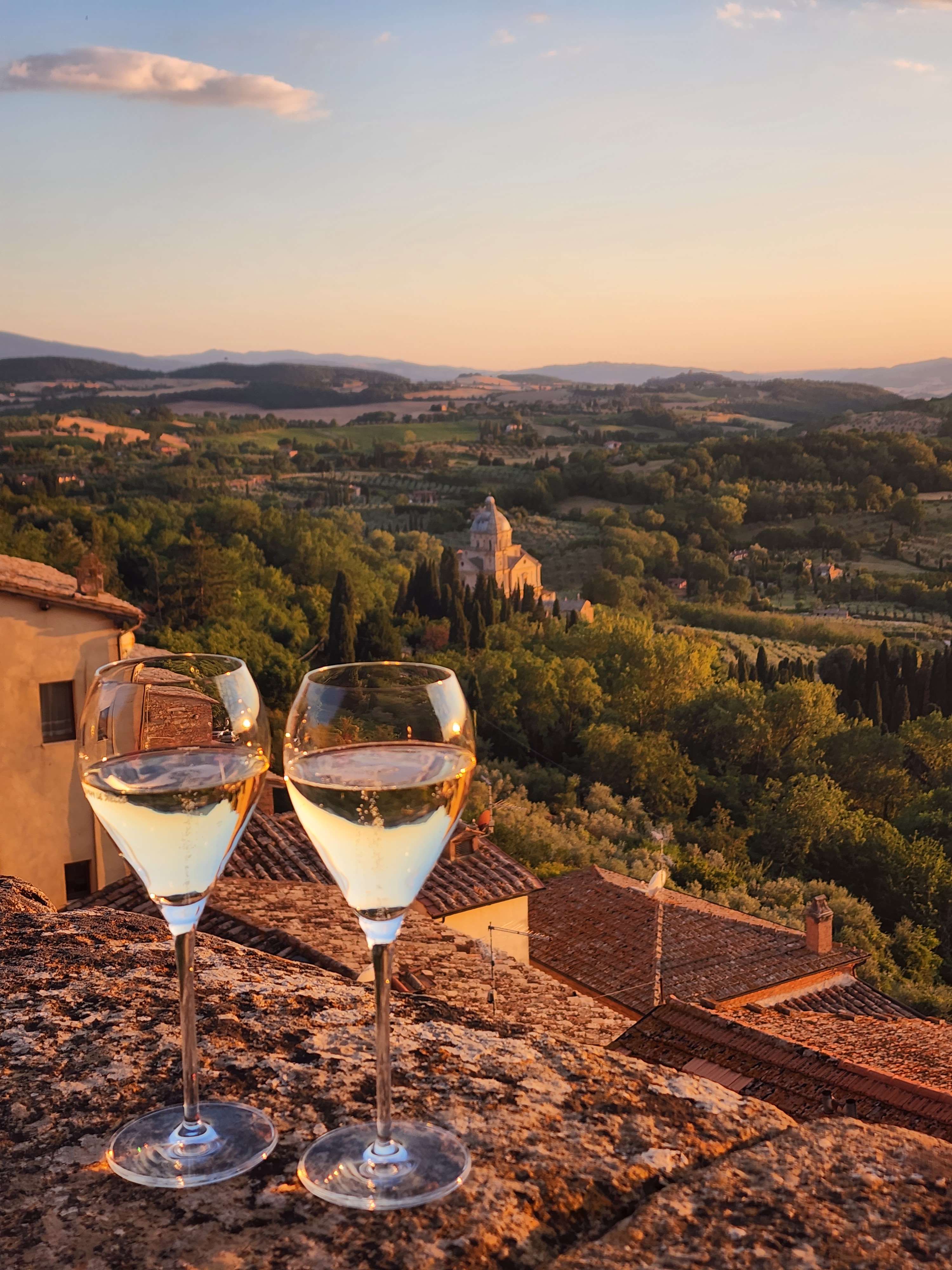
Why Vino Nobile di Montepulciano Matters
Vino Nobile di Montepulciano is the town's serious red wine: Sangiovese-based, structured, and made from vineyards around Montepulciano. Locally, the Sangiovese clone is often called Prugnolo Gentile.
It is not the same thing as Montepulciano d'Abruzzo, which is a grape from a different region. This confuses visitors constantly. Here, "Montepulciano" is the place; the wine is built around Sangiovese.
Compared with Chianti, Vino Nobile often feels darker and more polished. Compared with Brunello di Montalcino, it is usually less expensive and more approachable earlier, though the best bottles still age well.
How to Plan a Wine Tasting Day
The mistake is treating wineries like attractions on a checklist. Most proper visits take 75–120 minutes. If lunch is included, allow three hours and do not schedule anything serious afterwards.
For a first wine day, choose one of these formats:
- Town cellar morning: one or two historic cellars in the centro storico, then lunch in town.
- Estate afternoon: one countryside winery with a proper tour and tasting, then dinner nearby or back at the villa.
- Lunch tasting: one estate, longer tasting, meal included, no second winery needed.
If everyone wants to drink, arrange a driver or keep the visit walkable. The wineries are close on a map, but the roads are rural, narrow, and not where you want to be debating who is under the limit.
1. Dei: My Favourite Wine Visit Near Montepulciano
Cantine Dei is the winery I most often want people to understand. Caterina Dei's wines have elegance without feeling forced, and the modern travertine cellar is one of the more beautiful winery buildings in the area.
This is not the most touristy choice, which is part of the appeal. The visit feels composed and personal, and the wines are genuinely strong across the range.
Book the EnoTour or the closest current equivalent: cellar visit plus tasting. If lunch or dinner is available, it can turn into a very good half-day. Confirm the current tasting format directly when booking, because pricing and menus are not always displayed as clearly as at the bigger hospitality estates.
Best for: serious wine drinkers, design/architecture interest, and guests who want my first personal pick.
2. Bindella / Tenuta Vallocaia: Best Winery Lunch
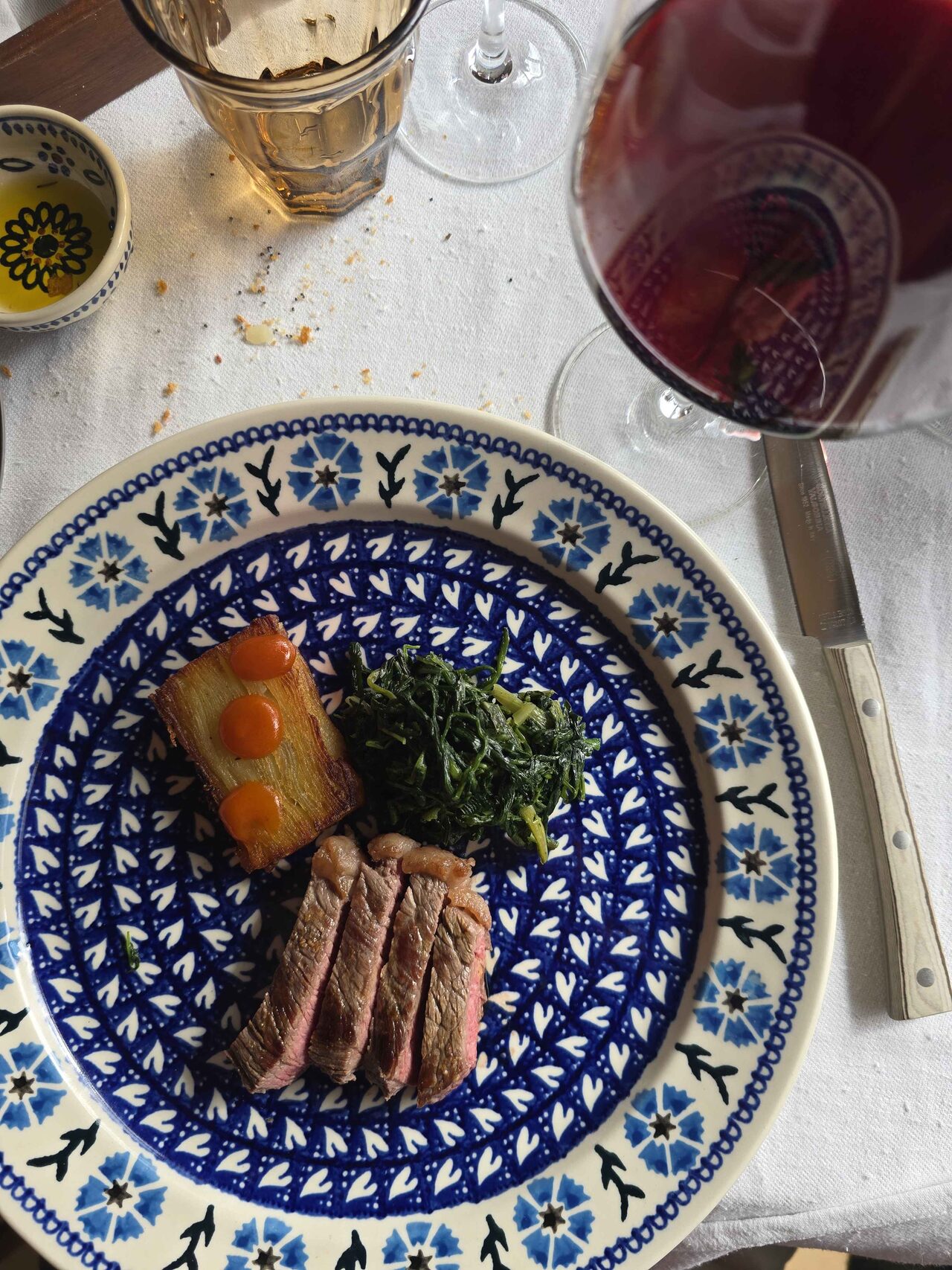
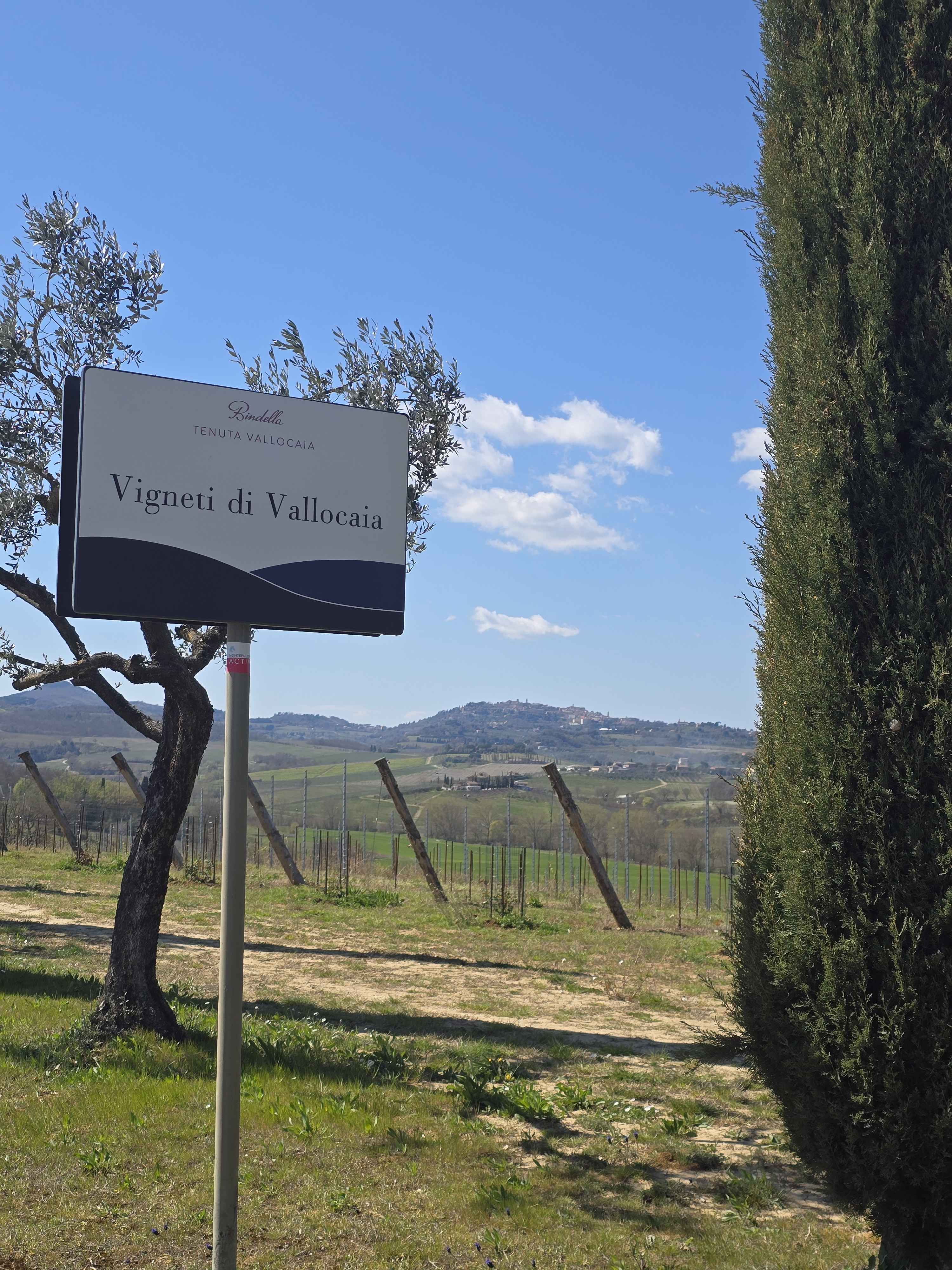
Bindella - Tenuta Vallocaia is the estate I would choose when the group wants a polished, easy winery lunch. It is organised, scenic, and consistent. The wines are clean and structured, and the setting works well for people who may not want a technical cellar lecture.
The usual tasting options range from a guided tour with four to six wines to longer lunch pairings. The lunch is the reason to linger: reserve ahead and do not put a second winery straight afterwards.
This is also one of the easier winery experiences for mixed groups, because people who are less obsessive about wine still get views, food, and a comfortable estate visit.
3. De' Ricci: Most Dramatic Historic Cellar
Cantina De' Ricci is the cellar I would send someone to if they only had one hour in town and wanted the theatrical underground experience. The spaces beneath the palazzo are deep, vaulted, and memorable.
It is central, atmospheric, and useful because you do not need to drive after the tasting. Book ahead for the better guided visits, especially in high season. Their tastings range from shorter cellar visits to deeper Sangiovese-focused experiences and lunch options at their countryside estate.
Best for: first-time visitors, bad-weather days, and anyone who wants the "wine cellar under Montepulciano" memory.
4. Contucci: Best Classic Family Cellar in Piazza Grande
Contucci sits right by Piazza Grande and has been tied to Montepulciano wine for centuries. The cellars under Palazzo Contucci are historic without feeling like a museum set.
This is a good choice if you are already walking the centro storico and want a serious but convenient tasting. Their fuller experience normally includes the palazzo, working cellars, garden when weather allows, and several wines with local food.
Best for: classic Montepulciano atmosphere, central logistics, and visitors who want history more than a countryside drive.
5. Crociani: Best Small In-Town Producer
Crociani is smaller and less polished than the big names, which is exactly why it belongs on this list. You are more likely to feel you are in a working cellar than in a designed visitor path.
Book by email or phone and do not expect a tourist-machine timetable. The appeal is direct conversation, small production, and a more old-school feel.
Best for: people who like smaller producers and do not need every experience packaged perfectly.
6. Ercolani: Best Budget-Friendly Walk-In Option
Cantina Ercolani is useful for visitors who want an easy, central, good-value stop. It is not the same as a long private estate tasting, but it is practical and approachable.
For families or groups with limited patience for formal wine visits, this can be a better fit than a two-hour appointment. You can keep it shorter, see underground spaces, taste, and move on.
Best for: casual visitors, families with older children, budget-conscious tastings, and flexible town days.
7. Avignonesi: Best Big-Name Estate Experience
Avignonesi is one of the best-known estates in the Montepulciano area, with a serious biodynamic focus and a broad hospitality setup. It is more of a destination estate than a quick cellar stop.
Choose this if you want a structured visit, polished service, and the chance to taste beyond basic Vino Nobile, including their well-known Vin Santo style when available.
It is a good option for wine lovers who want a more complete estate experience, but it needs a reservation and a realistic time block.
Best for: visitors who want a larger, internationally known estate and a more formal tasting day.
8. Carpineto Montepulciano Estate: Best for Clear Bookable Formats
Carpineto Montepulciano Estate is useful when you want the winery visit to be easy to understand before you book. The estate sits on Strada Provinciale della Chiana, 62, with vineyards, olive groves, solar-powered winemaking facilities, and a wine museum.
It is also a genuinely handsome estate: broad, open, well-kept and professionally run, with enough scale that the visit feels calm rather than improvised. This matters for groups. You get proper vineyard scenery, organised hospitality, and a managed experience that can handle visitors without losing the sense that you are in the Montepulciano countryside.
The 2026 English experiences sheet gives a practical menu: a €25 one-hour tasting of three wines, a €35 Tuscan light lunch, a €35 Tuscan Wine Tour with five wines and bruschetta, a €75 Cru Experience with light lunch and five higher-end wines, and a €30 vineyard picnic with local products and Rosso di Montepulciano shared by the group. Most slots are listed at 11:30 and/or 15:00.
This is not the tiny family-cellar version of Montepulciano. It is better for guests who want a beautiful, larger, well-managed estate with clear prices and a choice between a simple tasting, lunch, or picnic without having to decode a custom offer by email. Confirm the current menu, language, and timing when booking; the wine-experience contact listed for the estate is tour@carpineto.com.
Best for: groups who want a gorgeous, organised estate setting, predictable booking options, vineyard picnic or light-lunch formats, and a broader Tuscan tasting that can include Vino Nobile alongside Chianti, Montalcino, and Farnito wines.
9. Poliziano: Best for Structured Tastings and Serious Bottles
Poliziano is one of the reference names for Vino Nobile, especially for people who want to understand single-vineyard and higher-level bottlings.
Their tastings are usually well-structured, with options that move from core estate wines into more detailed expressions. If you care about comparing vineyards and styles, this is a strong choice.
Book ahead. This is not the place I would treat as a casual walk-in after lunch.
Best for: structured tastings, collectors, and people who want to leave with serious bottles.
10. Boscarelli: Best Traditional Family Estate
Boscarelli has the feel of a family winery that makes wine first and hospitality second. That is a compliment. The De Ferrari family farms specific plots with a clear point of view, and the tastings tend to be more personal than theatrical.
This is a good choice if you prefer a working estate to a visitor centre. Reserve ahead and confirm the current tasting format; opening patterns can be less obvious than at bigger estates.
Best for: traditional Vino Nobile drinkers, smaller groups, and people who like family-run wineries.
11. Salcheto: Best Sustainable / Contemporary Winery
Salcheto has built much of its identity around sustainability, careful measurement, and contemporary winery design. The result is a visit that feels different from the palazzo-cellar version of Montepulciano.
It is a good option if you want a modern cellar tour, a sustainability angle, and a restaurant option without leaving the wine road. Confirm current opening days and restaurant hours, especially outside peak season.
Best for: sustainability-minded visitors, modern winery architecture, and groups who want lunch or dinner built into the visit.
12. Icario: Best Clear Tasting Menu
Icario is useful because the visitor offering is clear and easy to understand. Their tastings usually range from shorter pours to fuller tour-and-food formats, which makes planning simpler.
The estate has a contemporary feel and works well for people who want a reliable appointment rather than a very rustic cellar conversation.
Best for: clear booking options, modern setting, and groups who want to know exactly what they are buying before they arrive.
13. La Ciarliana: Best for a More Playful Tasting
La Ciarliana is a good option when you want something less stiff. The estate offers vineyard and cellar visits, food-focused tastings, and more informal learning-style experiences.
It is still a real winery, not a gimmick, but the tone can be more relaxed than some of the serious, vertical-tasting estates.
Best for: groups, curious beginners, and visitors who want wine explained without feeling lectured.
Best Wineries If You Are Staying Without a Car
If you do not want to drive, keep the tasting in the historic centre. De' Ricci, Contucci, Crociani, and Ercolani are the practical choices because you can walk between them and then go to lunch or dinner.
That said, Montepulciano without a car limits the wider wine experience. The countryside estates are where you understand the vineyards, the landscape, and the difference between producers.
If everyone wants to drink and you still want estate visits, hire a driver for the afternoon. It is simpler than trying to solve it winery by winery.
Best Winery Choices With Kids or Mixed Groups
With children, avoid long technical tastings unless the winery has space, food, or a clear family-friendly setup. Bindella works better than many because lunch gives the visit a structure beyond wine. Carpineto's picnic or light-lunch formats may also be easier for mixed groups than a very technical cellar visit. Ercolani can work for a short town stop. La Ciarliana may suit groups that want a lighter, more interactive tone.
Always mention children when booking. Some wineries are relaxed about it; others are built around adult tasting rooms where a bored child will make the hour feel much longer.
If the children mainly need a pool and food, be honest: do one short tasting, then go back to the villa.
What Tastings Cost and How Long They Take
For most standard tastings, budget roughly €20–€45 per person. More involved tours, vertical tastings, or lunch pairings can run much higher, especially when food and older bottles are included.
Timing matters more than price. A simple tasting can be 30–45 minutes. A proper cellar visit is usually 75–120 minutes. A lunch pairing is normally a half-day.
Confirm prices when booking. Wineries change menus, seasonal opening, and tasting formats more often than old blog posts admit.
When to Book and When to Visit
For summer, weekends, lunch pairings, or English-language tours, book ahead. For the very best estates, do not wait until the night before. If your trip is in harvest season, be especially flexible; wineries are working businesses, not only visitor attractions.
Spring and autumn are the best wine-touring seasons. Summer is still possible, but the heat changes the rhythm: morning tasting, long lunch, pool or rest, then dinner. August can be crowded and hot.
Avoid scheduling a serious tasting immediately after a heavy lunch unless you want everyone sleepy and half-attentive.
Wine Buying and Shipping
Buying at the winery is part of the fun, but do not assume every bottle is automatically cheaper than retail. The advantage is selection, older vintages, estate-only bottles, and knowing exactly what you tasted.
If you are flying, ask about shipping before you buy heavily. Some estates ship internationally; others work through partners. For a few special bottles, checked luggage may be enough. For cases, get the shipping details in writing.
Also remember that wine bought after the first tasting has to sit somewhere while you continue the day. In summer, do not leave good bottles cooking in a hot car.
Suggested One-Day Wine Itinerary
For most guests, I would plan the day like this:
- Morning walk in Montepulciano and one historic cellar, such as De' Ricci or Contucci.
- Light lunch or a break back at the villa.
- Afternoon estate visit at Dei, Bindella, Carpineto, Poliziano, Boscarelli, or Salcheto.
- Dinner with a driver plan, or back at the villa if lunch was the main event.
If you choose Bindella or Carpineto for lunch, simplify the rest of the day. Walk in town before or after, but do not force another serious tasting.
Beyond Montepulciano: Montalcino and Chianti
If you are staying for a week, you can add a day in Montalcino for Brunello. It is close enough for a day trip, but different enough that it deserves its own day rather than being bolted onto a Montepulciano tasting afternoon.
Chianti is also reachable, but it is a bigger area and can become a driving-heavy day. From Montepulciano, I would usually prioritise Vino Nobile first, Montalcino second, and Chianti only if wine is the main purpose of the trip.
Where to Stay for Wine Touring
A villa base makes wine touring easier because nobody has to repack or change towns every night. You can do a town cellar one day, a countryside estate another day, and a longer lunch tasting when the group is ready for it.
Molino Nobile works well for this style of trip: close enough to Montepulciano for cellar visits and restaurants, but with the space to recover after tastings, swim, cook, or bring in a private chef.
For groups, the real benefit is flexibility. Not everyone has to join every tasting, and the people who stay behind are not stuck in a hotel room.
Frequently Asked Questions
What is the best winery in Montepulciano?
For my taste, Dei is the first recommendation. For a polished winery lunch, Bindella is the easiest choice. For a clear menu of bookable tasting, lunch, Cru and picnic options, Carpineto is useful. For a dramatic in-town cellar, choose De' Ricci or Contucci.
Do you need to book wine tastings in Montepulciano?
Yes for proper tours, estate visits, lunch pairings, and English-language tastings. Some in-town cellars accept walk-ins for simple tastings, but the better experiences should be reserved.
Can you visit Montepulciano wineries without a car?
You can visit the historic cellars in town without a car. For countryside estates such as Dei, Bindella, Carpineto, Poliziano, Boscarelli, Salcheto, or Avignonesi, you need a car, driver, or arranged transfer.
How much do wine tastings cost in Montepulciano?
Most standard tastings are roughly €20–€45 per person. Lunch pairings, private visits, and vertical tastings cost more and can become a half-day experience.
Is Vino Nobile the same as Montepulciano d'Abruzzo?
No. Vino Nobile di Montepulciano is from the town of Montepulciano in Tuscany and is based mainly on Sangiovese. Montepulciano d'Abruzzo is a different wine from Abruzzo, made from the Montepulciano grape.
Are Montepulciano wineries good with children?
Some are manageable with children, especially shorter visits or estates with lunch and outdoor space. Mention children when booking and avoid long technical tastings if the kids are likely to get bored.
Related Reading
Planning a trip to Montepulciano?
Browse our handpicked villas — pools, vineyard views and everything on your list within easy reach.