Tuscany is the world's most sought-after wedding destination — and Montepulciano sits at its heart. Here's everything you need to plan a villa wedding in southern Tuscany, from venues and legalities to caterers, flowers and what to expect on the day.
Why Montepulciano for a Destination Wedding?
I live in Montepulciano, and I've watched couples fall in love with this place before they've even checked into their villa. The light, the hills, the wine, the food — it works on people quickly. So it shouldn't surprise me that so many of them come back to get married here.
But Tuscany weddings have a reputation for being complicated, expensive, and overwhelming to organise from abroad. That reputation isn't entirely undeserved. A destination wedding in Italy involves Italian bureaucracy, language barriers, unfamiliar vendors, and logistical challenges that your local venue simply doesn't present. Done wrong, it's stressful. Done right — with the right villa, the right team, and the right information — it's the most memorable day of your life.
Here's what you actually need to know.
The Case for a Villa Wedding Over a Hotel or Restaurant
The classic Italian wedding venue options — the hotel ballroom, the hilltop restaurant, the agriturismo with a function room — all have their merits. But a private villa is categorically different.
You own the day. No other guests arriving for dinner at 7pm. No function room timeslot that ends at midnight. No hotel manager anxious about noise complaints from the corridor. The villa is yours for the duration of your stay. The wedding happens in your own space, at your pace, on your schedule.
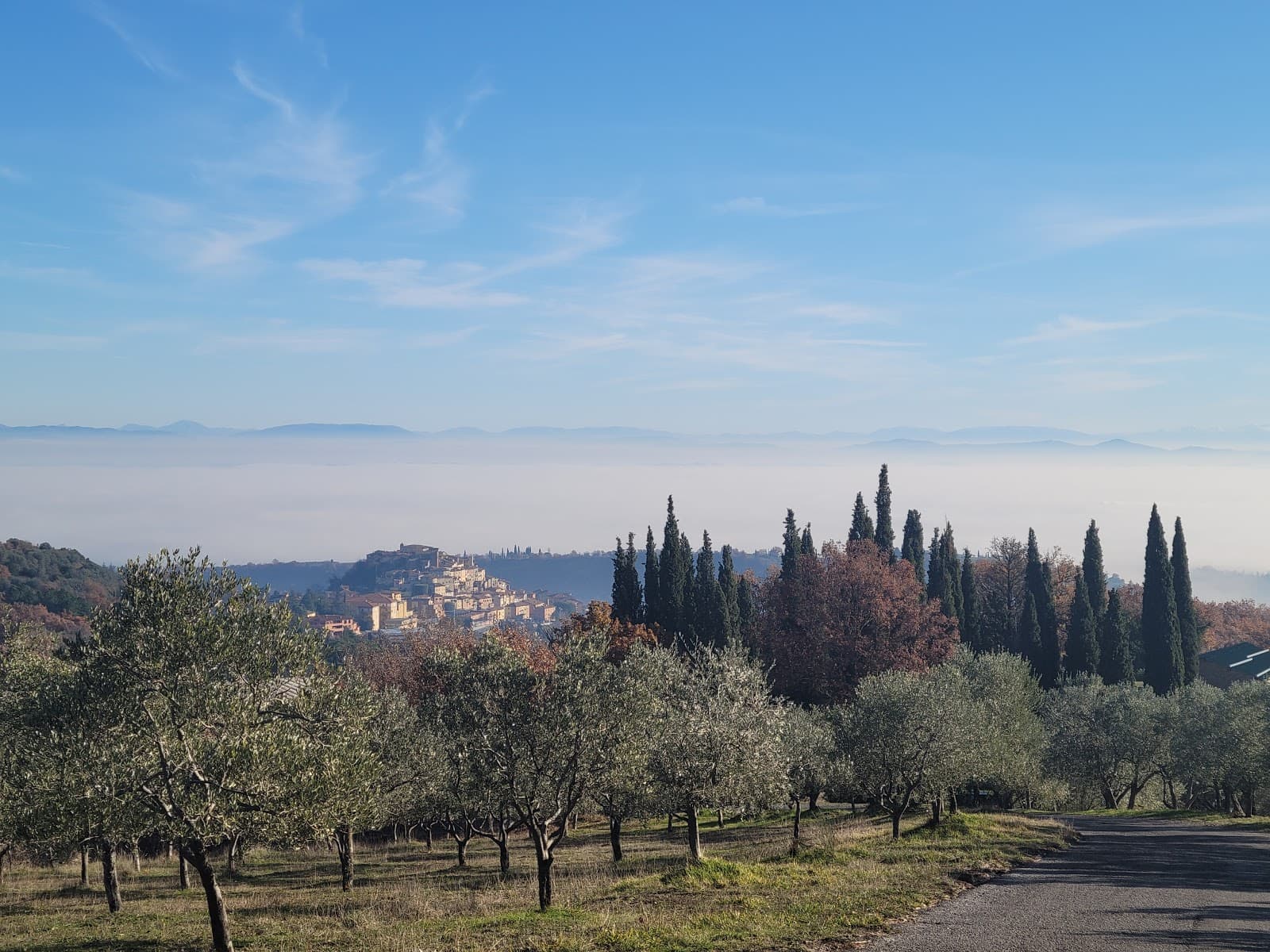
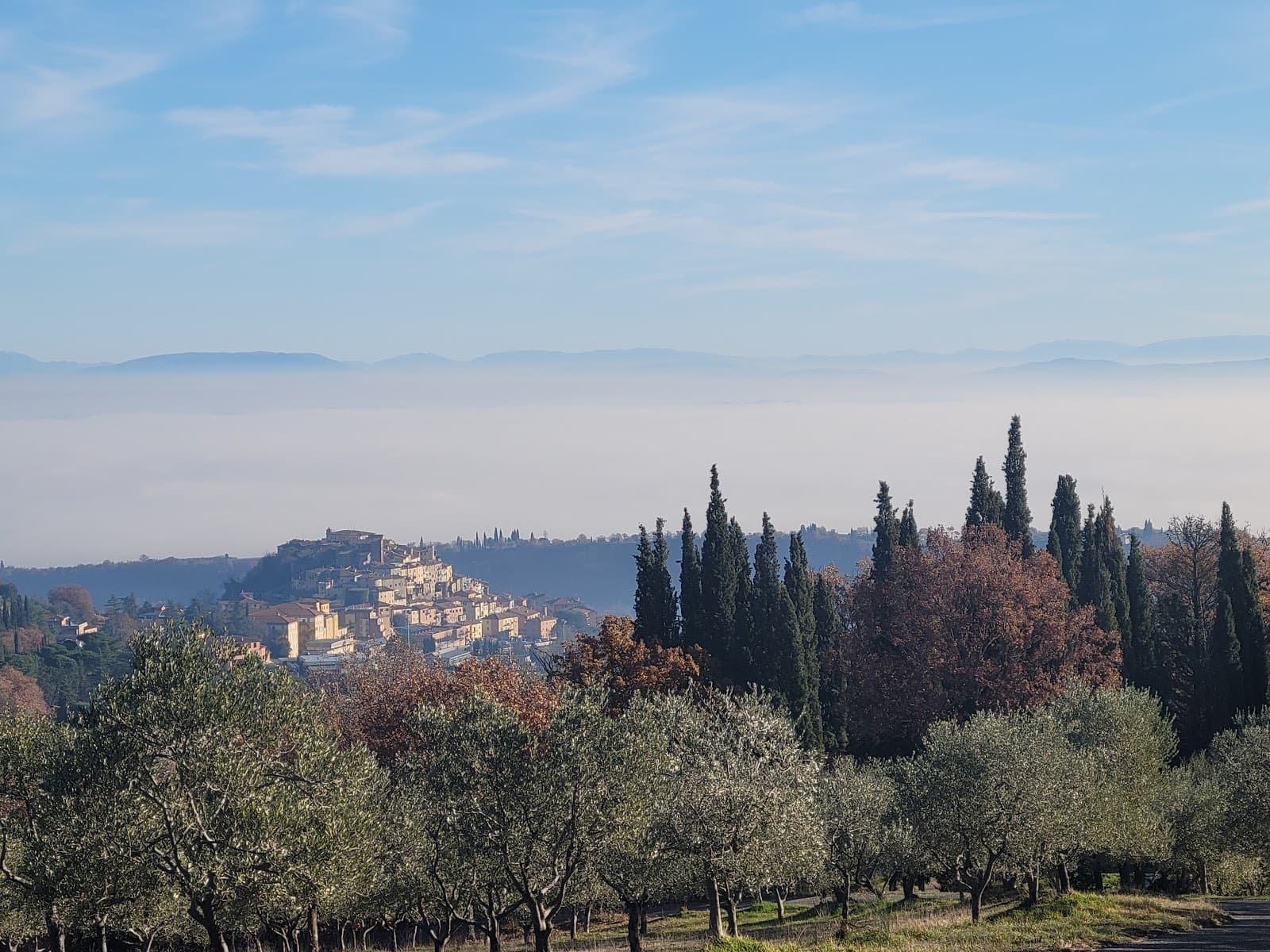
The setting is unmatched. A Tuscan farmhouse terrace overlooking the Vino Nobile vineyards, with the Val d'Orcia rolling south toward Monte Amiata — there is no restaurant or hotel ballroom that competes with this backdrop. The ceremony, the drinks reception, the dinner, the dancing — all of it happens in a landscape that is genuinely one of the most beautiful in the world.
Cost control. When you book a villa for a wedding, you bring your own caterer. You source your own wine (Vino Nobile at cellar prices, which you're passing 40km of wineries to access). You're not paying hotel margins on every glass. For groups of 30–60 guests, a villa wedding is often significantly more cost-effective than an equivalent event at a licensed wedding venue — while delivering a better experience.
The whole group stays together. Your closest friends and family are in the same place for the entire celebration. No taxi rides back to different hotels, no split groups, no "I'll see you at the venue tomorrow morning." Everyone arrives together, wakes up together, recovers together.
Legal Requirements: Civil vs. Symbolic Ceremonies
Italian law allows foreign nationals to marry legally in Italy, but the process requires advance planning. Here's the distinction that matters most:
Legally binding civil ceremony: You need to complete administrative steps in both your home country and Italy. The Italian process involves submitting documentation to the local comune (municipality) — in your case, the Comune di Montepulciano — typically 6+ months in advance. Requirements include birth certificates, certificates of no impediment (demonstrating you're free to marry), and notarised translations. The ceremony is conducted by the Italian registrar (ufficiale di stato civile) in Italian, though a translator can be present.
Symbolic ceremony: Most villa weddings in Tuscany use a symbolic (blessing) ceremony rather than a legal one. You register your marriage at home in your own country before or after the Italian celebration — a straightforward civil ceremony that takes 20 minutes — and then hold your "real" wedding in Tuscany as a symbolic celebration without legal constraints. This is the preferred route for most international couples because it eliminates the Italian bureaucratic complexity entirely and allows you complete freedom over the ceremony's form, officiant, and language.
My recommendation: Unless you specifically want to be legally married in Italy, do the paperwork at home and focus your Tuscan event on the experience. Every serious wedding planner in this area will tell you the same.
How Many Guests? Villa Capacity and What That Means
The number of guests shapes almost every other decision. Tuscany villa weddings work best for intimate to mid-size events — 20 to 80 guests is the sweet spot where the setting feels personal rather than like a corporate function.
Under 30 guests: The most intimate villa weddings. A property like Molino Nobile — sleeping 12 — can host a ceremony and reception for up to 30 with additional hired seating and catering setup. Everyone stays at the villa. This is the closest thing to a "house party" wedding and it's deeply personal.
30–60 guests: The most common size for villa weddings in the Montepulciano area. Sleeping guests stay at the villa; day guests drive in from nearby accommodation. You'll need a dedicated events terrace or garden space that can be cleared for dancing in the evening.
60–120 guests: Larger villa estates are available in the Tuscany region, though the choice narrows at this scale. Many couples in this range choose a venue-specific approach (a licensed agriturismo with a dedicated events space) rather than a residential villa.
A useful heuristic: the villa should sleep at least your inner circle — immediate family and closest friends. Everyone else can be in nearby accommodation and come to the venue for the celebration. We can help coordinate accommodation blocks for guests at local properties.
The Ceremony: Where in the Villa
The location of the ceremony within your villa property is one of the most important decisions — and one you should make in person during a venue visit rather than from photographs.
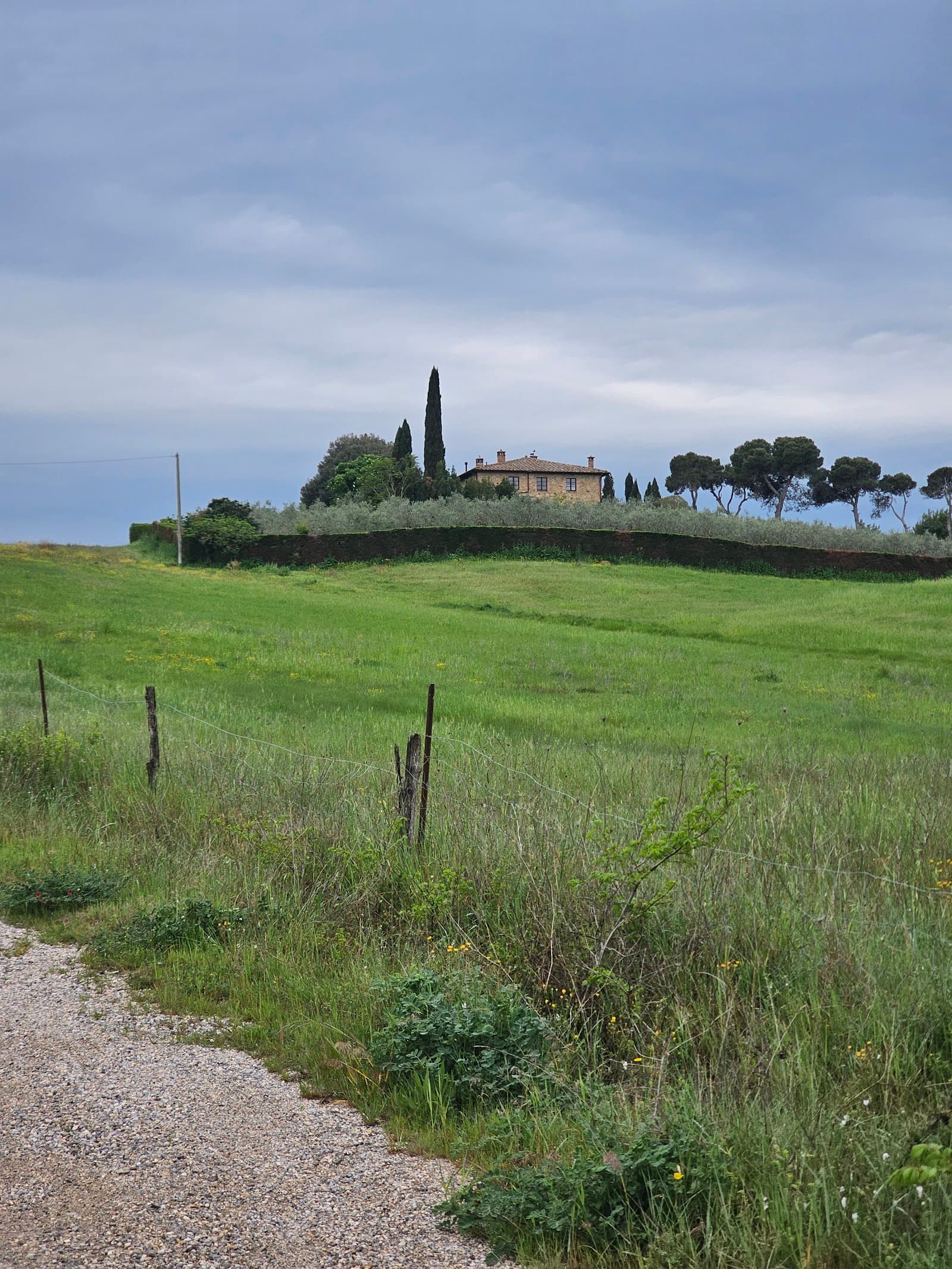
The terrace or loggia: Most Tuscan farmhouses have a covered or partially covered terrace facing the vineyards. This is the classic position: the ceremony backed by ancient stone, the guests facing the valley. Afternoon light here is extraordinary — warm, golden, perfect for photographs. Acoustic challenges if there's wind; plan for a PA system.
The garden lawn: Larger gardens allow for a separate ceremony lawn with chairs, an arch or floral installation, and a processional path. More theatrical, requires more setup and rental equipment, but gives you the full "ceremony in a garden" experience.
The olive grove: Ceremonies among old olive trees have a particular quality that's hard to describe and impossible to stage. The trees themselves create shade, atmosphere, and a backdrop that no florist can replicate. Check ground conditions (uneven root systems can be an ankle-twisting hazard for guests in heels).
The pool terrace: Evening ceremonies alongside the pool are striking — candles on the water, reflections at twilight. Works best for small guest counts and late-summer timing when the light falls late.
The Catering Question
Food is the core of an Italian wedding, and no decision you make will shape the experience of your guests more.
Private chef: For weddings up to 40–50 guests, a private chef team working from your villa kitchen is the most personal option. They source locally, cook fresh, and bring the Tuscan table into the villa at a genuine level. The cost is typically €80–120 per person for a full multi-course wedding dinner with wine service. We work with two outstanding local chef teams who do private event catering for villa guests — ask us for an introduction.
Catering company: For larger weddings, a professional catering company brings their own kitchen equipment, service staff, and event management. Choose one that works specifically in the Tuscany events market and has done villa weddings before — a company used to hotel ballrooms won't perform the same in a farmhouse garden.
The menu: Stick to the seasonal Tuscan canon and your guests will be talking about the food for years. A great Tuscan wedding menu might include:
- Antipasto misto (crostini with chicken liver, bruschetta, local salumi, Pecorino di Pienza, seasonal vegetables)
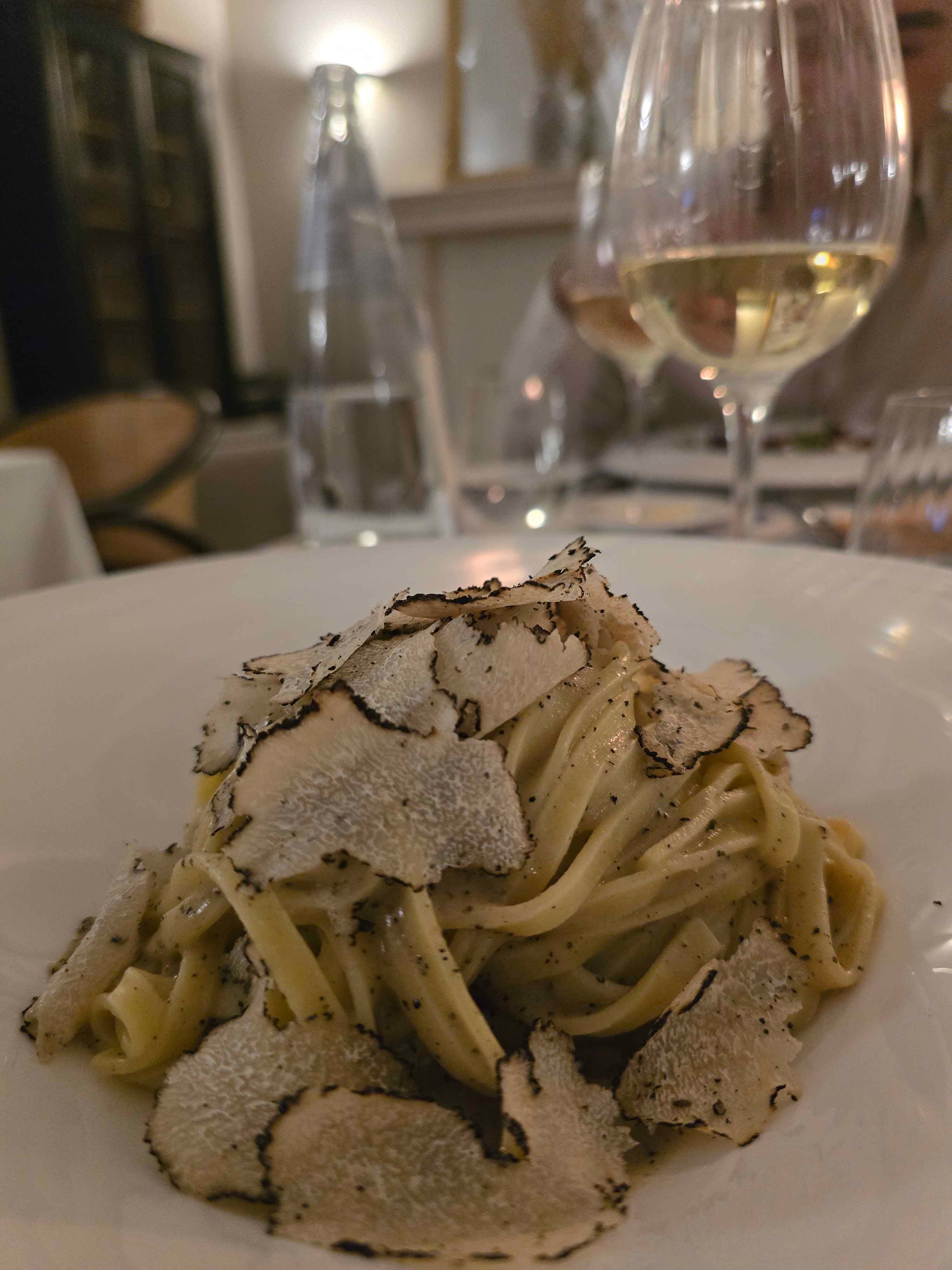
- Primo: hand-rolled pici with ragù, or a fresh pasta with truffle or porcini
- Secondo: Chianina beef (bistecca, or slow-braised short rib), or grilled fish if you prefer
- Contorni: roasted seasonal vegetables, salads, legumes
- Dolce: a proper wedding cake (many patisseries in Siena and Florence make destination wedding cakes), plus cantucci and Vin Santo to finish
Wine: Don't fly wine in from home. Vino Nobile from the estates 10 minutes away costs €12–18 at the winery and will be the best wine most of your guests have ever had with a meal. We can arrange direct winery purchases for wedding events at preferential rates.
Flowers and Decoration: The Tuscan Approach
The risk with Tuscan wedding décor is over-engineering it. The landscape is already extraordinary. Forcing formal floristry into a stone farmhouse terrace can look incongruous — like spraying perfume in a rose garden.
The best Tuscan wedding décor is structural and wild rather than formal:
- Olive branch and foliage — available on the property, free, stunningly beautiful. A local florist can add roses and seasonal flowers.
- Terracotta and linen — matches the setting. Avoid anything that looks like a hotel ballroom.
- Candles in abundance — evenings outdoors, terracotta holders, votives along every surface. The effect at night is extraordinary.
- Local seasonal flowers — peonies in May–June, sunflowers in July–August, dahlias and chrysanthemums in September–October. Ask your florist what's available and in-season rather than specifying imported blooms.
Several excellent florists work in the Montepulciano area and understand the aesthetic. Your wedding planner will have relationships with these suppliers.
Wedding Planners: Why You Need One
I'll be direct: planning a destination wedding in Italy without a local wedding planner is a gamble. Everything you deal with — vendor relationships, venue permits, local regulations, supplier contracts in Italian, backup plans for weather — is more complex at distance. A good wedding planner in the Montepulciano area has done this dozens of times. They know which suppliers to trust, which to avoid, what the comune requires, and what the weather forecast typically looks like on a late-September afternoon.
What a wedding planner handles:
- Supplier sourcing, briefing, and coordination (caterer, photographer, flowers, music)
- Venue permits and local notifications
- On-the-day coordination (so you don't spend your wedding directing logistics)
- Language and cultural mediation
- Contingency planning (weather, vendor cancellations, local events that might affect access)
Wedding planner fees in Tuscany typically range from €3,000–8,000 depending on the complexity of the event and the planner's scope of services. For a 40-person villa wedding, budget €4,000–5,000 for a comprehensive package. It's the best money you'll spend on the entire event.
Photography and Videography in Montepulciano
Tuscany produces some of the best wedding photographers in the world, and several are based in or regularly work in the Montepulciano area. The light, the landscape, and the architecture conspire to make almost every frame beautiful — but a skilled photographer knows how to use the golden hour, the vineyard backdrops, and the ancient stone for images that look nothing like other people's wedding photographs.
When briefing a Tuscany wedding photographer:
- Specify the Val d'Orcia landscapes you want included — the cypress-lined roads, the chapel at Vitaleta, the vineyard rows at Bindella
- Plan for a golden hour couple's session in the vineyards or on the terrace — even 30 minutes at sunset produces images that last a lifetime
- Discuss the villa layout in advance and walk them through it on arrival day so they're not discovering locations during the reception
Budget €2,500–5,000+ for full-day wedding photography in Tuscany. Videography adds €1,500–3,500. Both are worth every euro — these are the assets you'll have for the rest of your life.
Music: From Ceremony to Late Night
Ceremony: Classical string quartet (a duo or trio for intimate settings) is the traditional choice and works beautifully on a terrace. A solo acoustic guitarist is more relaxed and intimate. Many couples now choose a playlist with good speakers — entirely acceptable and more predictable.
Reception and dinner: Live music at dinner creates an atmosphere no playlist can quite replicate. Jazz trio, Italian singer-songwriter, classical guitar — any of these work outdoors with good sound design. A good local wedding planner will have relationships with trusted musicians.
After dinner: A DJ for dancing is the standard option once dinner finishes. Outdoor dancing on a terrace until midnight (with appropriate curfew respect for neighbours) is part of the Tuscan wedding experience.
Weather and Timing: When to Hold a Tuscany Villa Wedding
May–June: Excellent. The countryside is at its most lush and green, temperatures are warm but comfortable (20–25°C), and the days are long with gorgeous golden-hour light. Peonies are in season. Rain risk is moderate — have a covered backup option.
July–August: Peak season. Reliably hot (30–36°C), which means outdoor ceremonies in full sun can be uncomfortable for guests. Plan for shade structures, fans, and water stations. Sunsets are spectacular. Evening outdoor events are wonderful once the heat drops after 7pm. The highest demand period — book venues and vendors earliest for summer dates.
September: My favourite month for a Tuscan wedding. The harvest season brings energy and beauty to the countryside. Temperatures drop to comfortable levels (22–28°C). The light is extraordinary. Grapes on the vine, turning golden countryside, the smell of harvest in the air. Slightly lower vendor demand than peak summer, which often means more flexibility.
October: Increasingly popular. The Vino Nobile harvest finishes and the landscape turns amber and ochre. Truffle season begins. Cooler temperatures (15–20°C) mean an indoor-outdoor hybrid works best — a terrace for cocktails and ceremony, interior for dinner. Check sunset times (earlier) and have lighting planned from the start.
Getting Guests There: Transport Logistics
For a destination wedding, guest logistics deserve as much attention as the décor. Most guests will fly into Florence, Rome or Pisa and rent cars or arrange transfers.
Car rental: The most flexible option for guests staying multiple days. The drive from Florence Airport is 2 hours; from Rome Fiumicino, 2–2.5 hours. Guests staying at the wedding venue or nearby should be warned about ZTL zones and parking — send them our ZTL guide in the guest information pack.
Private coaches: For the wedding day itself, hiring a minibus or coach to collect guests from accommodation and return them after the event means nobody has to be the designated driver. This is standard practice for villa weddings and your planner will arrange it. Expect €400–700 for a full-day coach with driver.
Taxi: Local taxi for individual transfers — +39 0578 716 393. Pre-book for wedding day arrivals and departures. Capacity is limited; a coach is more reliable for groups.
The Wedding Morning: Making It Calm
The morning of a villa wedding is the part most couples underestimate. Give yourself time.
A practical schedule for a 4pm ceremony:
- 10am: Catering team arrives, setup begins
- 11am: Bridal preparation in main bedroom (allocated to bride/groom alone the night before — communicate this clearly to villa guests)
- 12pm: Photographer arrives for preparation shots
- 1pm: Lunch served to villa guests (keep it light — the feast is tonight)
- 2pm: Florist completes ceremony and reception setup
- 3pm: Guests begin arriving
- 3:45pm: Guests seated for ceremony
- 4pm: Ceremony begins
The key: the villa needs a clear operational plan for the morning. Who has access to which rooms and when. When catering arrives and what access they need. When the ceremony space is sealed off to guests.
Your wedding planner coordinates this. This is exactly why you hired one.
Budget: What Does a Villa Wedding in Tuscany Cost?
For a 40-person villa wedding over a long weekend, here is a realistic budget breakdown:
| Item | Cost Range |
|---|---|
| Villa rental (3 nights, sleeps 12) | €5,000–8,000 |
| Guest accommodation (28 guests in local properties) | €3,000–6,000 |
| Catering (40 guests, €100/pp) | €4,000 |
| Wine and drinks | €1,500–3,000 |
| Wedding planner | €4,000–5,000 |
| Photography (full day) | €3,000–4,000 |
| Flowers and decoration | €2,000–4,000 |
| Music (ceremony + dinner + DJ) | €2,000–4,000 |
| Transport (coach) | €600 |
| Officiant | €500–1,000 |
| Hair and makeup (on-site) | €500–800 |
| Total | €25,000–40,000 |
For context: an equivalent wedding at a licensed UK venue typically runs £25,000–50,000 before honeymoon costs. A Tuscany villa wedding offers a comparable budget with an incomparably better setting and experience.
Booking Molino Nobile for Your Wedding
Molino Nobile is our flagship property and the one we'd recommend first for villa weddings in the Montepulciano area. Six bedrooms sleeping 12, a restored 18th-century farmhouse with multiple terraces facing the Val di Chiana vineyards, and private grounds with an ancient olive grove, heated pool, and jacuzzi.
The main terrace — elevated, south-facing, looking out over the vineyard rows toward the Val d'Orcia — seats 40 comfortably for a ceremony with chairs and a floral arch. The loggia adjacent to the terrace provides catering staging. The olive grove accommodates a ceremony of up to 30 guests in natural shade. The pool terrace works for evening cocktails and dancing.
We work directly with a curated group of local caterers, florists, photographers, and wedding planners we trust. When you book Molino Nobile for a wedding event, we make those introductions and help you build the team. From €1,299/night, with event supplements for the additional setup and coordination involved in hosting a wedding. Contact us to discuss dates and pricing.
For larger weddings requiring accommodation for 30+ guests, we can also coordinate a block of rooms at neighbouring properties in the Montepulciano area alongside the villa booking.
Frequently Asked Questions
Is it legal to get married in a villa in Tuscany?
Yes, with the right preparation. A legally binding civil ceremony at an Italian villa requires advance documentation submitted to the local comune — typically 6+ months ahead. Many couples choose to legally marry at home (a quick civil ceremony) and hold a symbolic celebration in Tuscany to avoid the Italian bureaucratic process. Both approaches result in a full wedding event in the villa; the difference is only administrative.
How far in advance should I book for a Tuscany villa wedding?
For summer dates (June–September), book 12–18 months ahead. Premium properties, good photographers, and trusted wedding planners in the Montepulciano area get booked quickly for the most desirable dates. September Saturdays in particular go fast. For spring (May) and autumn (October) weddings, 9–12 months is usually sufficient.
What is the minimum guest count for a villa wedding?
There's no minimum. The most intimate Tuscany villa weddings we've hosted have been for 8–12 people — just the couple and their closest family. These have some of the most beautifully personal atmospheres. Most villa weddings in the Montepulciano area are 20–60 guests. Very large events (80+) require a purpose-built events space rather than a residential villa.
Do I need a wedding planner for a Tuscany villa wedding?
Not legally required, but strongly recommended. The complexity of coordinating caterers, florists, musicians, transport, permits, and on-the-day logistics from abroad — in a language you may not speak, with suppliers you've never met in person — is significant. A local wedding planner mitigates these risks and handles the coordination that would otherwise consume your time and emotional energy in the months before your wedding.
What happens if it rains?
Every good Tuscany villa wedding plan includes a backup for rain. Options include: a large marquee or tent structure erected on the lawn for the ceremony and reception, using the villa's interior covered spaces (loggias, large open rooms), or a hybrid approach with a covered area for the ceremony and interiors for dining. Discuss this with your wedding planner and caterer at the initial planning stage — not the week before. Tuscany rain showers are usually short and sharp; a solid plan means they become a footnote rather than a crisis.
Related Reading
Planning a trip to Montepulciano?
Browse our handpicked villas — pools, vineyard views and everything on your list within easy reach.