From wine cellars in ancient tufa rock to the thermal cascades of Saturnia — a locals' guide to getting the most from your time in southern Tuscany.
The Short Version: What Is Actually Worth Doing?
Montepulciano is not a town you need to "tick off" in two hours. Yes, the main street is beautiful and the wine cellars are famous. But the best trips here mix three things: one slow morning in the centro storico, one proper Vino Nobile experience, and at least one drive into the Val d'Orcia when the light is good.
If you are staying nearby, do not try to pack everything into one day. Montepulciano works best as a base: town in the morning, pool or lunch in the heat, then a late-afternoon drive, tasting, or dinner with a view.
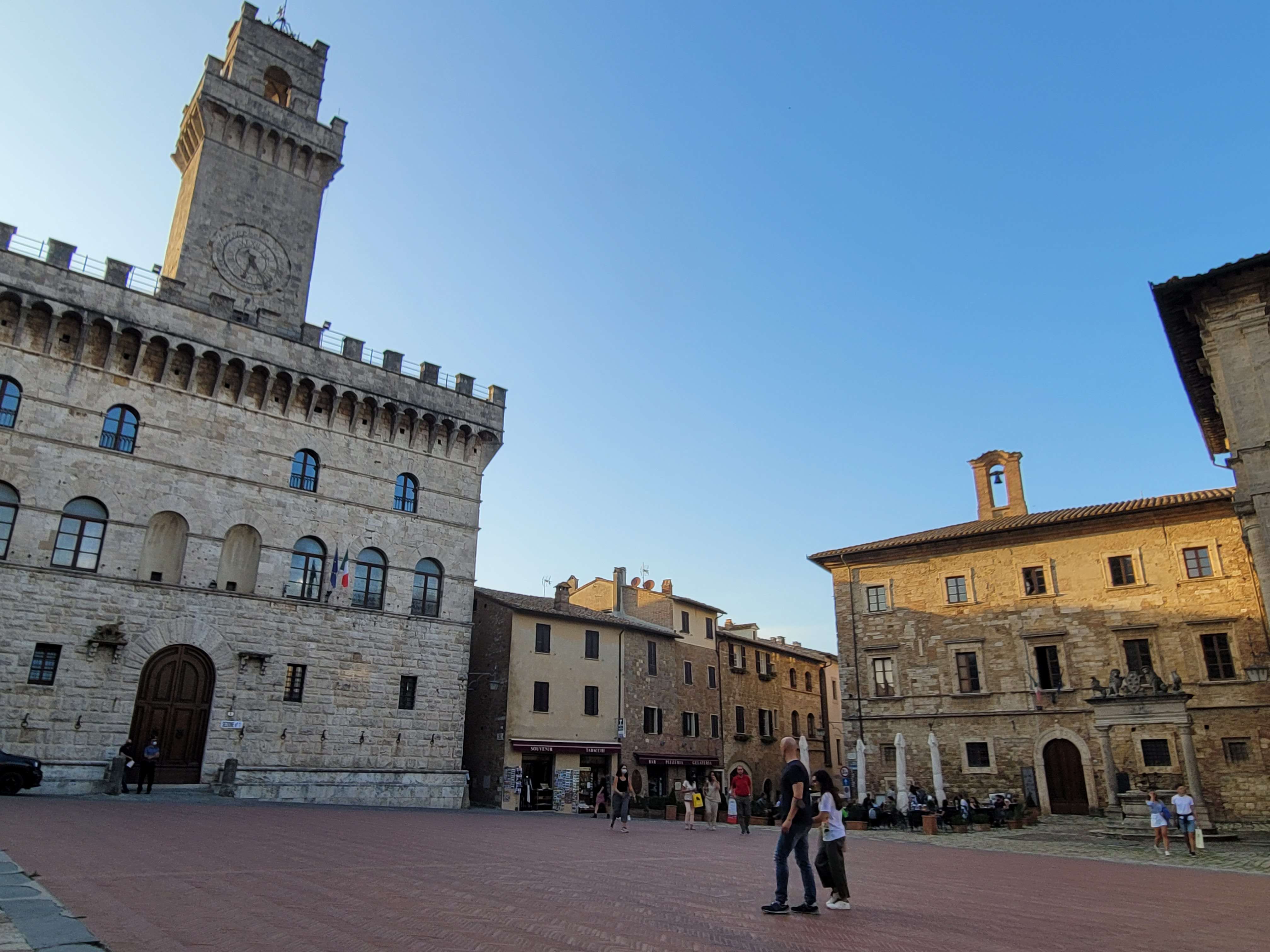
1. Walk the Corso from Porta al Prato to Piazza Grande
Start at Porta al Prato and walk uphill along the Corso until you reach Piazza Grande. It is steep, but this is the spine of Montepulciano: stone palazzi, small shops, wine bars, side streets, and sudden views over the valley.
Do it early if you have kids or anyone who struggles with heat. In July and August, the climb feels very different at 10:00 than it does at 14:30.
My practical version: park outside the walls, walk up slowly, stop for coffee or gelato, then reward everyone with a proper lunch or tasting rather than treating the town like a forced march.
2. Sit in Piazza Grande, Not Just Photograph It
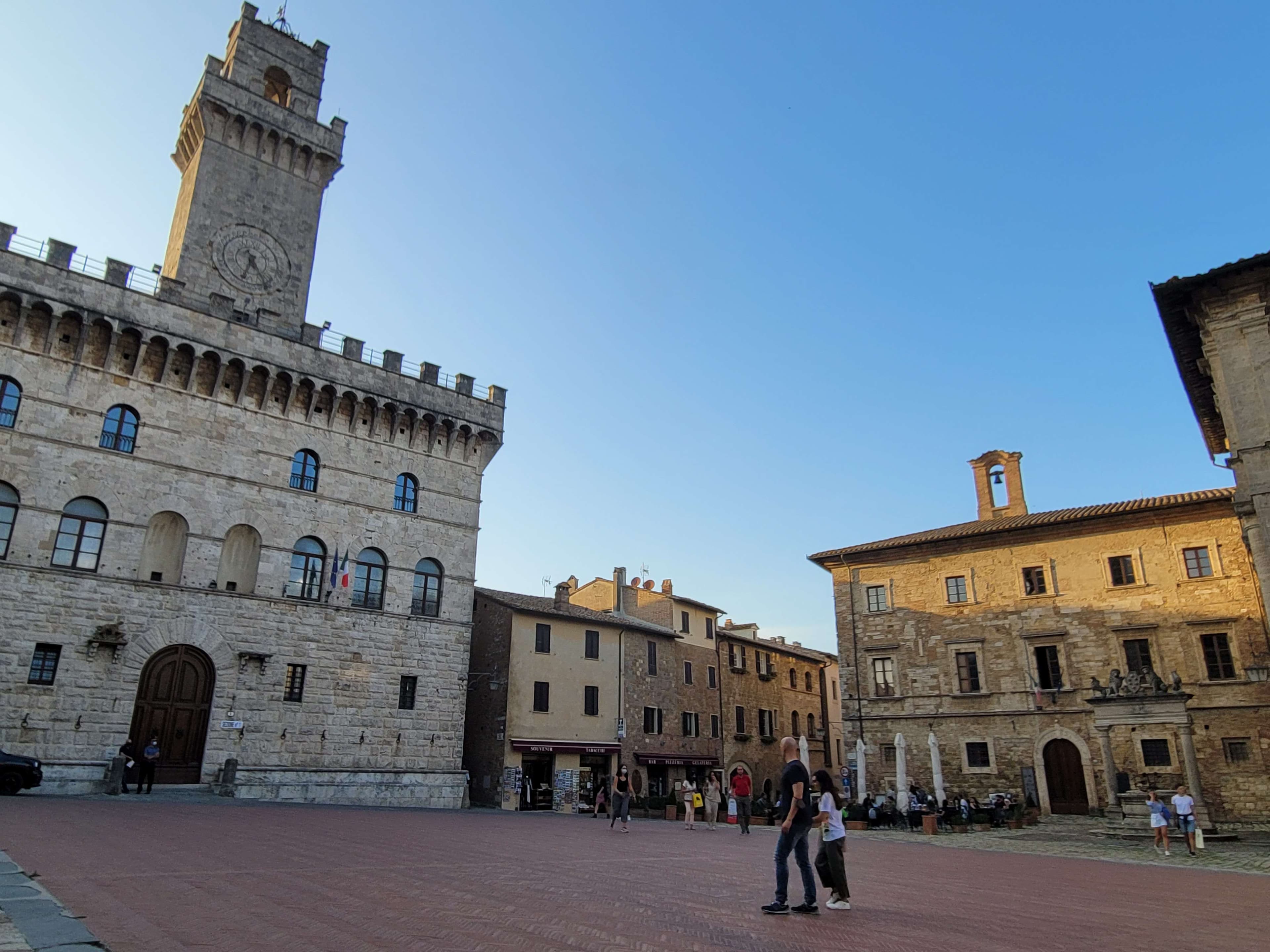
Piazza Grande is the civic heart of Montepulciano: the Duomo, Palazzo Comunale, Palazzo Contucci, and the stone well all sit together at the highest point of town.
Most people take a photo and leave. Stay ten minutes. The square changes as tour groups move through, bells ring, delivery vans disappear, and the light hits the stone. It is especially good late afternoon, when the town starts to feel lived-in again.
If you are visiting with children, this is also a useful pause point. There is space to breathe, but keep an eye on steps and sloping stone.
3. Climb the Palazzo Comunale Tower for the Big View
The Palazzo Comunale tower gives you the classic rooftop view over Montepulciano and the surrounding countryside. It is one of the few paid sights in town that is easy to justify if visibility is good.
Check the opening hours locally before you build your day around it; hours can vary by season. The climb is short but narrow, so it is not ideal with a toddler in arms or anyone uncomfortable with tight staircases.
Best time: morning for clearer air, or late afternoon for warmer light.
4. Visit the Duomo and Look for the Quiet Details
The Cathedral of Santa Maria Assunta is plain from the outside compared with Siena or Orvieto, but that is part of the point. Step inside for a quiet reset after the climb through town.
Do not expect a blockbuster cathedral visit. Expect a cool, calm interior, a few minutes of shade, and a better sense of how the town is layered around Piazza Grande.
This is a good quick stop if you are trying to balance sightseeing with children or older relatives.
5. Go Underground in a Historic Wine Cellar
This is the one wine experience even non-wine people should do in Montepulciano. Several palazzi in town sit above deep cellars carved into the tufa rock, and walking down into them explains the town better than another panoramic photo.
Good central options include Cantina Contucci, Cantina De' Ricci, and Cantina Ercolani. Some accept walk-ins, but book ahead for a proper tour, especially in high season.
If you only want one tasting in town, choose atmosphere over quantity. The cellars are the memory.
6. Do One Proper Vino Nobile Tasting Outside Town
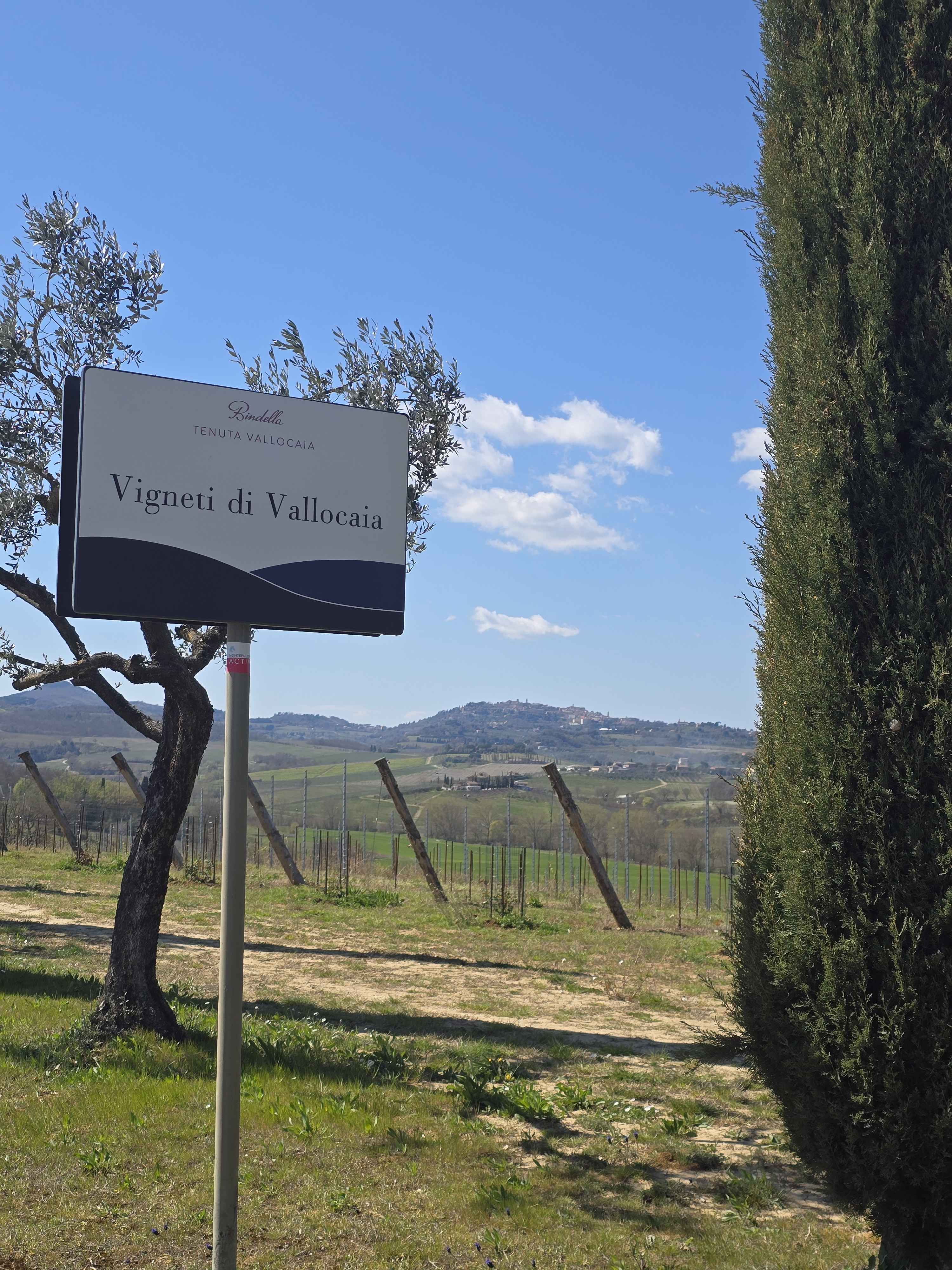
Town cellars are atmospheric; countryside estates are where you understand the landscape. For a deeper tasting, choose one estate outside the walls and give it time rather than trying to visit four in an afternoon.
Good names to look at include Bindella - Tenuta Vallocaia, Avignonesi, Salcheto, Poliziano, and Boscarelli.
Book ahead. Do not assume you can turn up, especially if you want lunch, a tour in English, or a more personal tasting.
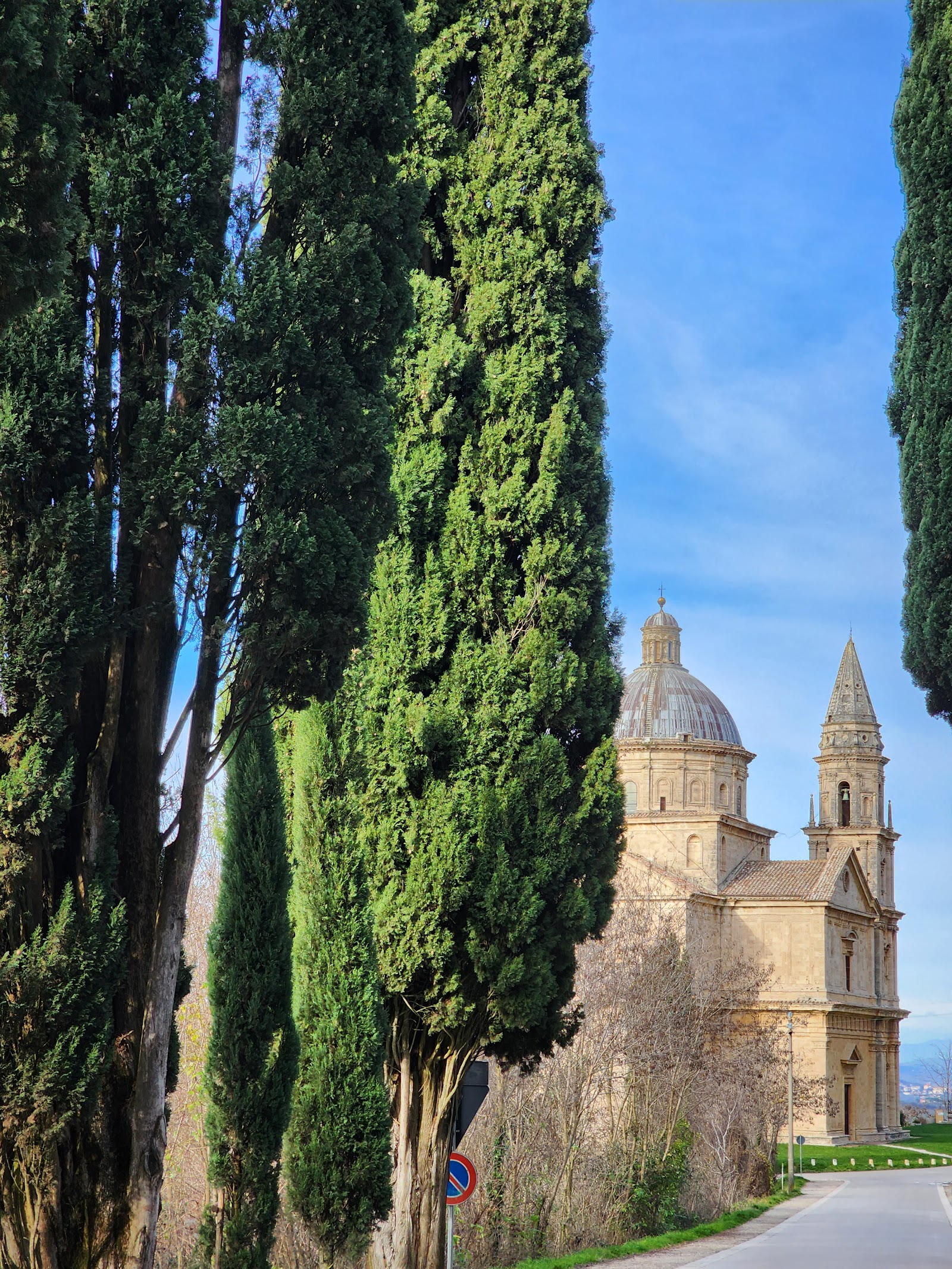
7. See San Biagio from the Outside and the Inside
The Temple of San Biagio sits just below town and is one of the most beautiful Renaissance churches in Tuscany. Even if you do not go inside, the setting is worth the detour.
You can walk down from the centro storico, but remember you must walk back up. With small children, older guests, or summer heat, drive and park nearby instead.
This is one of the best sunset stops close to Montepulciano. The church, cypresses, and stone glow when the light drops.
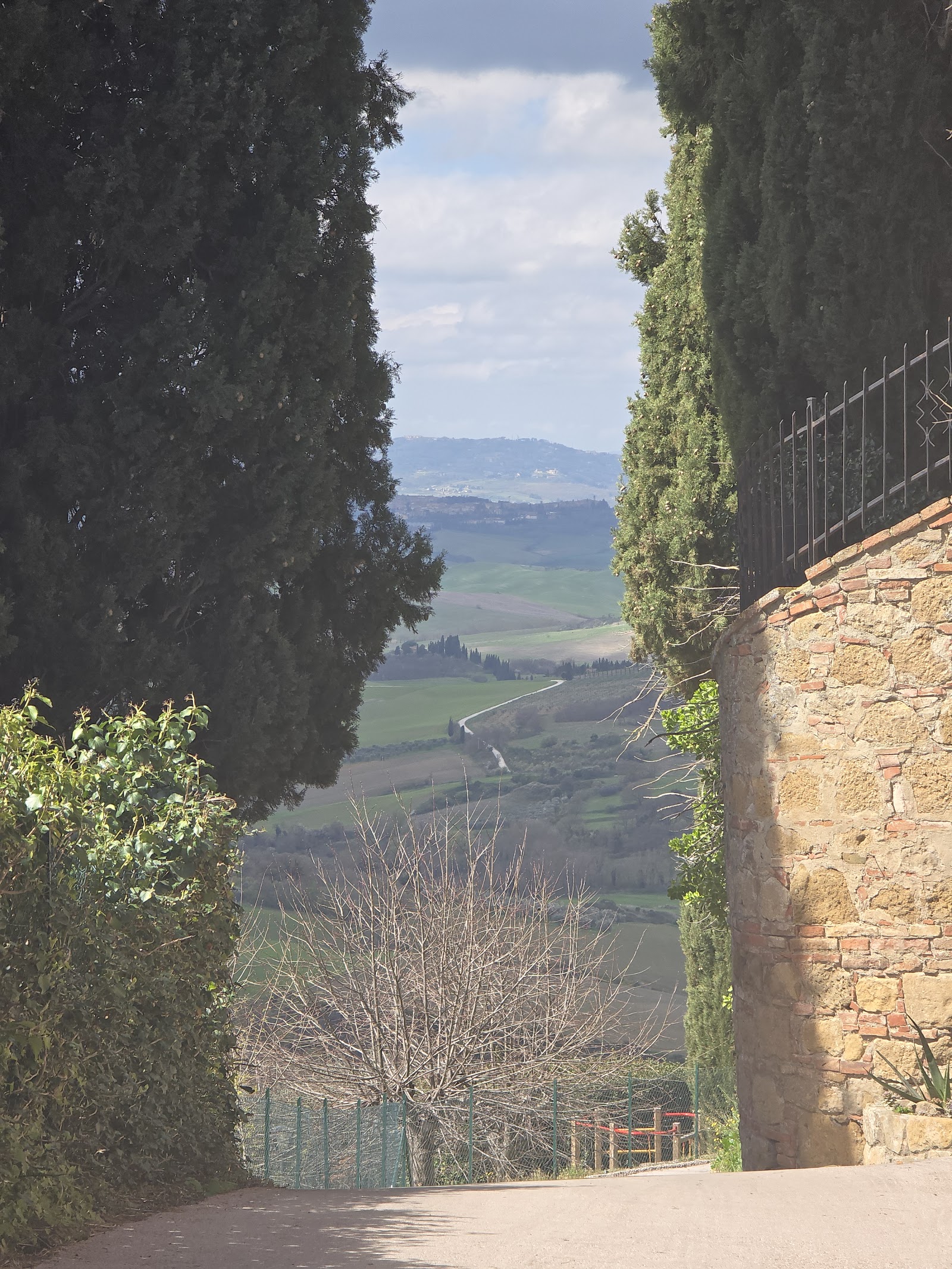
8. Drive the Val d'Orcia Loop at Golden Hour
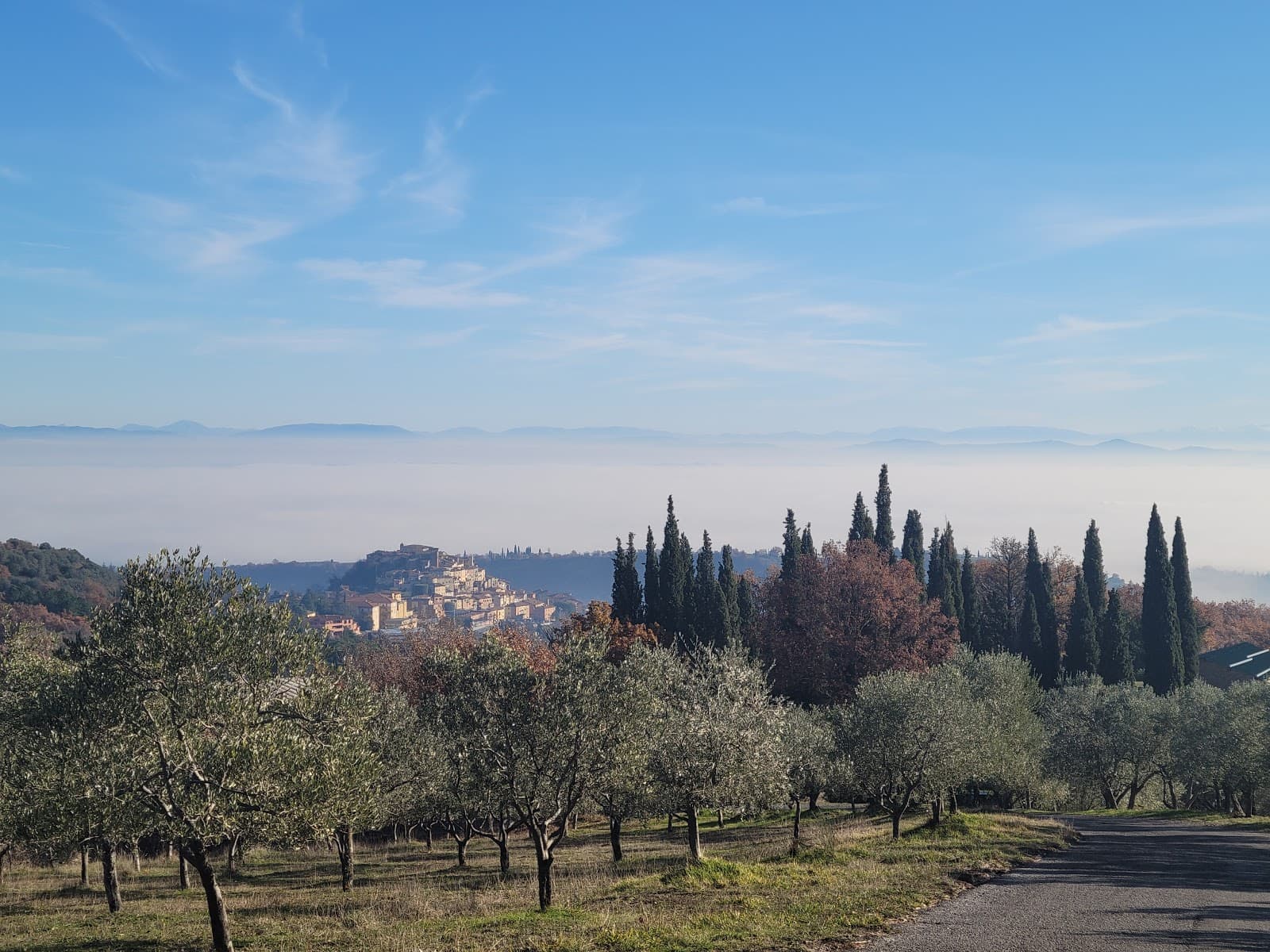
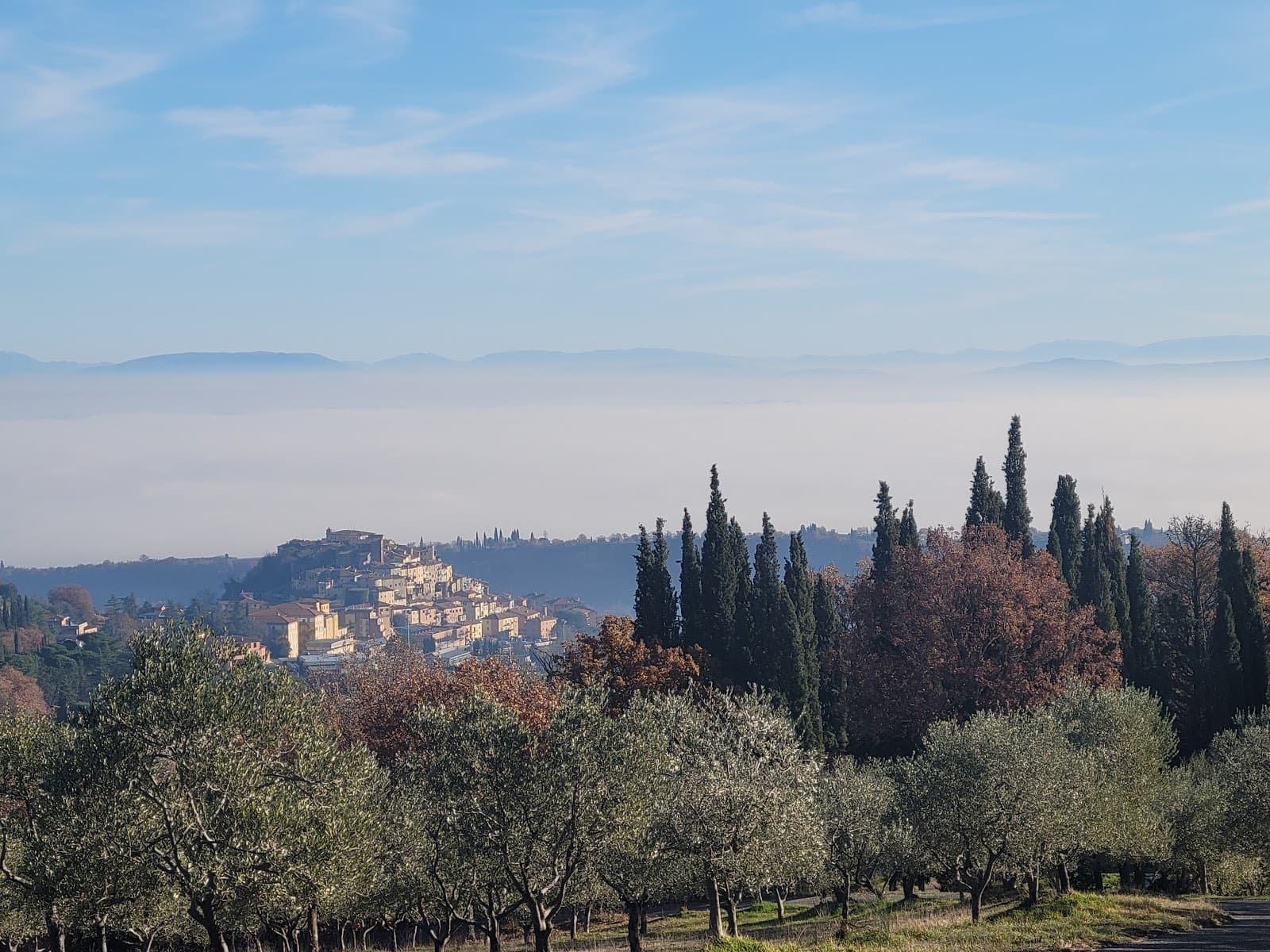
The Val d'Orcia is the postcard landscape people imagine when they picture Tuscany: cypress roads, wheat fields, stone farmhouses, and soft hills. From Montepulciano, the easy loop is Pienza, San Quirico d'Orcia, Bagno Vignoni, then back through the countryside.
Do not do this as a box-ticking drive at noon. The landscape is best early morning or late afternoon. In summer, I would rather swim, rest, or have lunch during the harsh middle of the day, then drive when the light is lower.
Useful stops include Pienza, Cappella della Madonna di Vitaleta, San Quirico d'Orcia, and Bagno Vignoni.
9. Visit Pienza for Pecorino and Views
Pienza is only about 20 minutes from Montepulciano and is one of the easiest, most rewarding side trips. It is small, clean, beautiful, and famous for pecorino cheese.
Walk the main street, step onto the panoramic path behind the cathedral, then buy cheese from one of the shops before you leave. Pienza is also easier with children than many hill towns because the centre is compact and flatter than Montepulciano.
Pair it with Bagno Vignoni or a Val d'Orcia drive rather than treating it as a full-day outing by itself.
10. Visit Bagno Vignoni, Even If You Do Not Swim
Bagno Vignoni is a tiny village built around a large thermal pool in the central piazza. You cannot swim in that main pool, but it is still one of the most unusual village squares in Tuscany.
Below the village are natural thermal channels and pools; nearby hotels and spas offer paid bathing options. For most visitors, Bagno Vignoni works best as a short stop combined with Pienza, San Quirico, or a spa afternoon.
Bring shoes with grip if you are exploring the lower water channels. The stone can be slippery.
11. Choose One Thermal Bath Day: Rapolano, Fonteverde, or Saturnia
Thermal baths are one of the best ways to break up a wine-and-hill-town itinerary. The right choice depends on how much driving and comfort you want.
- Rapolano Terme is the practical family/value choice, with proper facilities.
- Fonteverde is the luxury spa choice, better for couples or a special day.
- Saturnia Cascate del Mulino is the famous free waterfall, beautiful but busy and a longer drive.
If this is your first trip and you are staying near Montepulciano, I would not make Saturnia your only big day unless you are happy with an early start.
12. Eat Pici and Do Not Overcomplicate Dinner
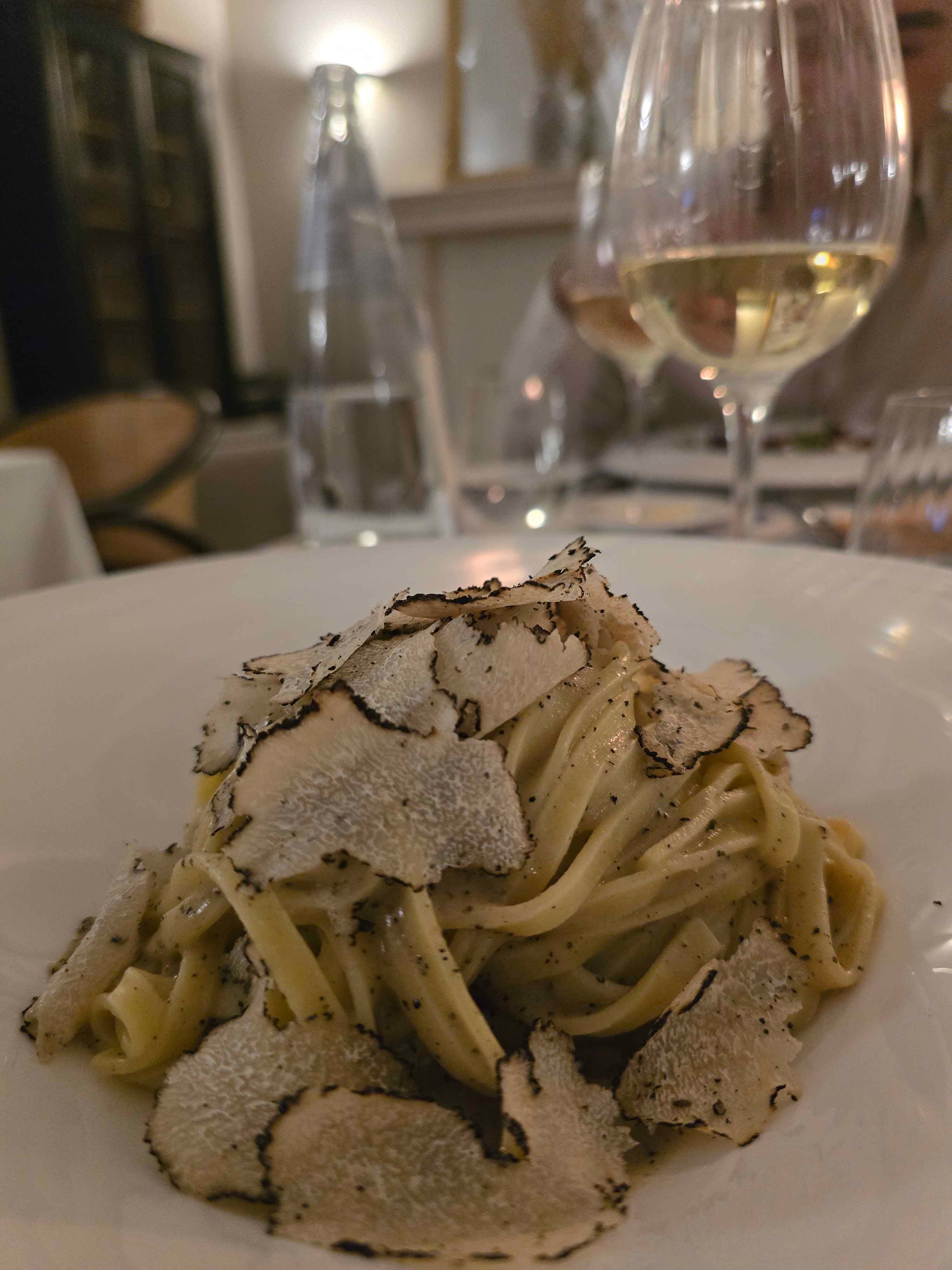
The local pasta is pici: thick, hand-rolled, chewy, and usually served with aglione tomato sauce, cacio e pepe, or ragù. You will see it everywhere because it belongs here.
For dinner, book ahead in high season and avoid assuming every nice-looking terrace is equal. In Montepulciano, the best meal is often the one that fits your logistics: close to parking, not too late for children, and not forcing a night drive after too much wine.
Start with the restaurant guides on this site, then ask locally if you want the current "where would you go tonight?" answer.
13. Book a Cooking Class if You Want a Slower Day
A cooking class is a good choice when you want a break from sightseeing but still want the day to feel Tuscan. The best versions are hands-on and simple: pici, sauce, bruschetta, maybe a dessert, and a long table at the end.
This is especially good for families or mixed groups where not everyone wants another wine tasting. Ask what is actually included before booking; some classes are proper meals, others are shorter demonstrations.
If you are staying in a villa, a private chef or in-villa class can be easier than driving everyone out again at night.
14. Shop for Wine, Pecorino, Olive Oil, and Pantry Food
Leave space in the trip for ordinary food shopping. Montepulciano and the surrounding towns are good for Vino Nobile, pecorino from Pienza, local olive oil, salumi, cantucci, and simple produce for villa dinners.
For practical groceries, supermarkets are outside or below the historic centre. Do not try to solve a full grocery run from inside the old town with luggage or children in tow.
For gifts, wine is obvious, but olive oil and pecorino are often more useful if you are not sure how much wine you can carry home.
15. Time Your Visit Around Bravio delle Botti if You Can
Bravio delle Botti is Montepulciano's barrel race, held on the last Sunday of August. Teams push heavy wine barrels uphill through town while the contrade compete with real local intensity.
It is not a staged show for tourists; it is a town event. That makes it much better, but also less convenient. Streets are busy, parking is harder, and restaurant bookings matter.
If your dates overlap, plan around it. If they do not, you may still see practice sessions in the run-up.
16. Use Montepulciano as a Base for Montalcino or Cortona
Two easy day trips from Montepulciano are Montalcino and Cortona. Montalcino is the Brunello town, with a fortress, wine shops, and beautiful countryside. Cortona has Etruscan history, steep streets, and views toward Lake Trasimeno.
Do not try to combine both in one casual day unless you enjoy driving more than arriving. Choose one based on your interests: Montalcino for wine, Cortona for hill-town wandering and museums.
From a villa base, these are easy outings because you can leave after breakfast and be back for a swim or dinner.
17. Take a Countryside Walk, Run, or Bike Ride
You do not need a major excursion every day. Some of the best mornings here are simple: a walk on a strada bianca, a short run through vineyards, or a bike ride when the roads are quiet.
The caveat is safety. Rural roads are narrow, shoulders are limited, and summer heat is real. Go early, carry water, and avoid the fastest roads where possible.
For cycling, the Val d'Orcia is beautiful but hilly. E-bikes make the difference for many visitors.
18. Spend One Afternoon Doing Nothing at the Villa
This sounds like anti-advice, but it is usually the difference between a good Tuscany trip and an exhausted one. If you rent a villa with a pool, use it. Plan one real down afternoon every two or three days.
The best rhythm is often: town or activity in the morning, lunch, pool/rest, then a short evening outing. Trying to sightsee from 09:00 to 19:00 every day makes southern Tuscany feel more difficult than it is.
If you are travelling with children, this is not optional. Pool time is what lets the adults enjoy dinner.
19. Parking and ZTL: Do Not Drive Into the Centro Storico
Montepulciano has restricted traffic areas and narrow streets that are not worth testing with a rental car. Unless your accommodation has explicit access instructions, do not drive into the centro storico.
Use the outside car parks and walk in. The most useful options for visitors are usually P1, P7, and P8, depending on where you are entering town and how much uphill walking you want.
If you are arriving with luggage, check your accommodation instructions before you arrive, not while you are already at the gate with cars behind you.
20. How Many Days Do You Need in Montepulciano?
One day is enough to see the town quickly. Two to three days is enough for the town, one wine experience, Pienza, and a Val d'Orcia drive. A week is ideal if you want the southern Tuscany version: wine, food, hot springs, day trips, villa time, and slow mornings.
For most guests, I would plan it like this:
- 1 day: historic centre, one cellar, San Biagio, dinner.
- 3 days: add Pienza, Val d'Orcia, and one proper estate tasting.
- 7 days: add hot springs, Montalcino or Cortona, cooking class, and real downtime.
Frequently Asked Questions
Is Montepulciano worth visiting?
Yes. Montepulciano is worth visiting for the historic centre, Vino Nobile wine cellars, views, and easy access to the Val d'Orcia. It is especially good as a base rather than a rushed stop between other Tuscan towns.
What is Montepulciano best known for?
Montepulciano is best known for Vino Nobile di Montepulciano, its hilltop Renaissance centre, underground wine cellars, and views over the Val d'Orcia and Val di Chiana.
Can you visit Montepulciano without a car?
You can visit the town without a car, but exploring the countryside, wineries, hot springs, and smaller villages is much easier with one. If you do not want to drive, use private transfers or book guided wine experiences.
Is Montepulciano good with kids?
Yes, but plan around hills and heat. Kids usually do best with short town visits, gelato stops, pool time, Pienza, Bagno Vignoni, and countryside outings rather than a full day of churches and tastings.
What should I not miss in Montepulciano?
Do not miss the walk to Piazza Grande, at least one underground wine cellar, San Biagio, and a late-afternoon drive into the Val d'Orcia. If you drink wine, add one proper Vino Nobile estate tasting.
Where to Stay for This Kind of Trip
If your plan is only one night, stay in or near the historic centre. If your plan is the version most people actually imagine — pool, wine, day trips, cooking, hot springs, and slow evenings — a countryside villa is easier.
Molino Nobile is set up for that rhythm: Montepulciano close by, private space to recover between outings, and enough room for families or groups who do not want every meal and every nap to become a logistics problem.
Related Reading
Planning a trip to Montepulciano?
Browse our handpicked villas — pools, vineyard views and everything on your list within easy reach.