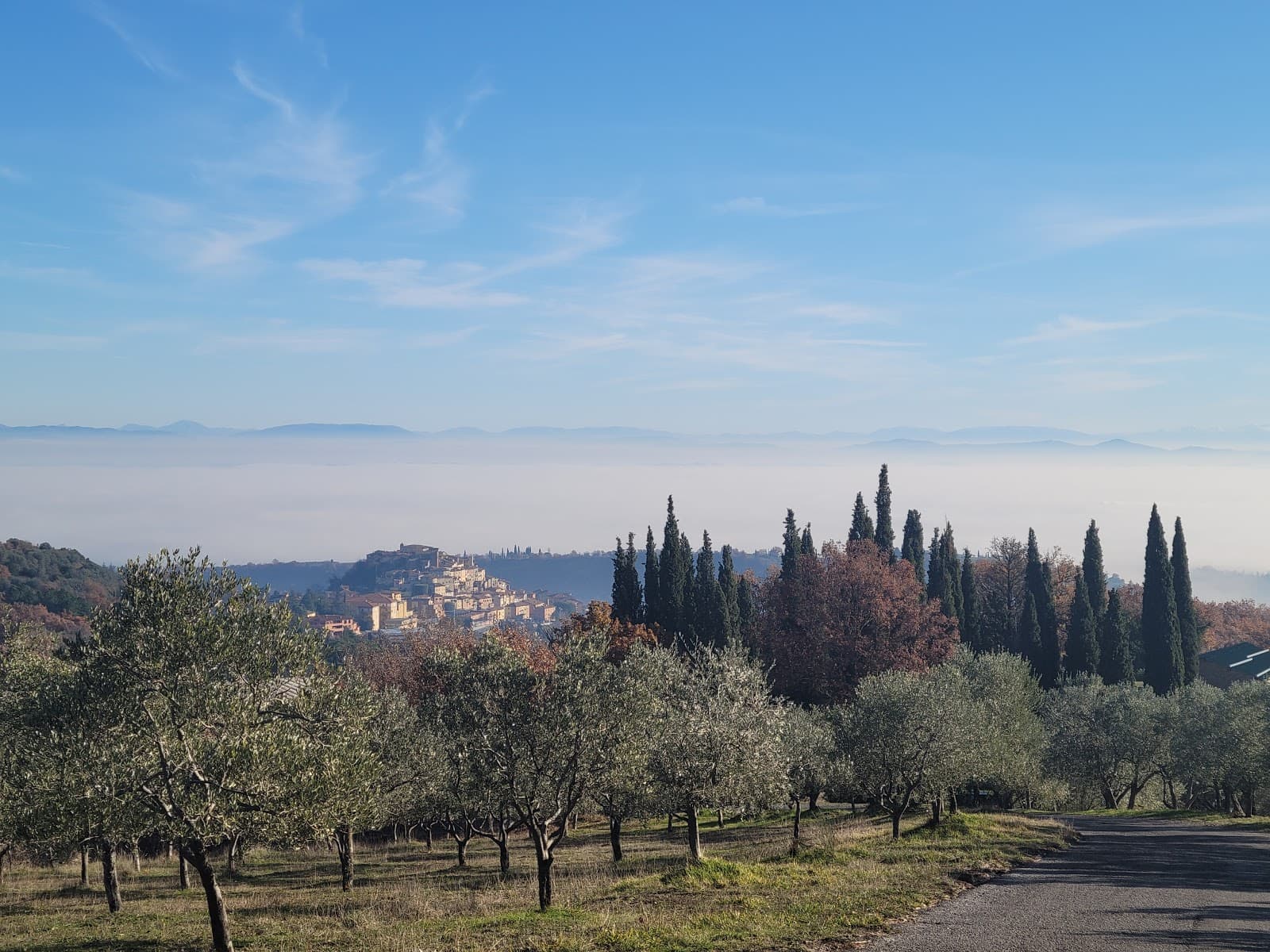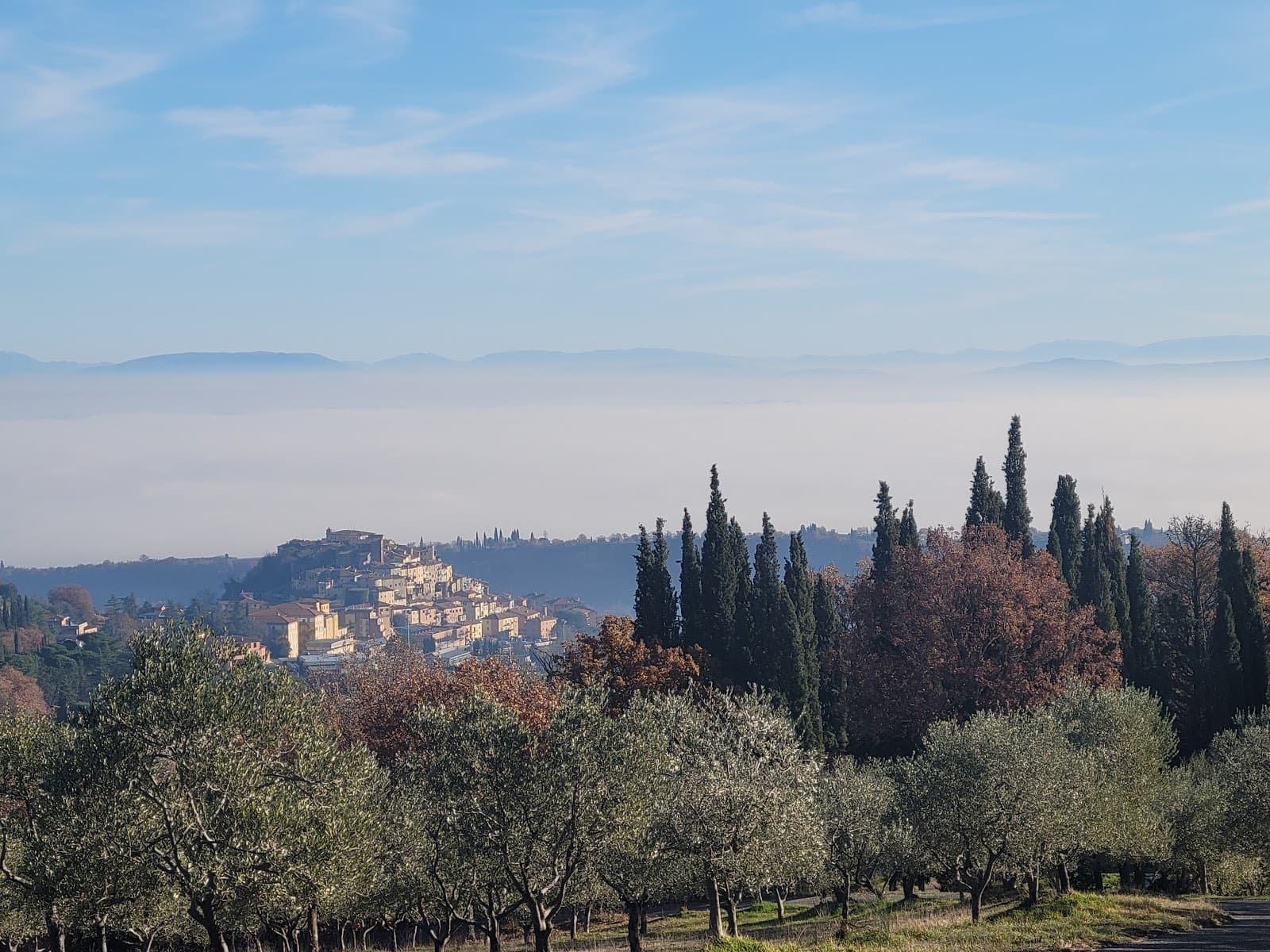
A 700-year-old barrel race through medieval streets, neighbourhood rivalry, feasts and pageantry — everything you need to know about Montepulciano's most exciting annual event.
What Is the Bravio delle Botti?
The Bravio delle Botti is Montepulciano's most spectacular annual event — a barrel race through the steep medieval streets of the town that has roots stretching back to the 14th century. Two-person teams from each of the town's eight contrade (neighbourhoods) push empty 80-kilogram wine barrels up Montepulciano's historic centre, finishing on the cathedral steps in Piazza Grande. The official route is about 1.6 kilometres, which is why the race feels less like a novelty and more like a serious athletic event.
I've watched the Bravio from different vantage points over the years, and it still gives me goosebumps. The speed at which those barrels move up a gradient that makes most tourists stop to catch their breath is genuinely extraordinary. The noise — hundreds of spectators lining the narrow street, flags cracking, drums hammering, neighbourhood supporters screaming — is unlike anything else in Tuscany.
It happens on the last Sunday of August every year. In 2026, that's Sunday, August 30th. The practical details below are based on local experience and checked against the official Bravìo delle Botti site; always confirm the current programme at braviodellebotti.com before planning your day.
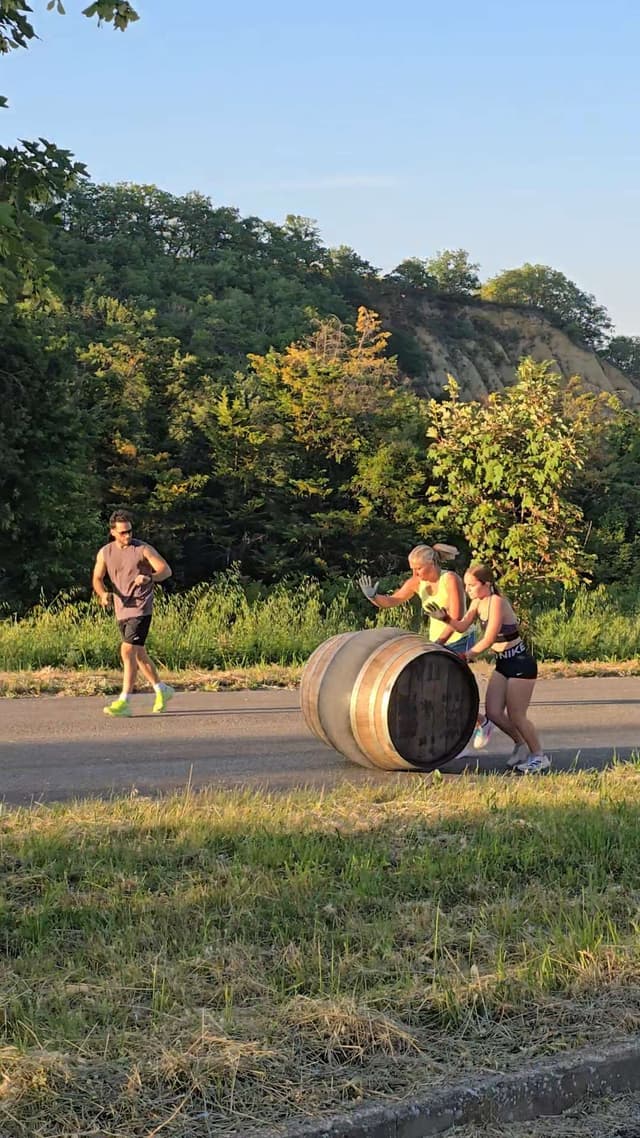
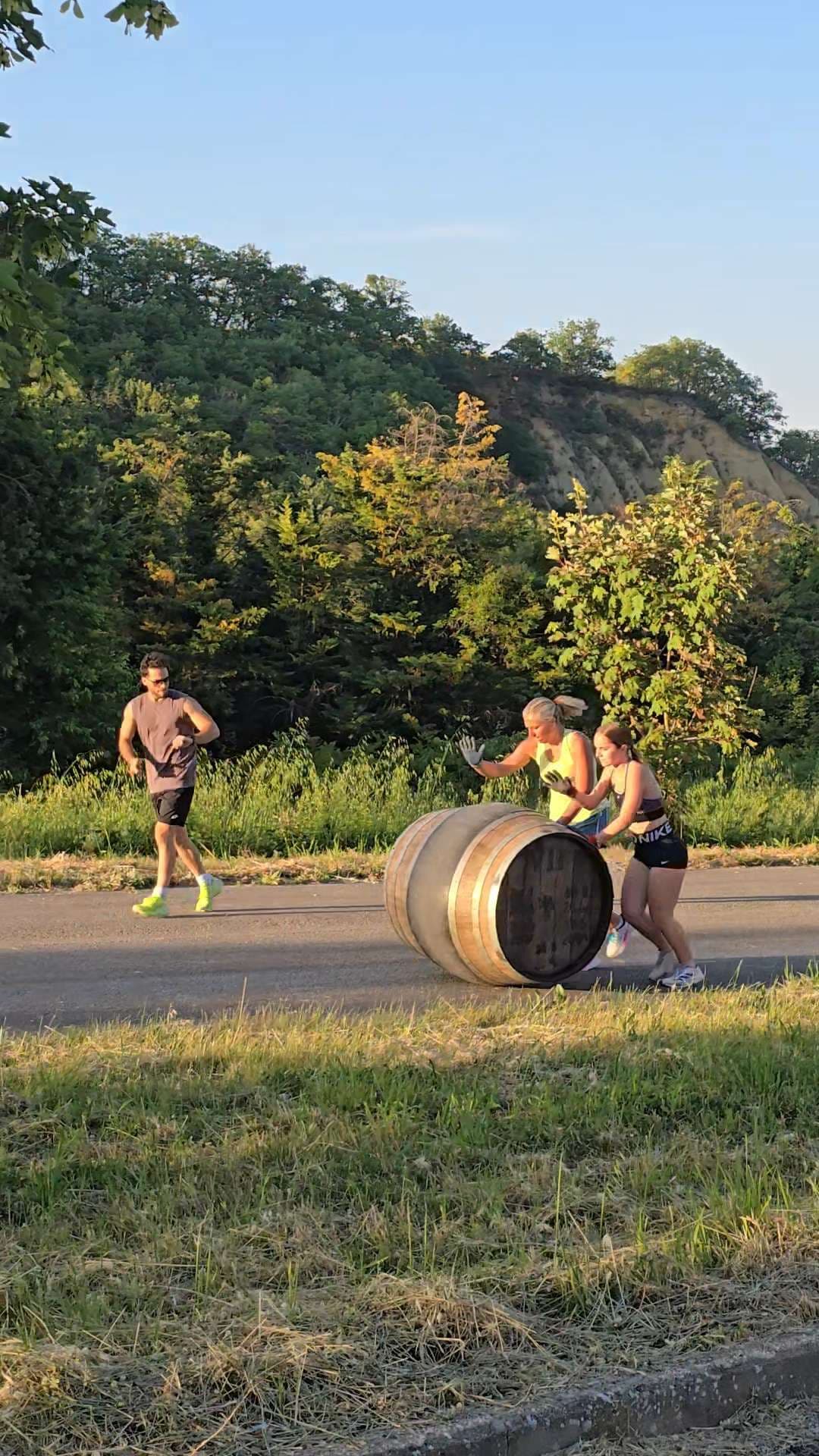
Barrel training before the Bravio delle Botti.
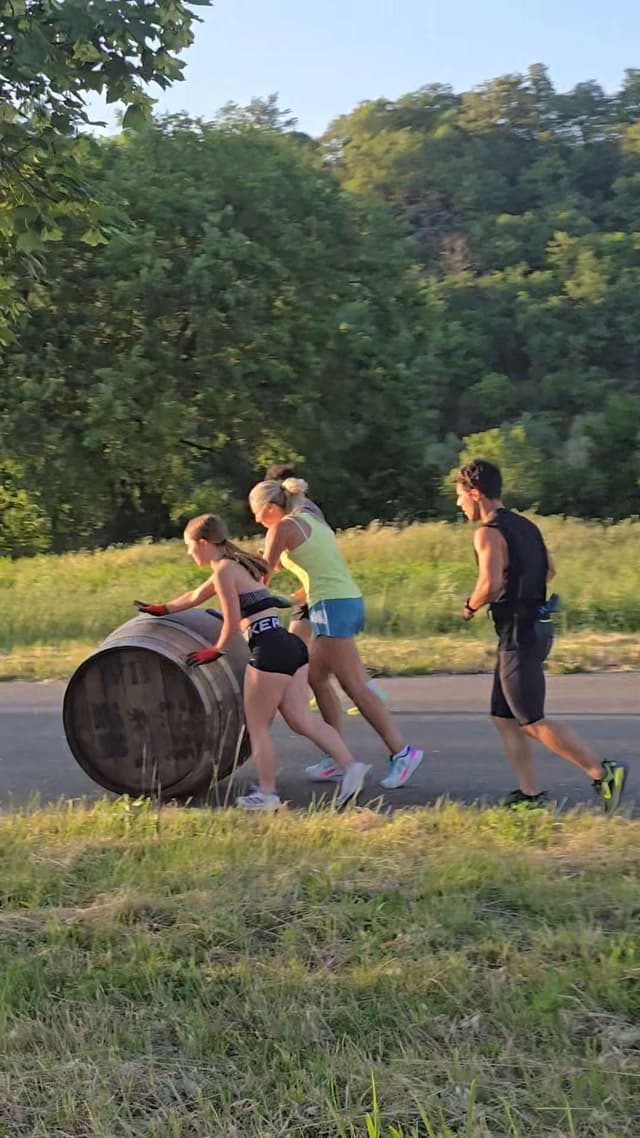
The race is short on paper, but the training is real.
The History: From Medieval Jousting to Barrel Racing
The original competition dates back to 1373, when it was called the "Corsa del Bravio" — a horse race between the contrade of Montepulciano, similar in spirit to Siena's famous Palio. The prize was a painted cloth banner called a bravio (from the Latin bravium, meaning prize), and the race was held in honour of San Giovanni Decollato, the patron saint to whom the race is dedicated.
The horse race continued until the 17th century, when it was suppressed for public-order reasons. The modern barrel race was revived in 1974, when Don Marcello Del Balio transformed the old horse race into a competition with wine barrels — a better fit for a town whose identity is tied so closely to Vino Nobile. Horses became barrels. The contrade allegiances — which had never really faded — found a new competitive outlet.
What's remarkable is how quickly the revived event became central to the town's identity. Within a decade, it was the most important date on Montepulciano's calendar. Today, the preparations consume the entire month of August.
The Eight Contrade
Montepulciano is divided into eight historic neighbourhoods, each with its own colours, emblem, and fiercely loyal supporters. The contrade aren't just relevant on race day — they shape social life in the town year-round. People identify with their contrada, eat together, celebrate together, and argue about the Bravio together.
Here are the eight:
1. Cagnano
2. Collazzi
3. Le Coste
4. Gracciano
5. Poggiolo
6. San Donato
7. Talosa
8. Voltaia
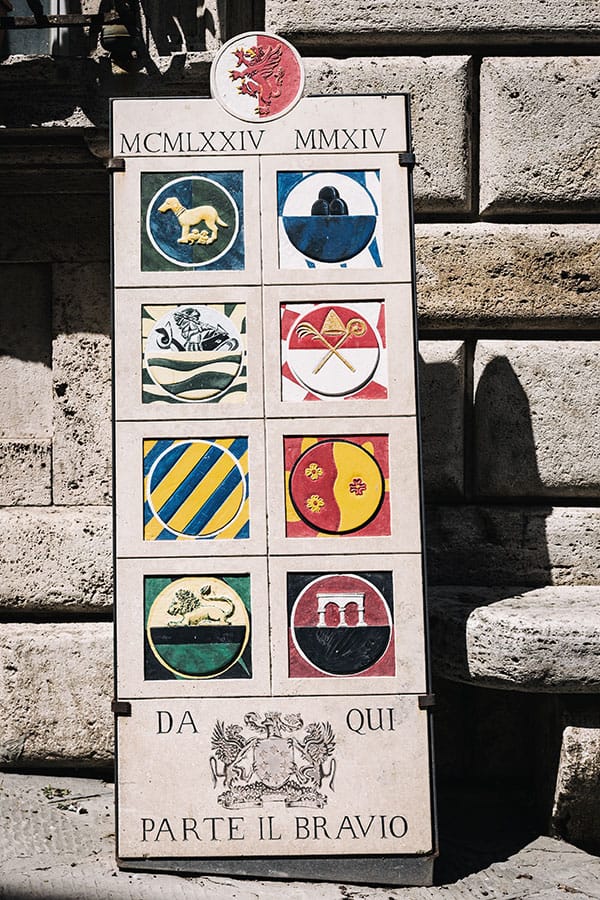
Each contrada selects and trains its two-person barrel-pushing team (spingitori) throughout the summer. The team's selection is taken very seriously — strength, stamina, coordination and technique all matter. Barrel pushing isn't just brute force; the skill is in keeping the barrel straight on cobblestones while maintaining speed up a long, steep route through town.
The Race Day: What to Expect
The Build-Up (Morning and Afternoon)
The last Sunday of August is the culmination of weeks of preparations. By mid-morning, the town is already transformed: contrada flags and banners hang from every window along the Corso, the streets are cleaned and cleared, and temporary barriers line the race route.
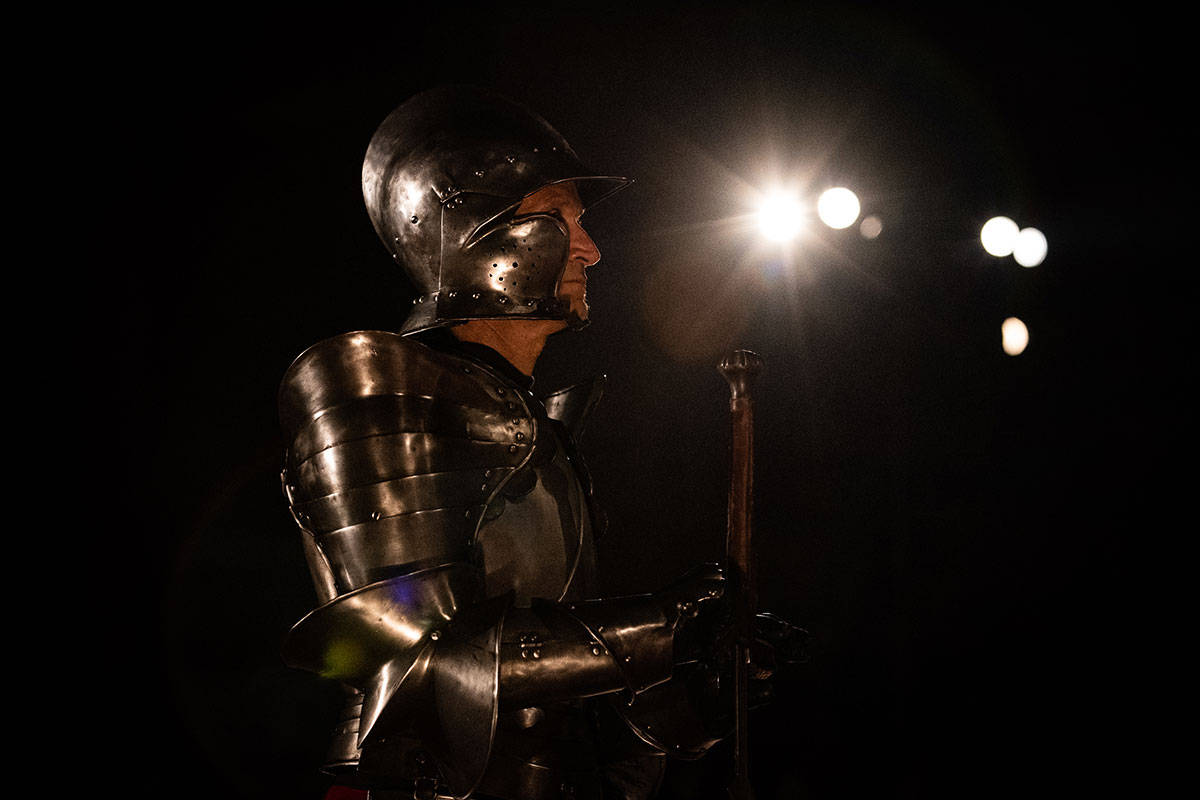
A historical procession fills the town in the afternoon. The corteo storico has more than 300 participants moving along the same route: flag-throwers (sbandieratori), drummers, nobles, soldiers, and representatives of each contrada in their colours. The pageantry is genuine, not a tourist show — these are locals who've been rehearsing for months, wearing costumes often made by hand within the contrada.
The flag-throwing displays are extraordinary. The sbandieratori hurl and catch heavy silk flags in choreographed routines that would be impressive in a gymnasium, let alone on a steep medieval street. The drumming is hypnotic. Allow at least an hour for the procession.
The Race (Early Evening)
The race itself starts in the early evening — check the current year's programme for the exact time. Two spingitori per barrel. Eight barrels. One uphill course of roughly 1.6 kilometres through the historic centre, finishing on the sagrato of the Duomo in Piazza Grande.
A cannon fires. The teams explode off the line.
The race is over quickly compared with the build-up, but it is not a gimmick sprint. The speed is remarkable given the weight of the barrels, the length of the route and the gradient. Teams weave, jostle, and occasionally crash into barriers or each other. The noise from the crowd is deafening.
The first barrel to reach Piazza Grande wins the bravio — the painted cloth banner, or panno, traditionally carrying the iconographic image of San Giovanni Decollato, Montepulciano's patron saint.
The Aftermath (Evening)
After the race, the winning contrada celebrates with a street feast that continues deep into the night. Tables appear, food materialises, wine flows, songs are sung. The losing contrade nurse their wounds and immediately begin talking about next year.
The rest of the town joins in the general festivity. The restaurants on the Corso are packed, the enoteca stay open late, and the atmosphere is joyful and chaotic in the way that only Italian neighbourhood celebrations can be.
The Contrada Dinners: Don't Miss These
In the weeks leading up to the Bravio, the contrade host outdoor cene della contrada — neighbourhood dinners in the streets, courtyards and piazzas of their territory. Long communal tables are set up, decorated in the contrada's colours, and local families cook traditional Tuscan dishes in enormous quantities.
These dinners are open to everyone — including visitors. They typically cost €20–30 per person for a full multi-course meal with wine, and they're one of the most authentic dining experiences you can have in Tuscany. You'll be eating alongside local families, elderly contrada veterans, children running between the tables, and the barrel-pushing team in training.
The atmosphere is festive, loud, and genuinely welcoming. Most contrade seat visitors willingly — just turn up, ask politely, and be prepared to eat a lot. The food is home-style Tuscan: crostini with chicken liver, pici al ragù, grilled meats, local cheeses, and as much Vino Nobile as you can handle.
How to find them: Check posters around town from early August, or ask at your accommodation. The tourist office in the Piazza Grande also keeps a schedule of contrada dinner dates.
Best Spots to Watch the Race
The entire Corso is lined with spectators, but position matters. Here are your options:
Lower Course / Start Area
The most dramatic vantage point — you see the teams launch, the initial surge of power, and the first clashes for position. It's loud and intense. Arrive at least 2 hours early to get a good spot near the barriers.
Mid-Corso (The Climb)
Along the middle section of the Corso — roughly between Piazza Savonarola and the Teatro Poliziano — you get the longest view of the race as the teams grind uphill. This is where you see the physical toll: the faces of the spingitori contorted with effort, barrels drifting on the cobblestones, teams gaining or losing ground in real time.
Piazza Grande (The Finish)
The emotional climax. The first barrel cresting the final slope and entering the piazza triggers an eruption from the winning contrada's supporters that's unlike anything I've experienced at any other sporting event. The finish area fills up fastest — arrive 3+ hours early or accept a view from the side streets.
Elevated Windows and Balconies
If you know someone with a window or balcony overlooking the Corso, this is the premium view. Some restaurants and apartments along the route offer viewing spots — ask locally.
My recommendation: Watch from the mid-Corso section for the best combination of race action and atmosphere. The start and finish are more dramatic but more crowded.
Planning Your Trip Around the Bravio
When to Book Accommodation
If you want to be in Montepulciano for the Bravio, book your accommodation as early as possible — ideally 6+ months ahead. Late August is already peak season, and the Bravio weekend pushes demand even higher. Villa availability within 30 minutes of town gets scarce by spring.
Getting There on Race Day
The centro storico is closed to normal traffic around the Bravio. Park early at P1 Porta al Prato, P6 or P7 — by midday, parking gets difficult. The main car parks fill up, and you may need to park further away and walk.
There's no realistic way to arrive by public transport for the evening race and get home afterward. Drive, but be prepared for traffic leaving town after the event.
What to Wear
August in Montepulciano is hot — 30–35°C. Wear light clothing, comfortable walking shoes (cobblestones, steep hills, standing for hours), a hat, and bring water. The procession and race take place in full late-summer heat.
If you want to show contrada allegiance, pick a neighbourhood and wear their colours. Nobody will mind — locals are flattered when visitors choose a side.
Where to Eat
Book dinner before the race (early sitting around 6pm) or plan to eat at one of the contrada street dinners. Post-race restaurant bookings are near-impossible without advance reservation, and the town centre is packed until midnight.
The Bravio vs Siena's Palio
The comparison is inevitable: both are historic contrada competitions in Tuscan hill towns. But the experience is fundamentally different.
Siena's Palio is a horse race in the famous shell-shaped Piazza del Campo. It's enormous — 30,000+ spectators in the piazza, international media coverage, extraordinary pageantry. It happens twice a year (July 2 and August 16) and is unquestionably one of Italy's greatest public spectacles.
Montepulciano's Bravio is intimate by comparison. The crowd is smaller (perhaps 3,000–5,000), the atmosphere more personal, and the event feels more genuinely local. You'll stand next to the families of the spingitori, hear the coaching from contrada captains, and feel the cobblestones vibrate as the barrels pass. It's less polished but more authentic — the kind of event where you accidentally end up at a contrada dinner table and leave three hours later with five new friends and a hangover.
If you can see both, do. But the Bravio has a warmth and accessibility that the Palio, by virtue of its scale, can't quite match.
Other August Events in Montepulciano
The Bravio doesn't happen in isolation. August in Montepulciano is a month-long festival season:
- Cantiere Internazionale d'Arte — a contemporary music and art festival that runs through late July and August, with concerts in the town's churches, piazzas and the Teatro Poliziano. World-class performances in intimate settings.
- Contrada dinners — throughout August, as described above.
- Wine events — several producers host special tastings and open-air events through the summer. Check with the Consorzio del Vino Nobile for the current programme.
- Ferragosto (August 15) — Italy's national summer holiday. The town is packed, restaurants are full, and there's a general atmosphere of celebration.
The Bravio for Families
The Bravio is excellent for families with children. The procession is colourful and exciting — flag-throwing and drumming captivate kids of all ages. The race itself is short, loud and easy to understand. And the contrada dinners are informal enough that children are completely welcome — Italian neighbourhood events always include kids.
Tips for families:
- Arrive early to get a spot near the barriers where children can see.
- Bring snacks and water — the wait between procession and race can be long.
- Let children choose a contrada to support — wearing the colours makes the experience more engaging for them.
- The mid-Corso area is less crushingly crowded than the start and finish — better for families with young children.
Photographing the Bravio
For photographers, the Bravio offers extraordinary opportunities:
- Procession: Best light is mid-afternoon. The flag-throwers against the stone buildings of the Corso make spectacular images. Use a fast shutter speed (1/500+) to freeze the flags.
- Race: Challenging because of the speed and crowd. A position at the start or finish with a telephoto lens (70–200mm) gives you the best barrel-action shots. The mid-Corso is better for wide-angle context shots showing the street, the crowd, and the effort.
- Post-race celebrations: The winning contrada's celebration is pure photojournalism. Genuine emotion, colour, chaos. Don't be shy — people want to be photographed when they've just won.
- Pre-race portraits: In the hours before the race, contrada members in costume gather in their neighbourhood streets. Ask politely and most people are happy to pose. The light in the narrow side streets can be beautiful.
Frequently Asked Questions
When is the Bravio delle Botti in 2026?
The Bravio takes place on the last Sunday of August every year. In 2026, that's Sunday, August 30th. The official programme usually includes morning ceremonies in Piazza Grande, an afternoon historical procession and the race in the early evening. Check the current schedule at braviodellebotti.com before you go.
Do I need tickets for the Bravio?
No — the Bravio is a free public event. There are no tickets, reserved seats, or VIP areas. Viewing is first-come, first-served along the Corso. Arrive early (2–3 hours before the race) for the best positions.
How long does the barrel race last?
The race itself is brief compared with the build-up, but the day is not. The historical procession, ceremonies, race and celebrations together take over the town for much of the day and evening.
Can visitors attend the contrada dinners?
Yes — the contrada dinners in the weeks before the Bravio are open to everyone. They cost €20–30 per person for a multi-course meal with wine. Just turn up at the dinner location (advertised on posters around town), ask politely, and you'll be seated. They're one of the best dining experiences in Tuscany.
Where should I park for the Bravio?
The centro storico is closed to normal traffic on race day. Use P1 Porta al Prato, P6 or P7, and arrive early — parking fills up fast. Plan for slow traffic leaving town after the event.
Where to Stay
The Bravio falls in peak season — book early. **Molino Nobile** is 10 minutes from the town centre, sleeps 12 across 6 bedrooms, with a heated pool and jacuzzi. After a hot afternoon watching the procession and race, the pool is exactly what you'll want. From €1,299/night — book direct for the best rate.
Browse all properties in the villa directory.
Related Reading
Planning a trip to Montepulciano?
Browse our handpicked villas — pools, vineyard views and everything on your list within easy reach.