Everything you need to know about Vino Nobile — Tuscany's most underrated great wine. Which producers to visit, what to order, and why it's better value than Brunello.
What Is Vino Nobile di Montepulciano?
Vino Nobile di Montepulciano is, in my opinion, Tuscany's most underrated great wine. It sits in the shadow of Brunello di Montalcino and Chianti Classico, mentioned in the same breath but rarely given the same attention. That's a mistake — and one that works in your favour if you're visiting Montepulciano.
I've been drinking Vino Nobile for years, and it's the wine I reach for when I want something genuinely Tuscan without paying Brunello prices. It's elegant, food-friendly, and extraordinarily good value for what it is.
The wine is named after the hilltop town itself — "Vino Nobile" meaning "noble wine," a reference used since the 17th century when it was considered among the finest in Italy. It became Italy's first DOCG (Denominazione di Origine Controllata e Garantita) wine in 1980, beating Brunello and Barolo to that honour.
The Sangiovese Grape (Prugnolo Gentile)
Vino Nobile is built on Prugnolo Gentile, a local clone of Sangiovese that has been growing in the vineyards around Montepulciano for centuries. "Prugnolo" means little plum — a reference to the plummy, rounded fruit character that distinguishes this clone from the Sangiovese Grosso of Montalcino (which becomes Brunello) or the Sangiovese of Chianti.
Prugnolo Gentile must make up a minimum of 70% of the blend. The remainder can be other varieties permitted in the DOCG regulations, typically Canaiolo and Mammolo, though many producers are moving toward higher percentages of Prugnolo — some going to 100%.
The result is a wine with a distinctive profile: cherry and plum fruit, floral notes (violets, especially in younger wines), earthy undertones of leather and tobacco, and firm tannins that soften with a few years in bottle.
DOCG Rules: What Makes Vino Nobile, Vino Nobile
The regulations are strict and worth understanding, because they shape everything about what's in the bottle.
Minimum aging:
- Standard Vino Nobile: 2 years total, with at least 1 year in oak
- Riserva: 3 years total, with at least 1 year in oak
In practice, most serious producers go well beyond the minimum. The best Riserva wines see 2+ years in large Slavonian oak or a combination of barriques and larger casks.
Release: Standard Vino Nobile cannot be sold before January 1st of the second year after harvest. So the 2023 vintage cannot be released until January 2025. Riserva must wait until January of the third year.
Rosso di Montepulciano (more on this shortly) is the DOC wine made from the same estate grapes but released earlier and with less aging — think of it as the producer's "second wine."
Rosso di Montepulciano: The Everyday Wine
Every serious Vino Nobile producer makes a Rosso, and it's one of the great overlooked Italian wine values.
Rosso di Montepulciano DOC uses the same grape varieties and often comes from the same vineyards as the Nobile, but with less aging (minimum 6 months) and typically from younger vines or declassified barrels. It's released much earlier — usually the spring following harvest.
The result is a lighter, fresher, fruitier wine that drinks beautifully young: €8–14 at the winery, compared to €15–25 for standard Nobile. If you're having a simple dinner at a countryside restaurant, ordering the local Rosso is almost always the right call. It's what the locals drink on a Tuesday.
The Best Producers to Visit
The Vino Nobile DOCG covers about 1,200 hectares around Montepulciano, worked by around 60 producers. Here are the ones worth seeking out:
Dei
My personal favourite and one of the most consistent estates in the DOCG. Caterina Dei produces wines of exceptional elegance — the standard Vino Nobile is precise and floral, the Riserva "Bossona" from a single old-vine vineyard is among the finest wines in Tuscany. The estate is beautifully run, the winery visits are personal and unhurried. Expect to spend €18–25 on the standard Nobile, €40+ for the Bossona.
Bindella
Another favourite, run by Swiss owner Rudolf Bindella with Swiss-level attention to detail. The vineyards are farmed organically, the wines are clean and structured, and the estate's Vallocaia winery makes for one of the most pleasant visits in the area. The single-vineyard "I Quadri" Vino Nobile is exceptional in good years.
Avignonesi
The most famous name in the DOCG, now owned by Belgian wine importer Virginie Saverys and farmed biodynamically. The wines are ambitious and sometimes divisive — bigger and more international in style than Dei or Bindella. Worth visiting for the beautiful 15th-century palazzo and the extraordinary Vin Santo dessert wine, which spends 10 years aging in small barrels in the estate's lofts.
Poliziano
Consistently excellent, with a particularly strong Riserva called "Asinone" from a single vineyard that regularly outperforms wines costing twice the price. Poliziano is also one of the friendliest estates for visitors — good English spoken, well-organized tastings.
Boscarelli
A smaller, family-run estate making structured, age-worthy Vino Nobile in a traditional style. The "Nocio dei Boscarelli" Riserva is made from very old vines and is one of the most complex wines in the appellation. Patience required — this needs 5–8 years from vintage to show its best.
Contucci
One of the oldest names in Montepulciano wine — the family has been making wine here since the 16th century and they still ferment in the ancient stone cellars beneath the town. The winery is embedded in the Palazzo Contucci on the Piazza Grande. The wines are traditional in style, with firm tannins and good structure. Worth a visit for the history alone.
Tenuta Valdipiatta
A smaller estate making precise, elegant Vino Nobile — often cited by insiders as one of the most underrated in the DOCG. The "Vigna d'Alfiero" single-vineyard Riserva is exceptional. Production is small so availability outside Italy is limited.
How to Taste Vino Nobile (What to Expect)
If you're tasting Vino Nobile for the first time, here's what to look for:
Colour: Deep ruby when young, becoming garnet with brick-red edges as it ages. Lighter than Brunello, darker than most Chianti.
Nose: Cherry, dried plum, violets in younger wines. Leather, tobacco, dried herbs, sometimes truffles in older bottles. The oak character should be present but not dominant.
Palate: Medium to full body, firm tannins (which become rounder with age), good natural acidity. The finish should be long and dry. You might notice a slightly austere quality in young wines — this is normal for the variety and tells you the wine will improve with age.
Temperature: Serve at 16–18°C. If you're drinking it in summer, put the bottle in the fridge for 20 minutes — most wine is served too warm.
Decanting: Young Vino Nobile (1–3 years old) benefits significantly from decanting. Pour it 30–60 minutes before serving and watch it open up.
Vino Nobile vs Brunello di Montalcino: The Honest Comparison
This question comes up constantly, so let me be direct.
Brunello is the more powerful, structured wine. Made from 100% Sangiovese Grosso (Brunello clone) with longer mandatory aging (5 years minimum, 6 for Riserva), it's a bigger wine built for long ageing — serious Brunello needs 10–20 years to show its best. Expect to pay €40–80+ for standard releases, €80–200 for top producers.
Vino Nobile is more elegant and food-friendly. It's approachable younger, shows more immediate charm, and pairs beautifully with a wider range of food. At €15–25, it's dramatically better value than Brunello for most dinner table situations.
The honest answer: for a special-occasion bottle you'll cellar for a decade, Brunello from a great vintage is worth the price. For drinking well over dinner in Tuscany, Vino Nobile from a producer like Dei or Bindella is the smarter choice.
Many wine professionals privately admit that top Vino Nobile Riserva, at its best, is not clearly inferior to Brunello — just different in style and character.
When to Drink It: Ageing and Vintages
Vino Nobile is one of those wines that improves with age but is also enjoyable young. Here's a rough guide:
- 0–3 years: Fresh fruit, firm tannins. Needs decanting. Pairs well with robust food.
- 4–7 years: The sweet spot for most standard releases. Tannins are integrated, complexity develops.
- 8–15 years: Top Riserva wines are often at their peak here. Complex, layered, extraordinary.
- 15+ years: Only the best vintages and producers. Fragile — drink within a few years of reaching this window.
Great recent vintages: 2015, 2016, 2019, 2021 are considered exceptional in the DOCG. 2017 produced riper, more opulent wines (useful if you want something to drink immediately). 2018 was solid. 2020 was mixed — choose carefully.
Where to Buy Vino Nobile in Montepulciano
Best value: Buy directly from the producer during your winery visit. You'll pay 20–30% less than in shops, and you can taste before you buy.
In town: The Enoteca del Consorzio (Via di San Donato 18) carries a well-curated selection from across the DOCG. The staff can guide you based on your taste preferences and budget. Cantina de' Ricci on the Corso also has a good selection of producers.
Supermarkets: The Conad in Montepulciano stocks local Vino Nobile from well-known producers at reasonable prices (€12–18 for decent bottles). Not the best shopping experience, but good for everyday drinking.
Shipping home: Most wineries will ship to EU countries. Shipping to the UK and US is possible but expensive — factor in €30–60 per case. Many producers will package bottles carefully for checked luggage (ask for the styrofoam wine carriers).
Food Pairings
Vino Nobile is one of the most versatile food wines in Italy. It's built for the Tuscan table:
- Pici al ragù — the classic local pairing. The wine's acidity cuts through the rich meat sauce perfectly.
- Bistecca alla fiorentina — you need a wine with structure to stand up to a 1kg Chianina T-bone. Vino Nobile does it.
- Wild boar stew (cinghiale) — the earthy, gamey character of the stew matches the leather and tobacco notes in the wine.
- Aged pecorino — the saltiness and fat of the cheese softens the tannins and brings out the fruit.
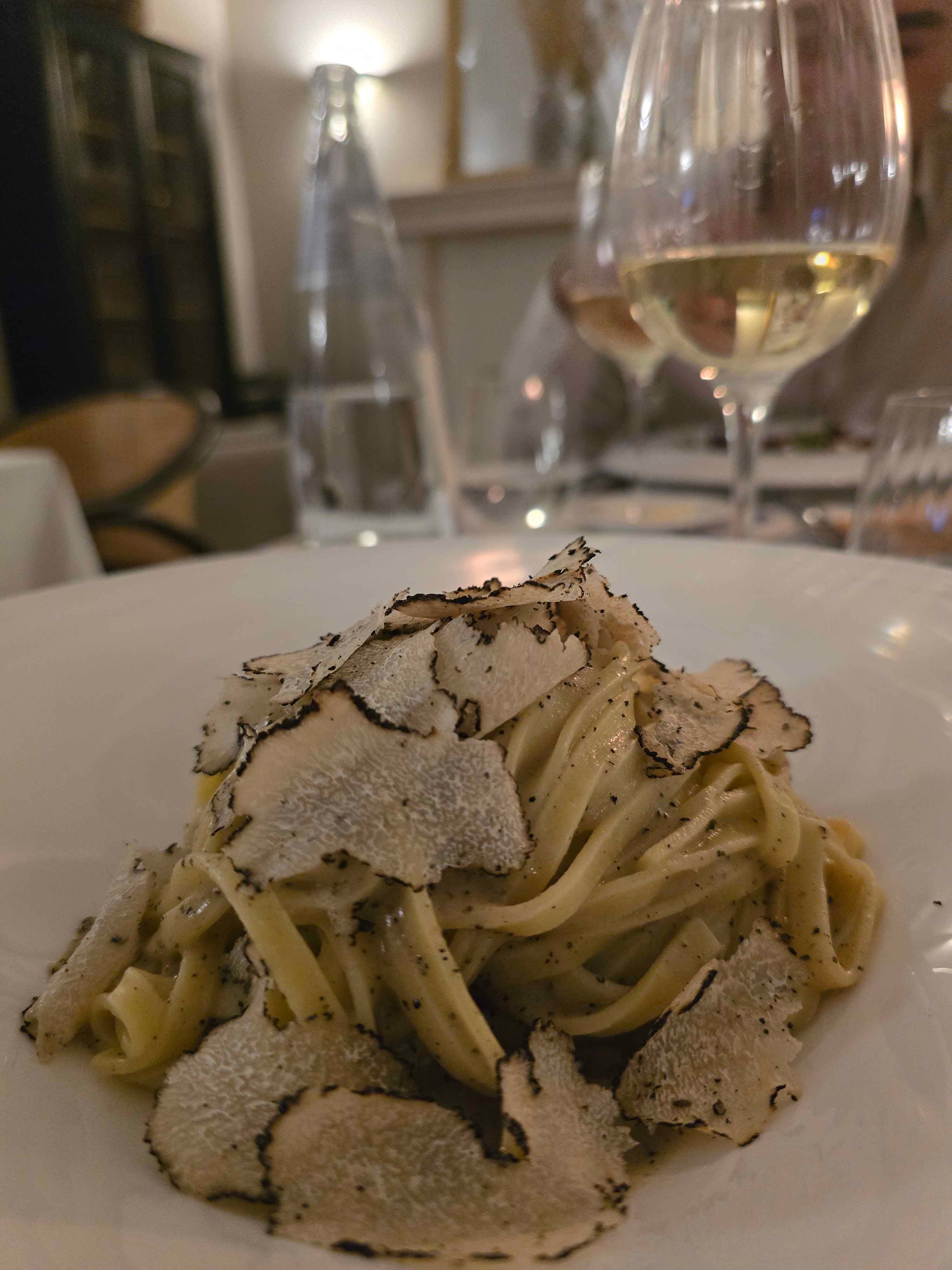
- Truffle pasta — the earthy complexity of truffle amplifies the same notes in the wine. Extraordinary combination.
- Avoid: Delicate fish, cream sauces, anything light and white. The wine overwhelms them.
Frequently Asked Questions
What grapes are in Vino Nobile di Montepulciano?
The wine is made primarily from Prugnolo Gentile, the local clone of Sangiovese, which must make up at least 70% of the blend. The remainder can include other approved varieties such as Canaiolo and Mammolo. Many top producers now make their Vino Nobile from 100% Prugnolo Gentile.
How does Vino Nobile compare to Chianti Classico?
Both are Sangiovese-based Tuscan reds, but Vino Nobile tends to be fuller-bodied with more structured tannins and a slightly more powerful character. Chianti Classico (especially Gran Selezione) can be equally serious and age-worthy, but the best examples often come at similar or higher prices. Vino Nobile has more consistent quality across its producers — there's less variation between the top and bottom of the DOCG than in Chianti Classico.
What are the best vintages for Vino Nobile?
2015, 2016, 2019, and 2021 are the standout recent vintages. 2015 and 2016 are drinking beautifully now and have years ahead of them. 2019 is starting to open up. 2021 is young and needs more time — but shows exceptional promise. Avoid 2002, 2005, and 2014, which were difficult years across Tuscany.
How much does Vino Nobile cost?
At the winery, standard Vino Nobile typically costs €15–25 per bottle. Riserva runs €25–45. Top single-vineyard wines from producers like Dei and Boscarelli can reach €50–80. In restaurants in Montepulciano, expect to pay €30–60 for a bottle. It's excellent value compared to equivalently serious wines from Burgundy, Barolo, or Brunello.
Can you visit the Vino Nobile wineries?
Yes — most wineries in the DOCG accept visits, though booking ahead is strongly recommended, especially in high season (May–October). Visits typically include a tour of the cellar and a tasting of 3–5 wines. Expect to pay €15–30 per person for a standard tasting. Some estates offer more in-depth experiences — vineyard walks, food pairings, blending workshops — at higher prices. I recommend booking directly through the winery's website or contacting them by email. English is spoken at all the major estates.
Where to Stay
If you're planning a serious wine visit, staying in a villa near Montepulciano puts you within 15 minutes of most of the best producers — and means you can taste without worrying about driving.
Molino Nobile** sits in the heart of the Vino Nobile DOCG zone, 10 minutes from the town and surrounded by vineyards. We can help arrange private winery visits and tastings for villa guests. Sleeps 12, heated pool, private chef available.
Browse all properties in our villa directory.
Related Reading
Planning a trip to Montepulciano?
Browse our handpicked villas — pools, vineyard views and everything on your list within easy reach.