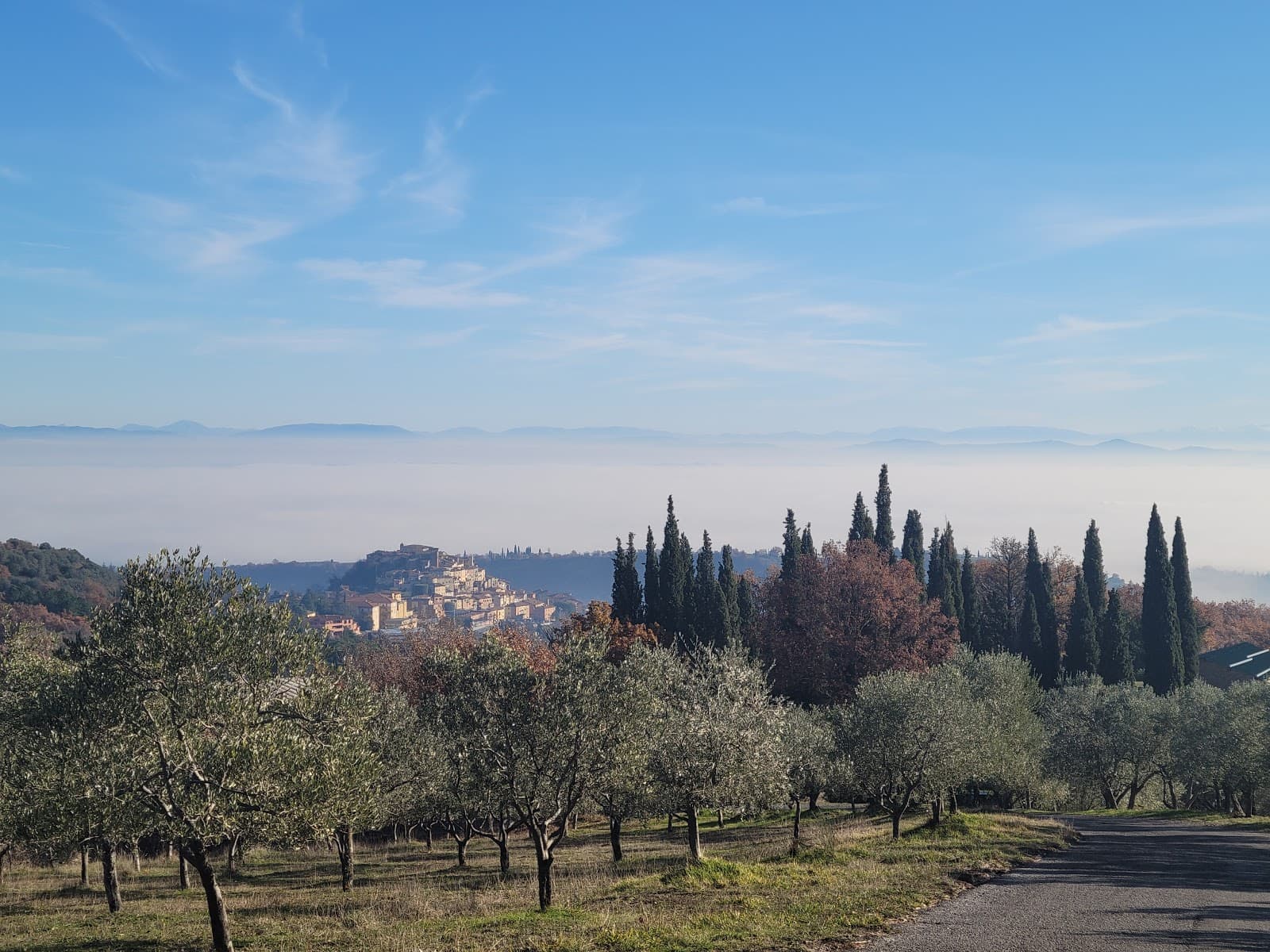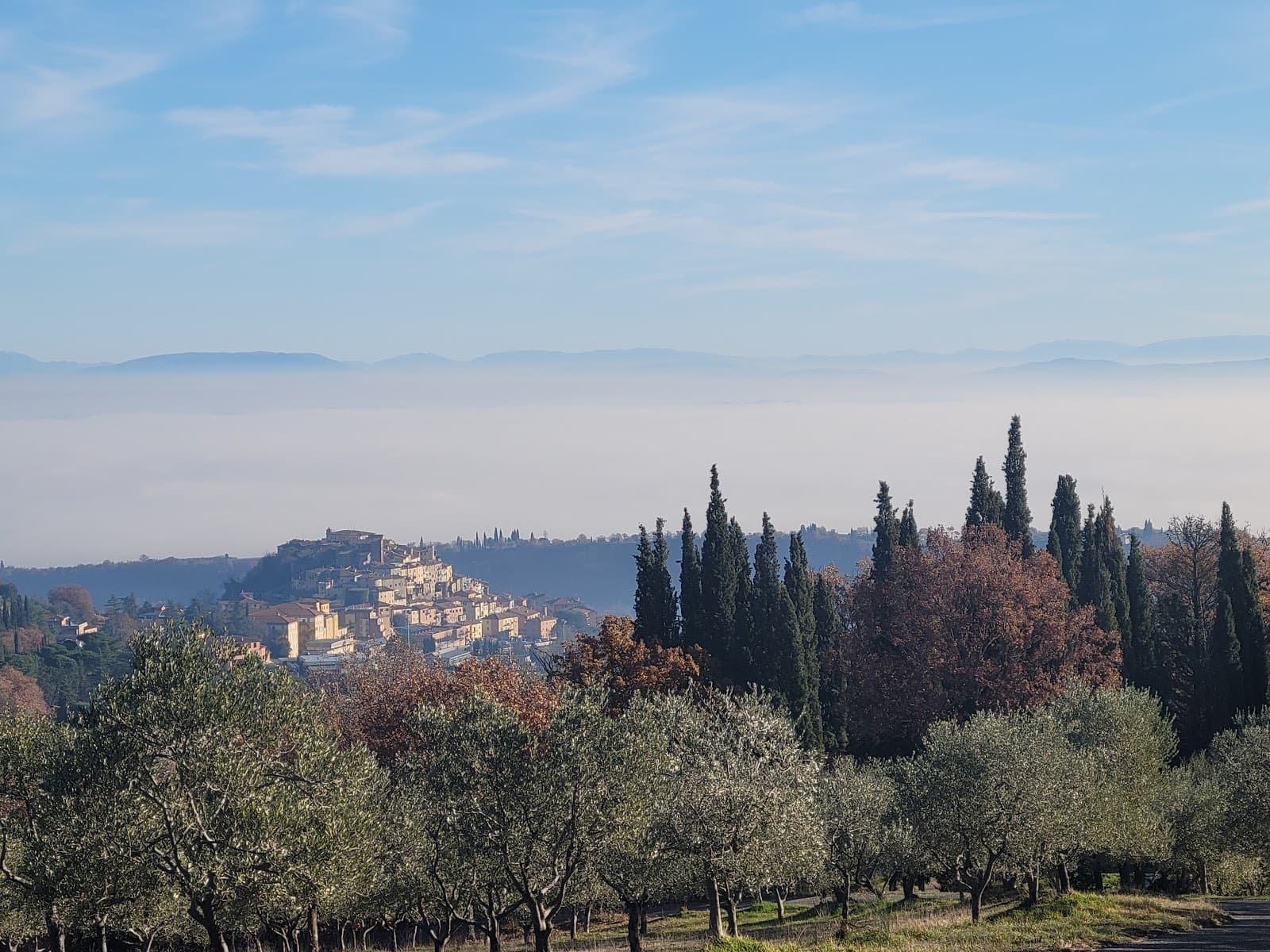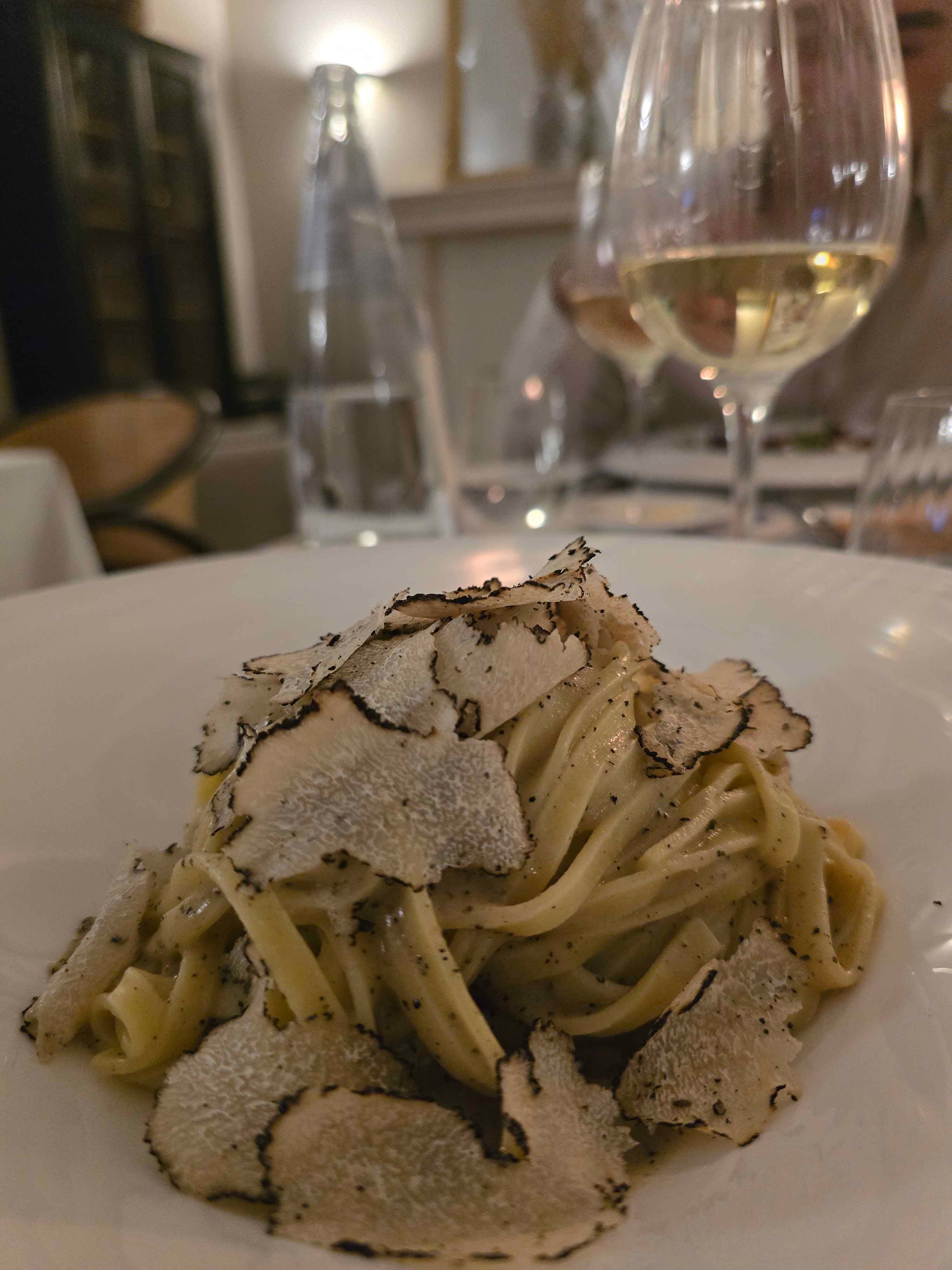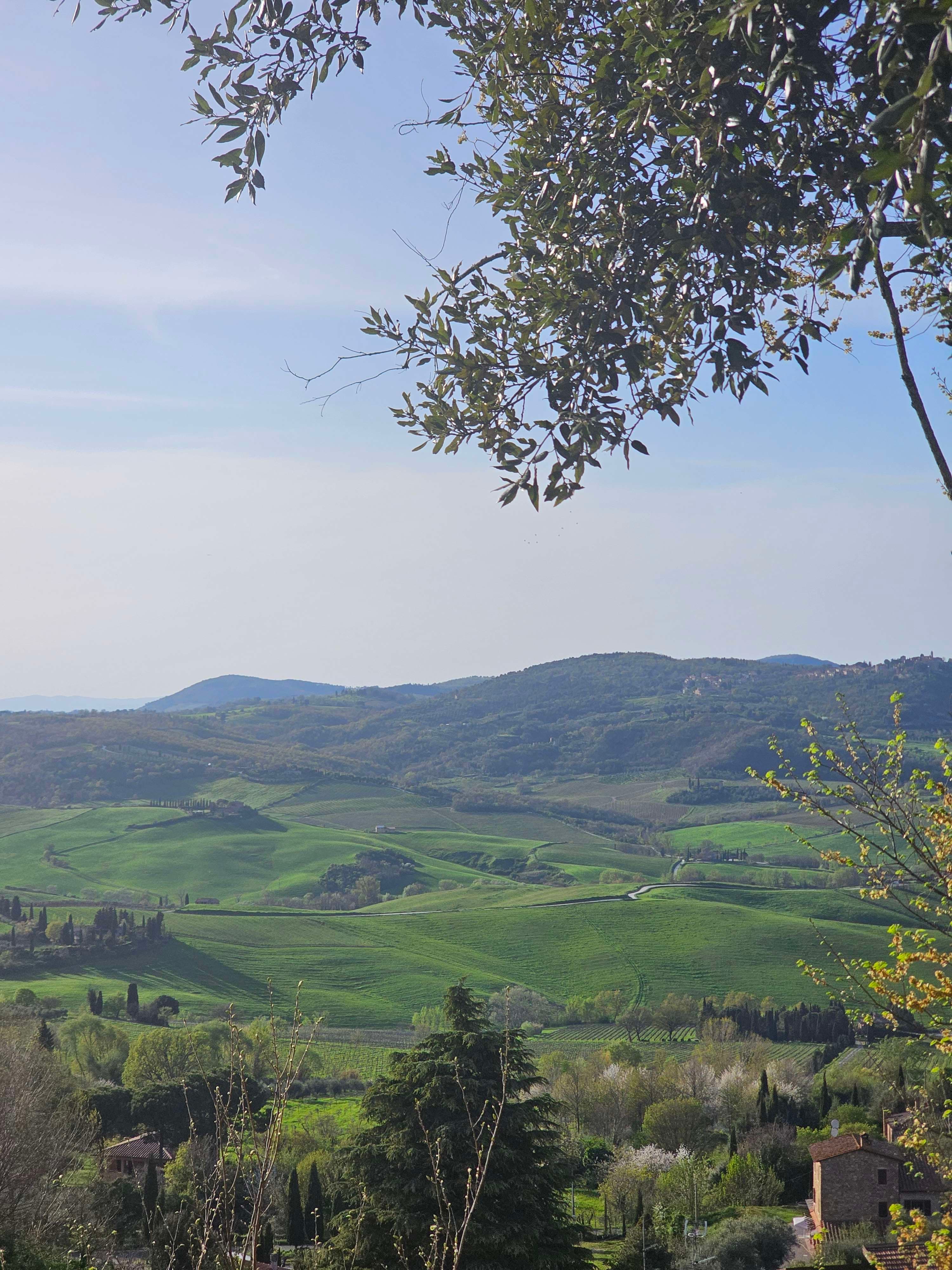
A practical local guide to the best day trips within about an hour of Montepulciano — Pienza, Bagno Vignoni, Montalcino, Cortona, Siena, and the quieter stops worth adding.
The Best Day Trips Within an Hour of Montepulciano
Montepulciano works well as a base because the good day trips are genuinely close. You do not need to spend half the holiday in the car. Within roughly one hour you can reach Renaissance towns, hot springs, wine villages, Etruscan museums, lake swimming, and Siena.
The important caveat is transport. You need a car. Buses exist, but they are too limited for most villa trips and badly timed for days built around lunch, children, wine tastings, or sunset drives. Rent a car, park outside the historic centres, and the whole area becomes easy.
These are the twelve day trips I would actually recommend from Montepulciano if you want to keep the driving sensible.
1. Monticchiello (15 minutes)
Monticchiello is the shortest proper outing from Montepulciano and one of the easiest to underestimate. It is a small walled village above the Val d'Orcia, with stone lanes, a few restaurants, and views that feel much bigger than the town itself.
Do the loop path around the village and up toward the castle ruins, then meander back down through town rather than treating it as a single main street. On a clear day, the views from the top are superb. There is also a small park below the village, which is useful if you have children who need ten minutes that are not another church or viewpoint.
For food, Osteria Fra Paolino is the local name to know. It works for dinner, and also for weekend brunch, with a higher level than you would expect for the price. For a simpler stop, use the café with the view and keep the visit short.
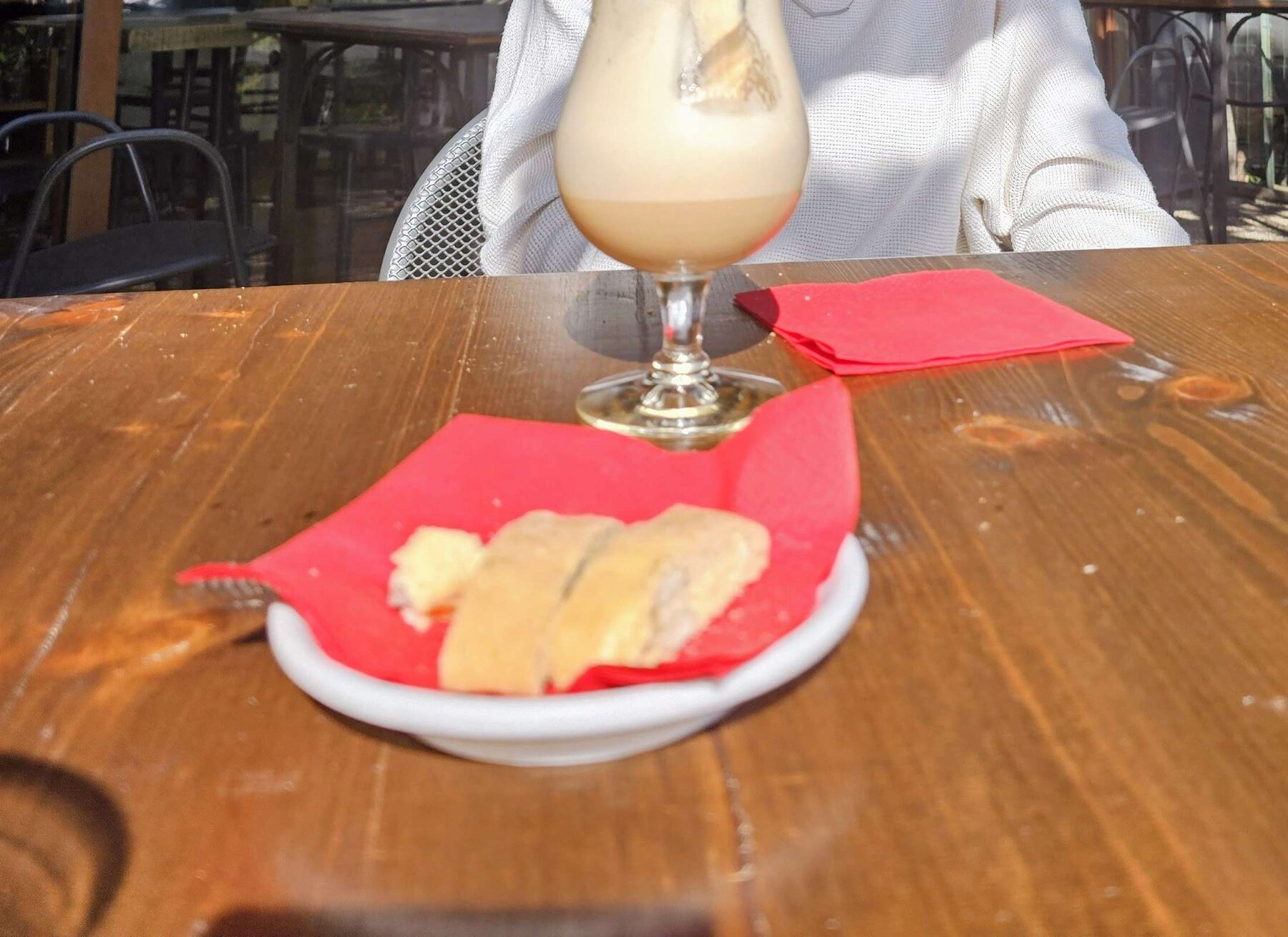
Best for: A village loop walk, castle-ruin views, lunch or dinner, a small kid break.
Drive: About 15 minutes.
Google Maps: Monticchiello, Osteria Fra Paolino, café viewpoint stop
Honest verdict: Too small for a whole day, but much better if you walk the loop and give it time.
2. Chianciano Terme (15 minutes)
Chianciano Terme is not the prettiest town on this list, but it is useful. It has supermarkets, pharmacies, practical services, and thermal facilities close to Montepulciano. For guests staying in a villa, that usefulness matters more than most travel guides admit.
For thermal pools, Piscine Termali Theia is our favourite. It has outdoor and indoor pools, proper kids' areas, a café/bar, and enough space for adults to make it feel like a relaxed half-day rather than a forced family compromise. On some weekends they run theme nights with live music, so check the programme if you are here over Friday or Saturday.
Best for: Thermal baths, kids' pools, errands, rainy-day plans.
Drive: About 15 minutes.
Google Maps: Chianciano Terme, Piscine Termali Theia
Honest verdict: Not beautiful, but Theia makes it one of the easiest family half-days near Montepulciano.
3. Pienza (20 minutes)
Pienza is the easiest essential day trip from Montepulciano. It was rebuilt in the 15th century by Pope Pius II as an ideal Renaissance town, and the result is compact, elegant, and unusually coherent. You can walk the main street quickly, but it is better not to rush it.
Go for the architecture, the views, and the pecorino. The shops along Corso Rossellino sell sheep's milk cheese, yogurt, and local goods; also leave time for the small design and home shops, which are better than the usual souvenir run. Bar Il Casello has one of the best easy-view stops in town, especially if you just want coffee or a drink rather than a long lunch.
Buon Gusto Gelateria is the gelato stop I would treat as mandatory. It is close enough to fold into the normal walk, so there is no reason to save gelato for later.
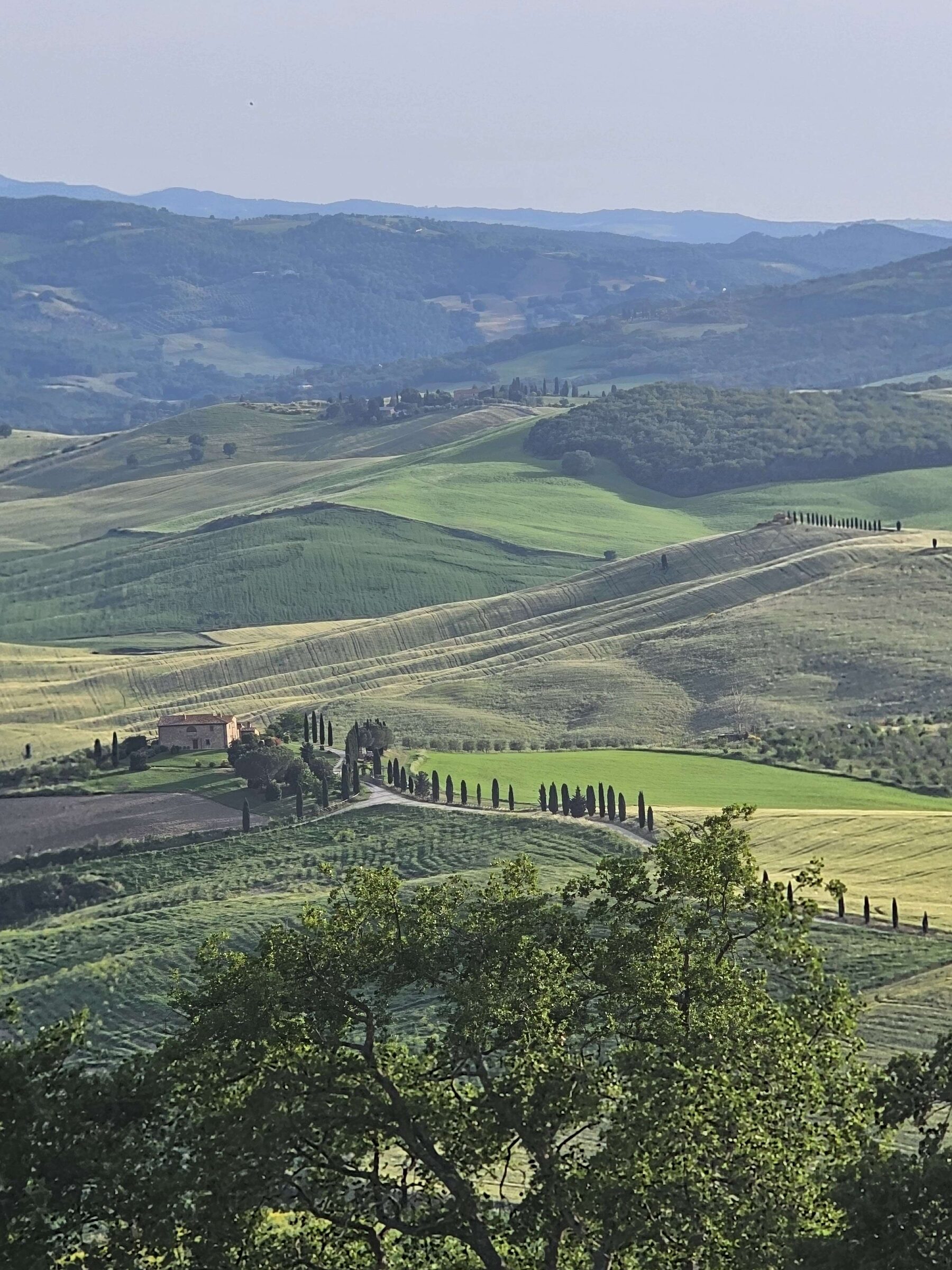
Best for: Renaissance architecture, pecorino and yogurt shops, design shops, gelato, Val d'Orcia views.
Drive: About 20 minutes.
Google Maps: Pienza, Buon Gusto Gelateria, Bar Il Casello, Corso Rossellino
Honest verdict: Essential. If you only do one short day trip, make it Pienza — and do not skip Buon Gusto.
4. San Quirico d'Orcia (30 minutes)
San Quirico d'Orcia is small, calm, and more substantial than it first looks. The Collegiata has excellent Romanesque doorways, and the Horti Leonini garden gives the town a quieter, more lived-in feel than Pienza.
It works best as part of a Val d'Orcia loop: Montepulciano to Pienza, then San Quirico, then Bagno Vignoni, then back through the countryside. That gives you architecture, views, gardens, thermal water, and lunch without a long drive at any point.
Best for: Romanesque architecture, quiet gardens, Val d'Orcia route planning.
Drive: About 30 minutes.
Google Maps: San Quirico d'Orcia, Horti Leonini, Bagno Vignoni
Honest verdict: Worth two hours; better paired with Pienza or Bagno Vignoni.
5. Bagno Vignoni (30 minutes)
Bagno Vignoni is one of the more unusual villages near Montepulciano. The central piazza is a large historic thermal pool, with steam rising from the water in cool weather. You cannot swim in the main pool, but the village has a calm atmosphere and makes a good lunch stop.
Below the village, Parco dei Mulini has the old mill channels and free outdoor thermal water. Conditions change by season, and the rocks can be slippery, so do not treat it like a managed spa. If you want a more comfortable paid thermal day, Posta Marcucci in Bagno Vignoni is the option I would check first, especially outside peak summer. Confirm current day-spa access before you drive over.
Best for: Thermal atmosphere, photos, a gentle half-day.
Drive: About 30 minutes.
Google Maps: Bagno Vignoni, Parco dei Mulini, Posta Marcucci
Honest verdict: Short on major sights, strong on atmosphere.
6. Sarteano (30 minutes)
Sarteano is a good choice when you want somewhere local rather than famous. It has a castle above town, Etruscan history nearby, and a historic centre that still feels like a real town rather than a day-trip stage set.
The Museo Civico Archeologico is the reason to go if you like Etruscan history. Sarteano is also useful for a quieter lunch, a market stop, or a low-pressure morning with children when a big art city would be too much.
Best for: Etruscan history, castle views, quiet local-town atmosphere.
Drive: About 30 minutes.
Google Maps: Sarteano, Museo Civico Archeologico, Sarteano castle
Honest verdict: Not a headline stop, but a good practical alternative to the obvious villages.
7. Chiusi (35 minutes)
Chiusi is one of the best nearby stops for Etruscan history. It is less polished than Pienza and less theatrical than Cortona, but it has real substance: museums, tombs, underground routes, and a town centre that rewards people who are interested in older history rather than only views.
It is also the closest useful train hub for Montepulciano trips, so many guests pass near it without visiting. If you have children who like tunnels, ruins, or anything slightly strange, Chiusi can work better than another pretty hill town.
Best for: Etruscan museums, underground routes, a quieter history day.
Drive: About 35 minutes.
Google Maps: Chiusi, Museo Nazionale Etrusco, Chiusi station
Honest verdict: Best for history-minded travellers; not the prettiest stop.
8. Castiglione del Lago and Lake Trasimeno (40 minutes)
Castiglione del Lago gives you a different landscape: lake water, Umbrian air, and a fortified town on a promontory above Lake Trasimeno. It is useful in summer when the children need something that is not another church or wine town.
The old centre is pleasant, the Rocca del Leone gives good lake views, and the waterfront makes the day feel lighter. Do not expect the Italian seaside. This is a lake town, not a beach resort. But for a swim, a walk, or a simpler lunch by the water, it is a good change of rhythm from the Val d'Orcia.
Best for: Lake views, summer swimming, children, a change of scenery.
Drive: About 40 minutes.
Google Maps: Castiglione del Lago, Rocca del Leone, Lake Trasimeno waterfront
Honest verdict: Good when you need water and space, not another hill town.
9. Cortona (45 minutes)
Cortona is steep, handsome, and more substantial than its Under the Tuscan Sun reputation suggests. It has Etruscan history, churches, museums, and broad views over the Valdichiana toward Lake Trasimeno.
The MAEC museum is the main reason to treat Cortona as more than a lunch stop. The upper town is a climb, so wear proper shoes and do not overpack the itinerary. With children or older relatives, park carefully and accept that Cortona asks more physically than Pienza or San Quirico.
Best for: Etruscan history, museums, steep streets, wide views.
Drive: About 45 minutes.
Google Maps: Cortona, MAEC, Piazza della Repubblica
Honest verdict: Worth it if you want history and views; tiring if you hate hills.
10. Cetona (40 minutes)
Cetona is the off-the-beaten-path version of this list: a lovely, calm town with a broad, flat piazza that works unusually well with children. Have a drink in the piazza, let kids bring bikes or scooters, and use it as a slower alternative to another steep hill town.
If you want movement, hike up toward the top of the hill or take one of the paths out of town through the forest. The restaurants flank the piazza, so dinner is easy without overplanning. Just before arriving into town there is a large park and playground with play structures and enough open space for children or dogs to run around before you sit down.
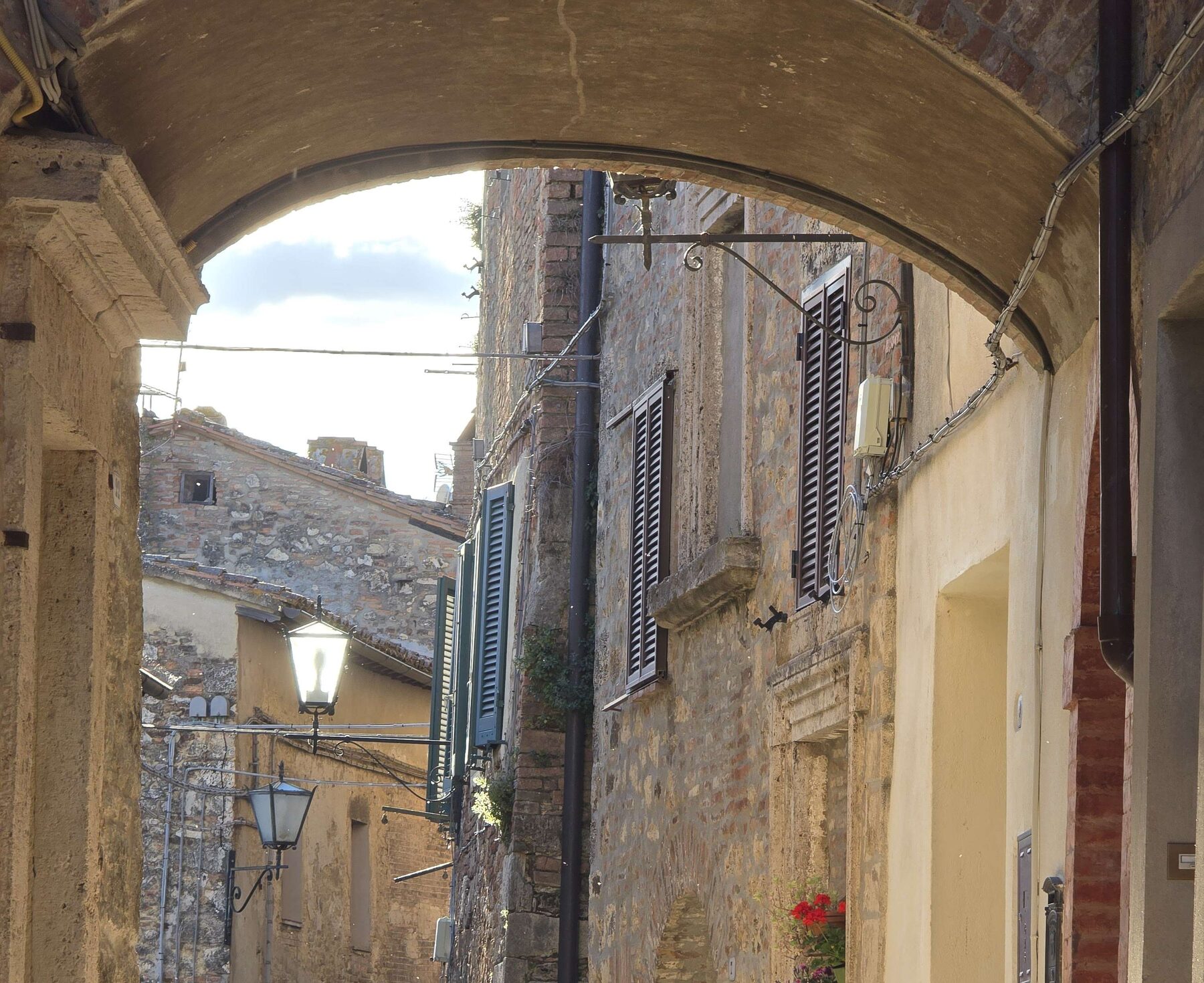
Best for: A drink in the piazza, kids on bikes, forest paths, restaurants, a proper playground stop.
Drive: About 40 minutes.
Google Maps: Cetona, Piazza Garibaldi, park and playground
Honest verdict: A strong family choice when you want somewhere pretty, flat in the centre, and less obvious than the Val d'Orcia towns.
11. Montalcino (50 minutes)
Montalcino is the Brunello town, and it earns a full day if wine is a priority. The town itself is smaller and quieter than Montepulciano, with a fortress, enoteche, restaurants, and long views across the countryside.
If you only want a simple visit, taste Brunello in town and walk the fortress. If wine is the point of the day, book one winery rather than trying to improvise three. Brunello estates are spread out, many require appointments, and nobody should be pretending to taste seriously and drive all afternoon.
Best for: Brunello, fortress views, a wine-focused day.
Drive: About 50 minutes by the scenic route.
Google Maps: Montalcino, Fortezza di Montalcino
Honest verdict: Essential for wine lovers; otherwise a good but not mandatory hill-town day.
12. Siena (about 1 hour)
Siena is the biggest day trip I would still keep on this under-an-hour list. Depending on route, traffic, and where you park, treat it as roughly an hour each way rather than a quick hop. It is worth the effort.
The Piazza del Campo is one of Italy's great civic spaces, and the Duomo is extraordinary. If you care about medieval art, Siena can easily absorb a full day. If you are visiting with children, keep it simple: Piazza del Campo, Duomo exterior or interior, lunch, gelato, then leave before everyone is finished.
Park outside the ZTL. Parcheggio Il Campo and Parcheggio San Francesco are practical options, but check the route before you arrive and do not follow a satnav blindly into the historic centre.
Best for: Medieval architecture, the Duomo, art, a proper city day.
Drive: About 1 hour.
Google Maps: Siena, Piazza del Campo, Duomo di Siena, Parcheggio Il Campo
Honest verdict: Essential, but plan it as a full day rather than a casual add-on.
Bonus: Arezzo (just over 1 hour)
Arezzo sits just outside the strict under-one-hour promise from Montepulciano, but it deserves a shout-out — especially on the first weekend of the month, when the huge Arezzo Antiques Fair fills Piazza Grande and the surrounding streets. If you like antiques, objects, old furniture, prints, frames, or just a city with more scale than the Val d'Orcia villages, this is the one to time your trip around.
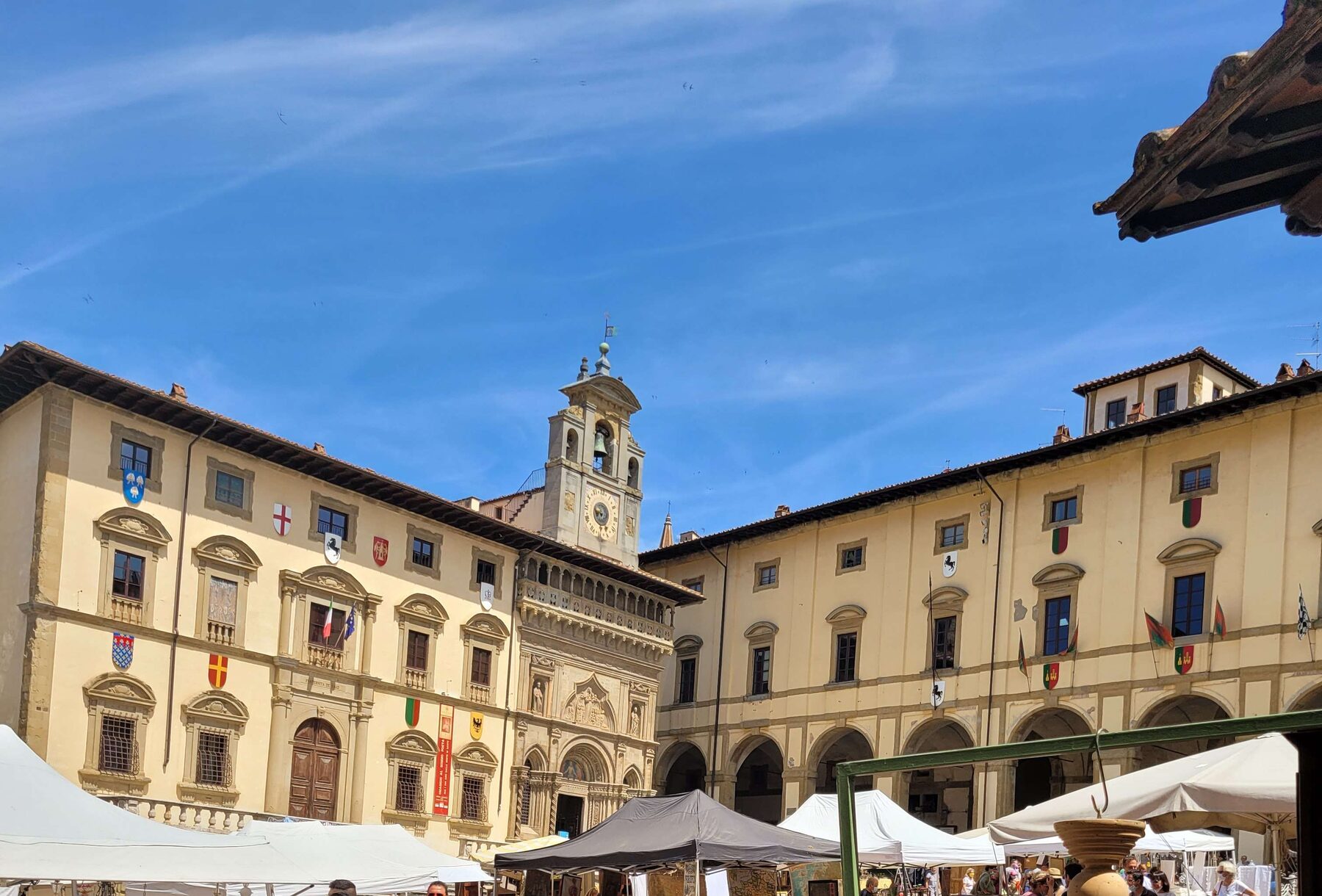
It is not the best choice for a lazy half-day: the drive is longer, parking takes thought, and the city is bigger. But for adults, older kids, design-minded travellers, or anyone who likes markets, Arezzo gives you a completely different rhythm from Pienza or Montalcino.
Best for: Antiques, markets, design finds, a bigger Tuscan city, first-weekend timing.
Drive: About 1 hour 5 minutes.
Google Maps: Arezzo, Piazza Grande, Arezzo Antiques Fair
Honest verdict: Just over the line for this list, but worth it if your dates hit the antiques fair.
How to Choose the Right Day Trip
If it is your first time in the area, start with Pienza, Bagno Vignoni, and Montalcino. That gives you the Val d'Orcia, thermal water, and the wine-country contrast with Montepulciano.
With children, I would put Theia in Chianciano, Cetona, Castiglione del Lago, Bagno Vignoni, and Sarteano higher than the art-heavy towns. With wine-focused adults, choose Montalcino and keep the rest of the day light. With history-minded guests, Chiusi, Cortona, Siena, and Arezzo are the stronger choices.
Do not try to do four towns in a day. Two is usually enough. Three can work if they are genuinely close — for example Pienza, San Quirico, and Bagno Vignoni — but only if you keep lunch simple and leave room for parking, heat, and tired children.
Practical Notes for Day Trips from Montepulciano
Car is essential: Public transport is too awkward for most of these routes. A car gives you mornings, lunch stops, supermarket runs, and the option to leave when children or grandparents are done.
ZTL zones: Most historic centres restrict traffic. Park outside and walk in. Fines can arrive months later, and the signs are easy to miss if you are following Google Maps too literally.
Parking: For Montepulciano itself, use P1 Porta al Prato, P6, or P7 first. For other towns, look for signed public parking before the old centre rather than trying to reach the main square.
Lunch timing: Restaurants usually serve lunch around 12:30-2:30pm, often with last orders earlier than visitors expect. If there is one place you care about, book it.
Wine and driving: If you are visiting wineries, book fewer tastings and appoint a driver. For a serious wine day, consider arranging a driver rather than pretending small pours do not count.
Frequently Asked Questions
What is the best day trip from Montepulciano under one hour?
For most visitors, Pienza is the best first choice. It is close, beautiful, easy to park for, and gives you the classic Val d'Orcia experience without a complicated day. Siena is the best larger day trip, but it needs more energy.
Can you visit Siena as a day trip from Montepulciano?
Yes. Treat Siena as roughly one hour each way, depending on route, traffic, and parking. It is a full-day trip, not something to bolt onto another town.
Do I need a car for these day trips?
Yes. A few towns have bus connections, but they are not practical enough for most holiday itineraries. With a villa stay, children, groceries, restaurants, and day trips, a rental car is the sensible choice.
Which day trips are best with children?
Theia in Chianciano, Cetona, Castiglione del Lago, Bagno Vignoni, Sarteano, and Pienza are usually easier with children than art-heavy museum days. Siena can work, but keep the plan short and do not try to see everything.
Which day trips are best for wine?
Montalcino is the obvious wine day trip because of Brunello. Pienza and the Val d'Orcia pair well with relaxed wine bars and food stops, but if you want winery appointments, plan the driving carefully.
Can I do Pienza, San Quirico, and Bagno Vignoni in one day?
Yes. That is one of the best short loops from Montepulciano. Leave after breakfast, stop in Pienza, continue to San Quirico, have lunch or a thermal stop in Bagno Vignoni, then drive back before dinner.
Where to Stay
Molino Nobile** works well for this kind of trip because you are outside the tight historic centre but still close to Montepulciano, Pienza, the Val d'Orcia roads, Chianciano, and the A1 corridor.
It sleeps 12 across 6 bedrooms, with a heated pool, jacuzzi, private parking, and vineyard views. That matters after day trips. You can do Siena or Montalcino in the morning, then come back to the pool instead of fighting for a hotel room in a hot town centre.
You can also browse the full villa directory for other Montepulciano-area stays.
Related Reading
Planning a trip to Montepulciano?
Browse our handpicked villas — pools, vineyard views and everything on your list within easy reach.