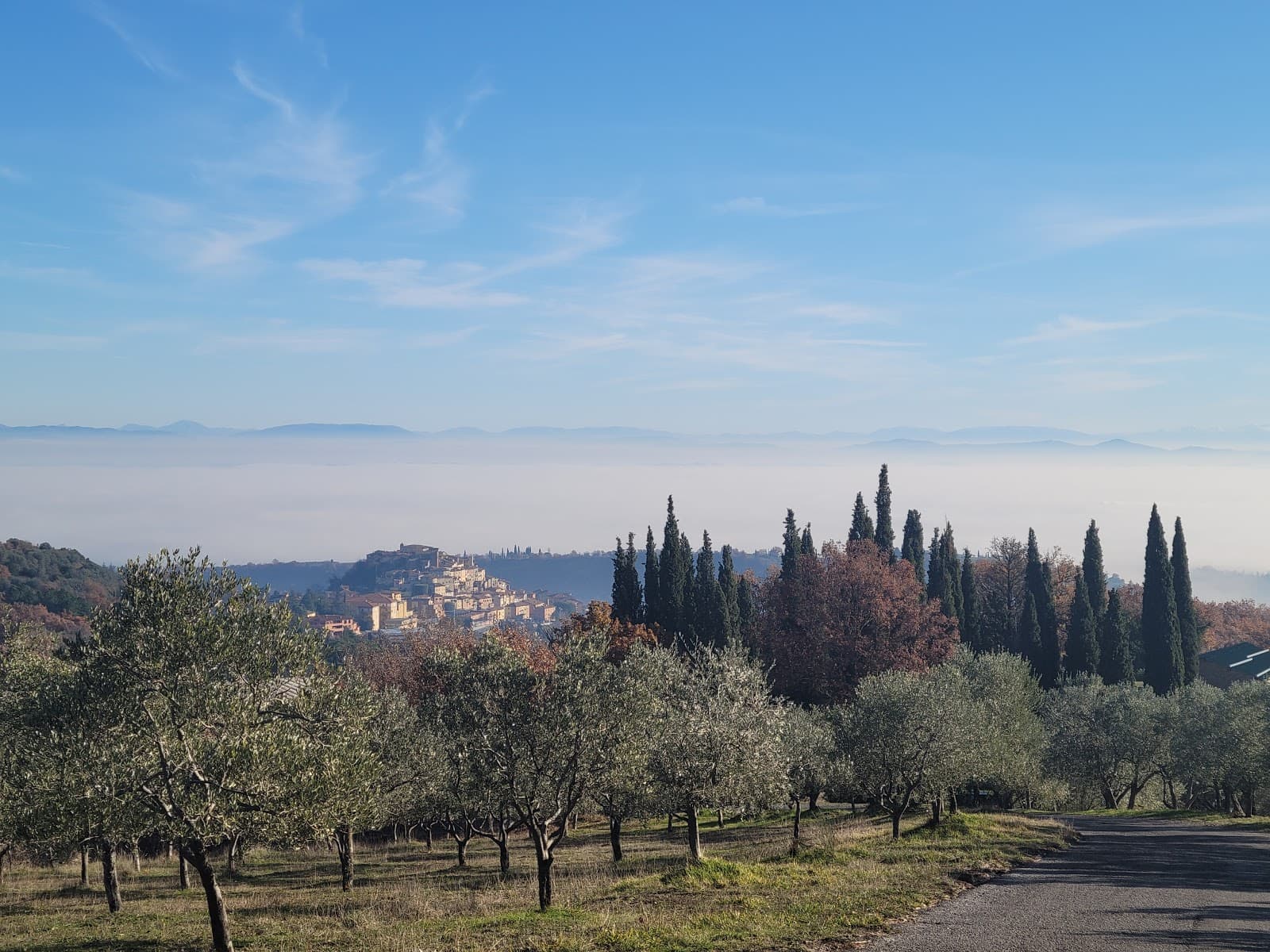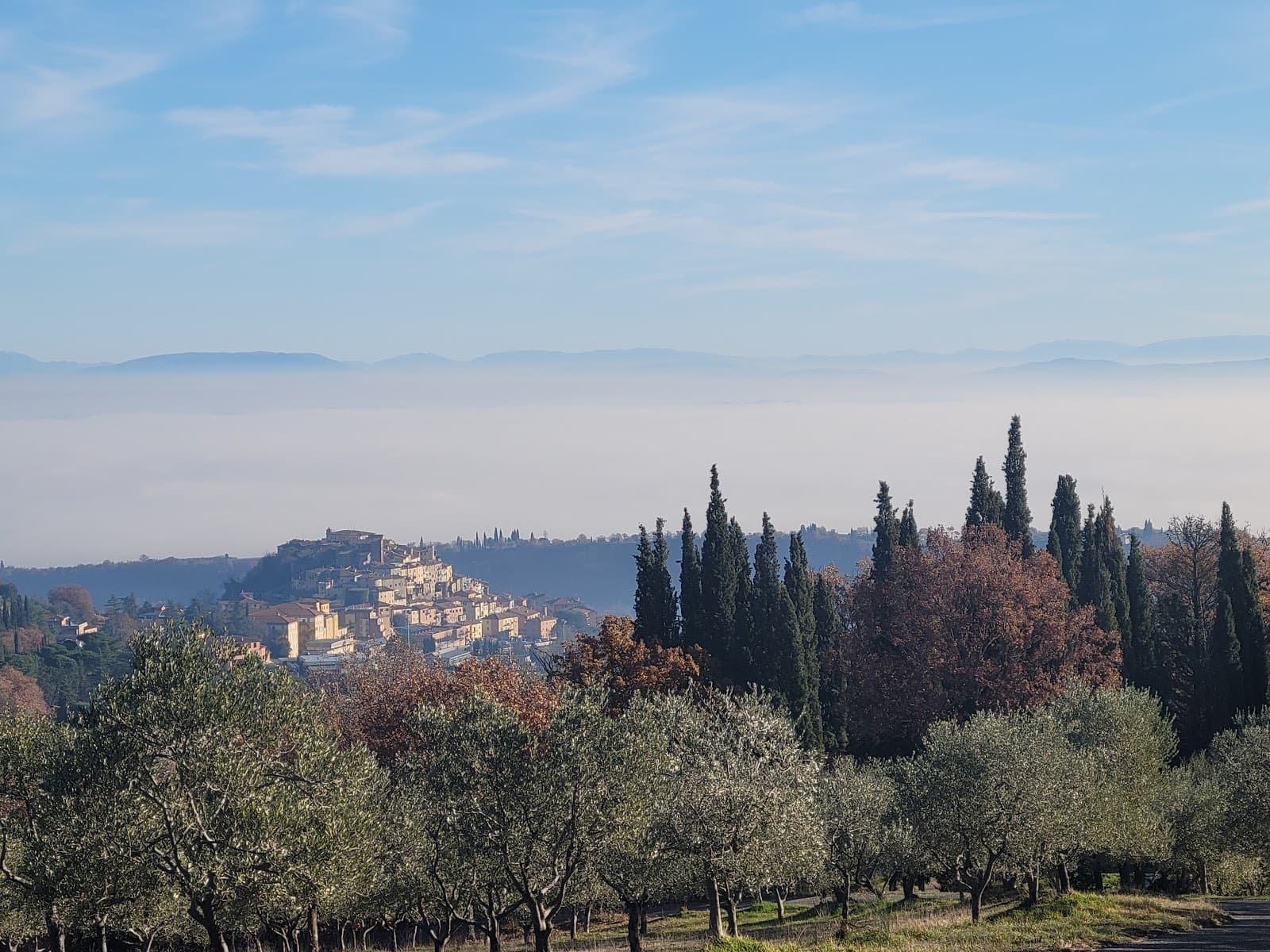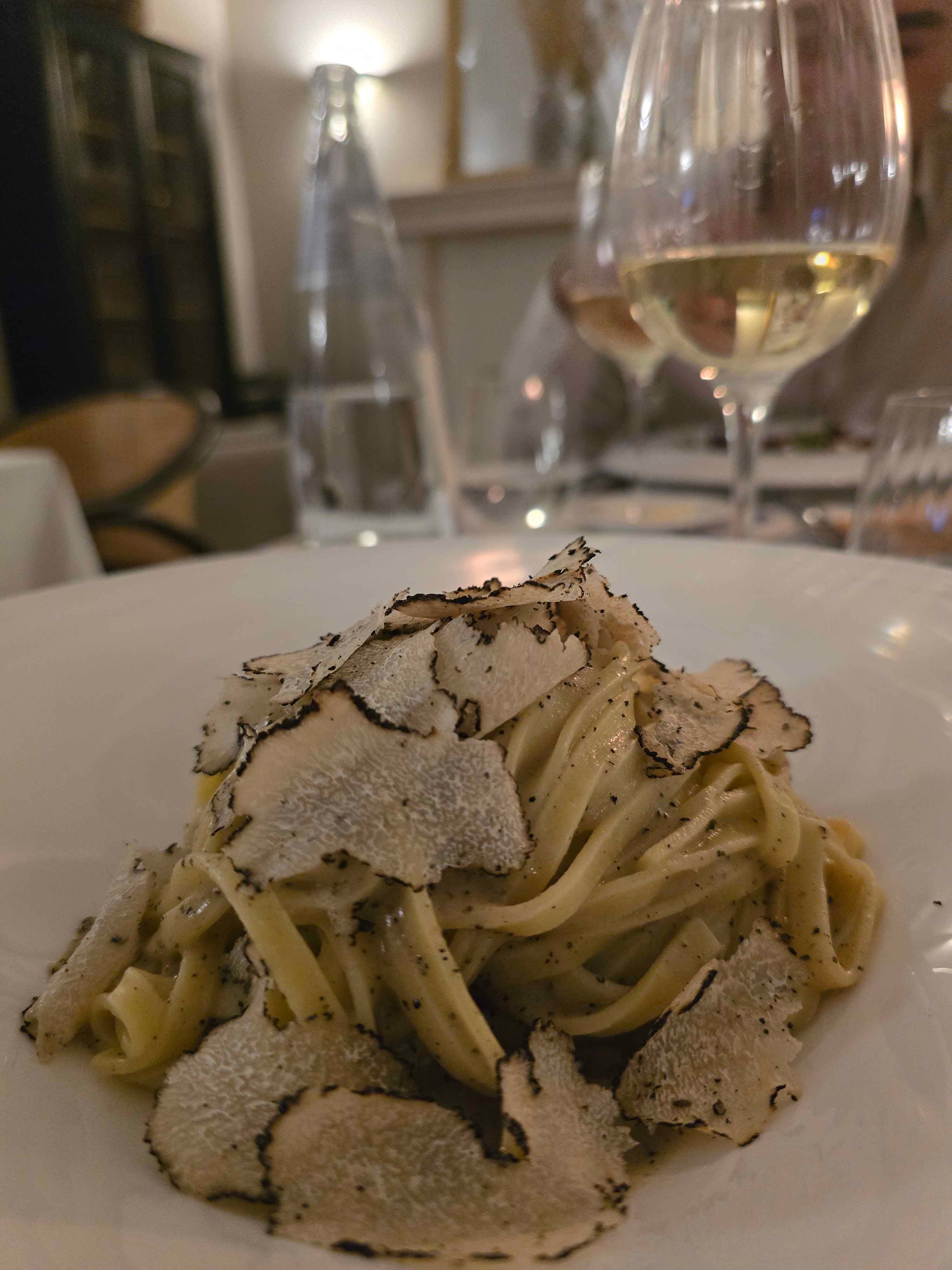
A practical driving day through Buonconvento, Monte Oliveto Maggiore and Asciano, with a choice of Site Transitoire at sunset or Rapolano's thermal baths.
Crete Senesi Day Trip from Montepulciano: The Short Answer
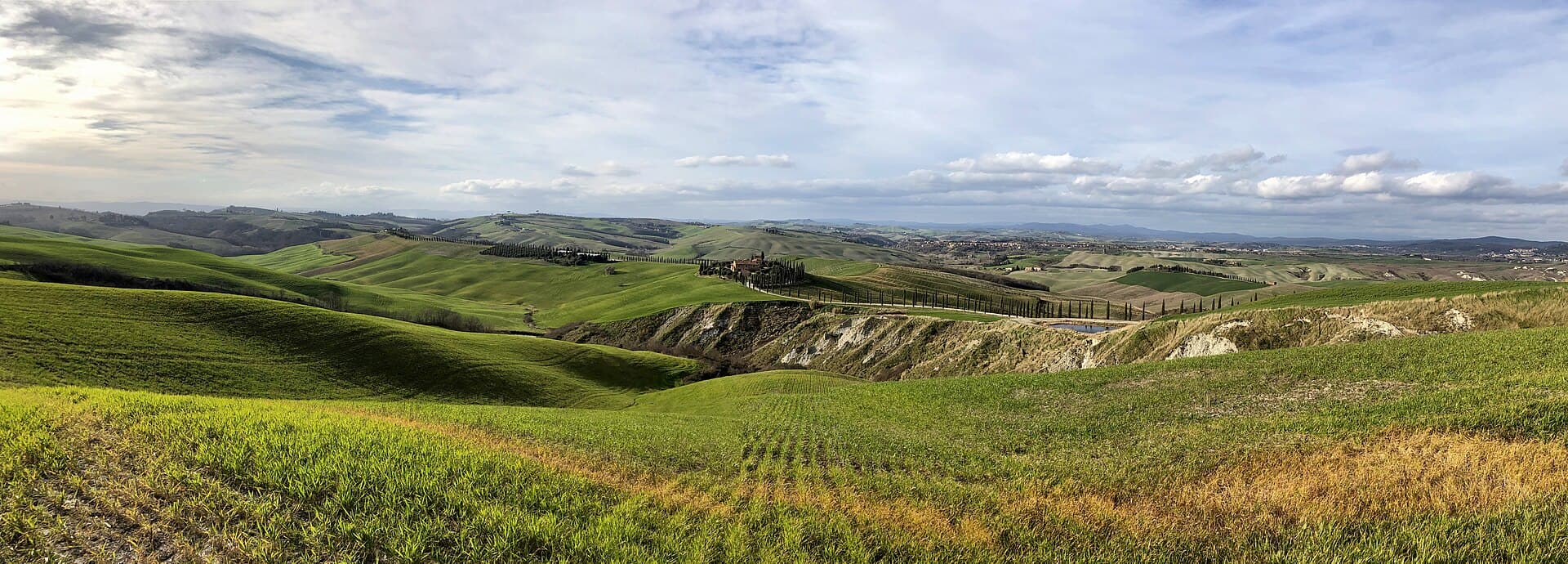
The Crete Senesi are the clay hills southeast of Siena: bare ridges, eroded gullies, isolated farmhouses and long, empty roads. They look nothing like the vineyards and cypress avenues around Montepulciano, which is the main reason to come.
The core route is Buonconvento in the morning, the Abbazia di Monte Oliveto Maggiore before its midday closure, and lunch and a slow afternoon in Asciano. You then choose one ending: sunset at Site Transitoire or a booked thermal session in Rapolano Terme. San Giovanni d'Asso is an optional village detour.
You can't comfortably do all six stops in one day, so don't try.
Landscape photograph: Einaz80 / Wikimedia Commons, CC BY-SA 4.0.
Is This Day Trip Worth It from Montepulciano?
It's worth it if you've already done the obvious southern Tuscany days and want something quieter. It's not the day I'd put first on a short trip.
From Montepulciano, this is a longer driving day than the Pienza, San Quirico and Bagno Vignoni loop. The Val d'Orcia stops sit close together. The Crete Senesi stops are spread over a wider area, linked by winding provincial roads. The driving is part of the experience, but it still counts as driving.
If you have three or four days, prioritise Montepulciano itself and the Val d'Orcia. If you have a week, this quieter day adds a different landscape to the trip.
What the Crete Senesi Actually Are
"Crete" means clay. The landscape is made of pale, easily eroded soil that forms rounded hills, sharp gullies (calanchi) and small whitish mounds (biancane). There are few trees, few villages, and wide open views.
How it looks depends on the season. Spring is green with young wheat. Early summer turns gold. After harvest and ploughing, the hills can look brown, grey or almost lunar. Some people find the late-summer version bleak. Others think it's the most striking, so decide for yourself.
Don't expect a picturesque village every ten minutes. The appeal here is space.
You Need a Car (and a Plan for Parking)
A car is essential. Public transport doesn't connect these stops in any practical way for a day trip from a villa.
A few practical points:
- Park outside historic centres. Buonconvento and Asciano are small, but treat any restricted-traffic signs seriously, the same way you would in Montepulciano.
- At the abbey, expect to walk from the parking area to the monastery buildings. Wear proper shoes.
- Don't stop on bends for photos. The views tempt you to pull over anywhere. Only use proper lay-bys or wide verges, and never block farm tracks or gates.
- Fill up before you go. Petrol stations are sparse on the back roads.
- Check your route the night before in Google Maps. Different road choices change the day a lot, and roadworks on minor roads are common.
The Route at a Glance
Core day:
1. Montepulciano → Buonconvento (morning walk, optional museum)
2. Buonconvento → Monte Oliveto Maggiore (arrive well before the midday closure)
3. Monte Oliveto Maggiore → Asciano (lunch, Palazzo Corboli, the old centre)
Then choose one ending:
- Ending A: Site Transitoire for late light and sunset, then the drive home.
- Ending B: Rapolano Terme for a booked thermal session, which also points you back toward Montepulciano.
Optional: San Giovanni d'Asso, either instead of Buonconvento or as a short stop when your chosen route passes nearby.
Build the day around opening hours and your chosen ending, not a desire to tick every town off a map. The pins below identify actual places and public car parks, rather than searches for road names. The interactive map shows the two driving loops; tap a pin for its exact place page. Site Transitoire is marked separately as a walk-only detour, not a driving destination.
Open the verified loops directly in Google Maps: core loop via Buonconvento, the abbey and Asciano, or the same loop with Terme San Giovanni. These start and finish at P1 outside Montepulciano's ZTL; substitute your accommodation as the starting point if easier.
Stop 1: Buonconvento
Buonconvento sits in the flat Arbia valley rather than on a hilltop. That makes it an easy first stop: use Parcheggio Gratuito Buonconvento, walk in, and see the whole walled centre in under an hour.
The main street runs through a compact medieval core enclosed by brick walls. It's quiet, tidy and unshowy. It's a good place for a morning coffee before the more demanding stops.
If you like Sienese painting, the Museo d'Arte Sacra della Val d'Arbia is the reason to stay longer. It's a small museum of religious art gathered from churches in the surrounding valley. Check current opening days before you plan around it. Small museums in this area often run on seasonal or limited schedules.
Honest verdict: Pleasant, easy and worth a short stop. Skip it if you're short on time or want to add San Giovanni d'Asso instead.
Stop 2: Abbazia di Monte Oliveto Maggiore
The Abbazia di Monte Oliveto Maggiore is the main reason for this day. It's a large brick monastery set among cypresses on a ridge above eroded clay slopes, and the setting is as striking as the building.
The highlight is the great cloister, painted with a fresco cycle of the life of Saint Benedict by Luca Signorelli and Sodoma. You can walk the whole cycle panel by panel. Give it time. The frescoes are full of detail, humour and everyday life, and they're easy to rush.
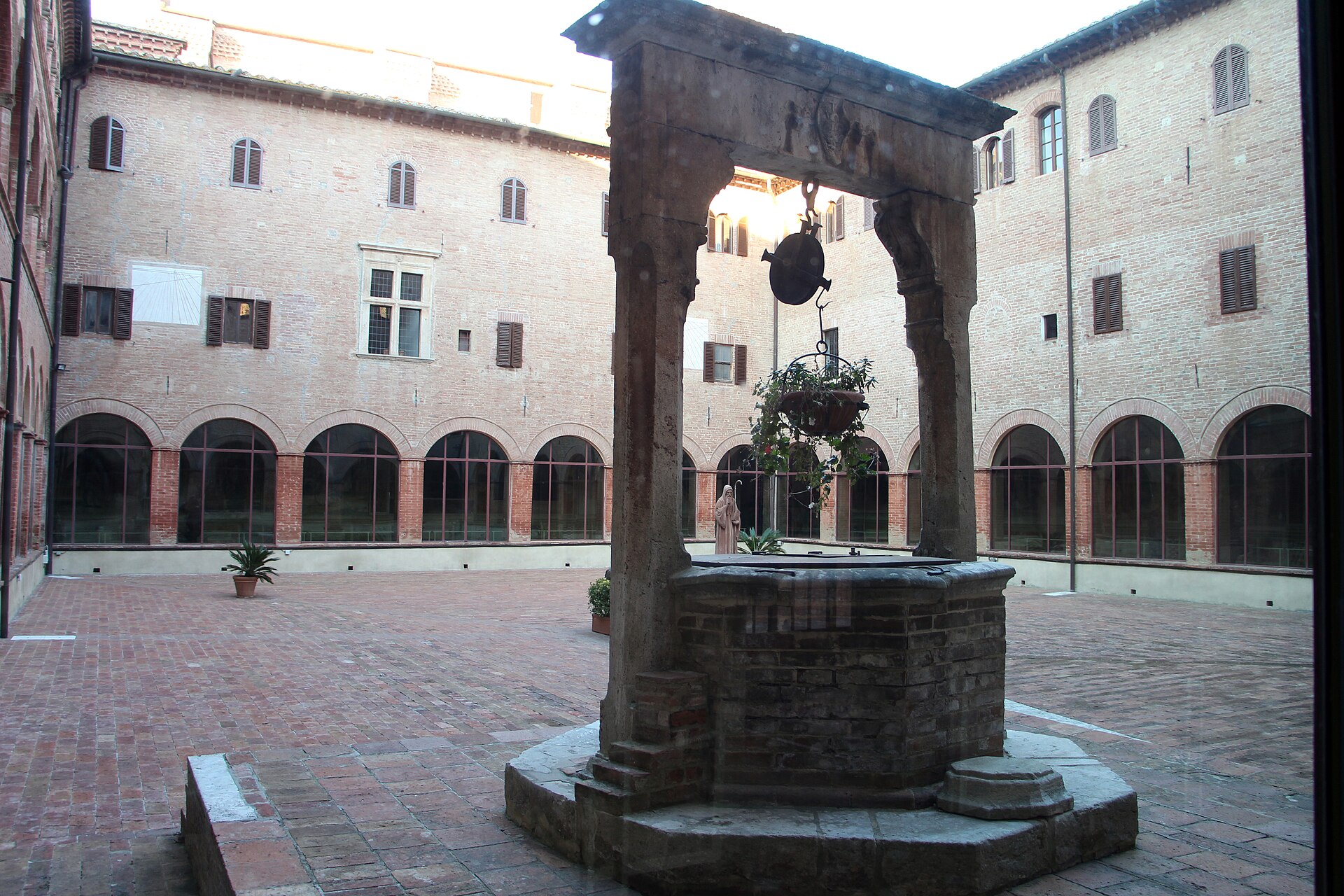
Photo source and licence · CC BY 3.0.
Opening hours differ between winter and summer, and there is a midday closure. This matters more than anything else on this route. Arrive in the morning with time to spare, or plan to come back in the afternoon. Check the official page before travelling: monteolivetomaggiore.it opening hours.
Visiting a Living Monastery: What to Expect
Monte Oliveto Maggiore is a working Benedictine monastery, not a museum that happens to have monks. That changes how you should behave there.
- Dress modestly. Cover your shoulders and don't wear very short shorts.
- Keep your voice down, especially in the church and cloister.
- Respect closed areas and any schedules tied to prayer.
- Children are fine if they can handle quiet. This isn't the place for a restless half-hour.
If your group is tired or hungry, visit the abbey before lunch rather than after. It deserves attention.
Stop 3: Asciano
Asciano is the natural centre of the Crete Senesi. It's a real working town rather than a showpiece village, which I think is part of its appeal. It's a good place to slow down after the abbey.
The main cultural stop is the Museo Civico Archeologico e d'Arte Sacra Palazzo Corboli at Corso Matteotti 122. It combines medieval frescoed rooms, Sienese sacred art and local archaeology. Parcheggio Via Fiume is a public parking pin outside the old centre. Hours are seasonal and the museum is closed on Tuesdays, so check the current schedule on the Fondazione Musei Senesi page before you go.
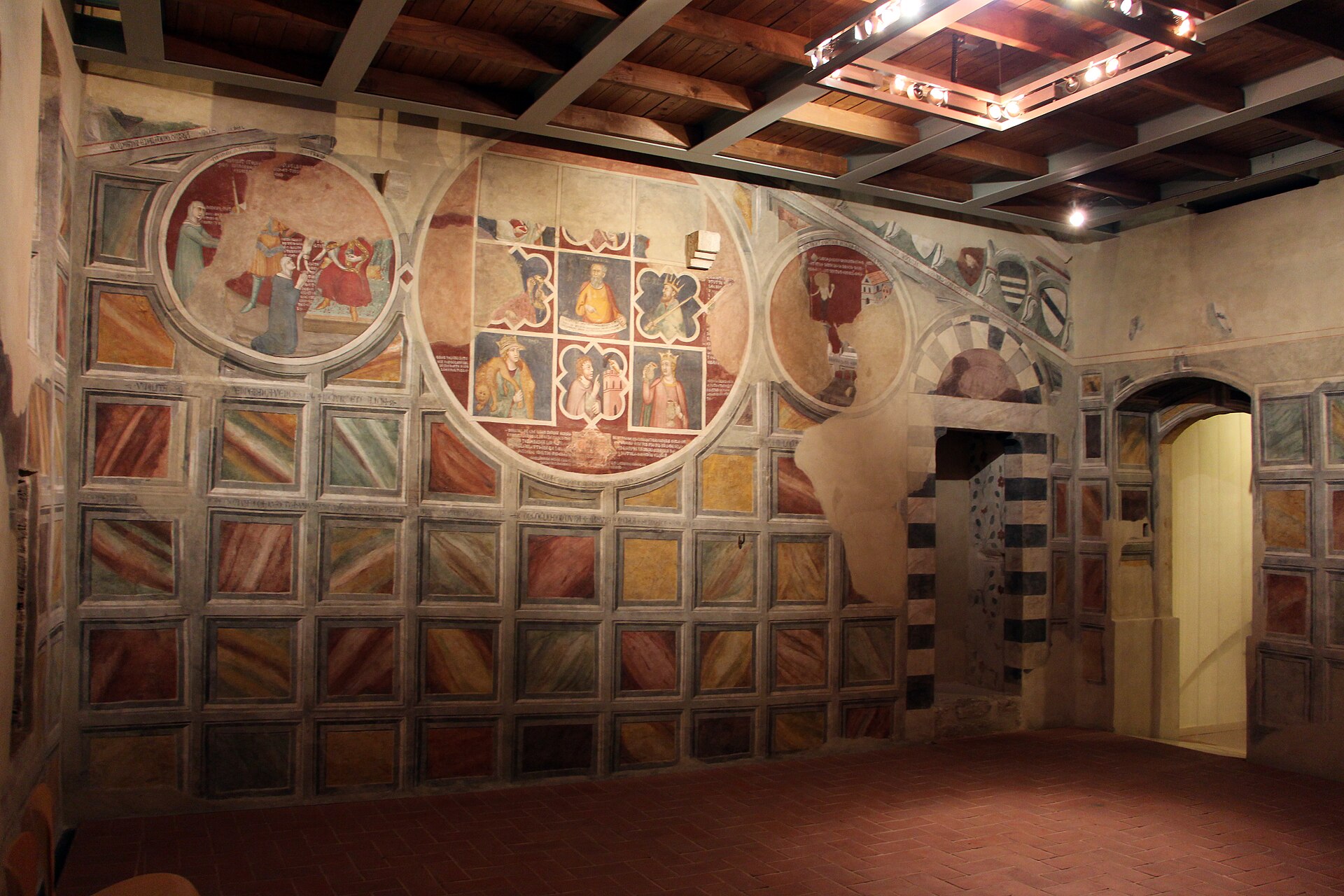
Photo source and licence · CC BY 3.0.
Also walk up to the Collegiata di Sant'Agata, the town's main church, then back along Corso Matteotti.
Lunch in Asciano
Asciano is the sensible lunch stop on this route. It has more options than the villages, and it sits between the abbey and either ending.
Check which restaurants are actually serving lunch on your travel day rather than counting on a dinner-only pizzeria. Small-town kitchens may close one weekday or stop lunch service earlier than visitors expect.
A picnic is a reasonable alternative. Buy supplies before you leave Montepulciano or in Asciano, and eat somewhere shaded.
Choosing Your Ending
This is the most important decision of the day. The two endings pull in different directions, and each one works best when it isn't rushed.
- Choose Site Transitoire if you want open landscape, art and late light, and don't mind driving home after sunset.
- Choose Rapolano Terme if you want to finish in warm water and head back toward Montepulciano at a reasonable hour.
Doing both usually means cutting one short. The sunset ending is time-specific, and a thermal session needs a booking and a proper block of time. Pick one.
Ending A: Site Transitoire at Sunset
Site Transitoire is a 1993 stone installation by the French sculptor Jean-Paul Philippe, set in open countryside near Asciano and the hamlet of Mucigliani. It's a simple arrangement of stone forms framing the horizon, and its impact comes from its placement in the landscape. It's particularly beautiful at sunset.
Do not drive to the sculpture pin. The local visitor guidance prohibits motor vehicles and parking at the work itself. For the longer Biancane di Leonina walking loop, the Siena-area route guide says to park in the marked space just after turning off the SS408 at the signed Leonina junction, then continue on foot. That full loop is listed at 6 km, so it is a separate hike rather than a quick pull-over at sunset. Check signs and walking time on arrival; don't assume the art is beside the road.
- Do not follow car directions to the Google Maps sculpture pin. That route can include restricted or private tracks. The map above leaves the sculpture off the driving line deliberately.
- After rain, clay paths can be slippery. Choose the thermal ending if the weather is poor.
- Bring a torch or phone light if you stay for sunset, and allow for the walk back before driving home in the dark.
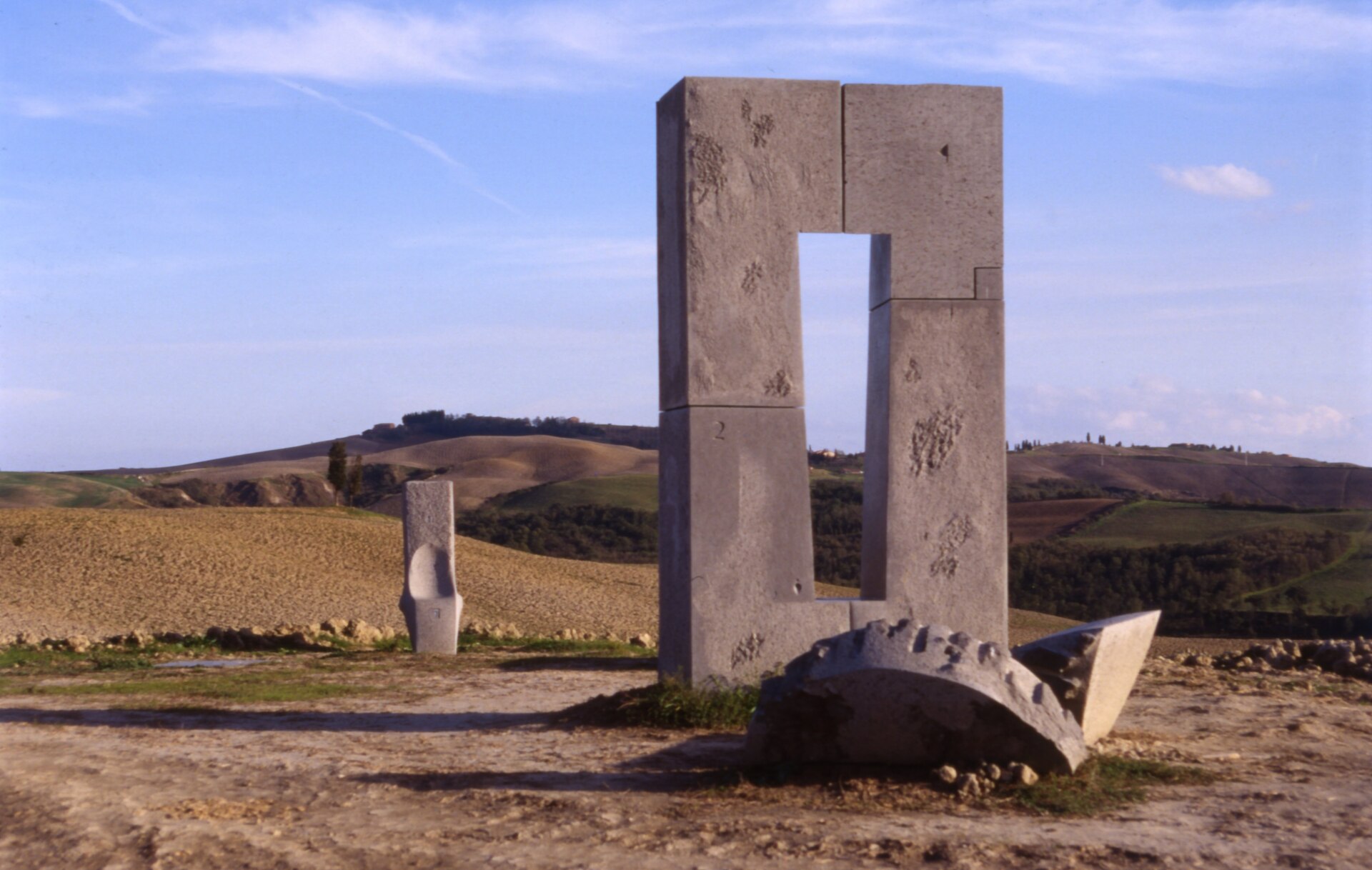
Photo source and licence · CC BY-SA 4.0.
Site Transitoire Is Not a Playground
Site Transitoire is a work of art in a farmed landscape. It isn't a picnic table, climbing frame or photo prop.
The artist permits sitting on the chair, but not climbing on the structures or placing objects on them. No picnic, fires or camping at the sculpture. Keep to the paths, respect the surrounding wheat fields and leave nothing behind.
If your children need somewhere to run around, choose the Rapolano ending instead.
Ending B: Rapolano Terme and the Thermal Baths
Rapolano Terme is a thermal town on the northeastern edge of the Crete, and it usually makes the more practical ending for the drive home.
The main option here is Terme San Giovanni. It's a paid, managed thermal establishment, not a free wild spring like Bagni San Filippo. Day access, time slots, prices and booking rules can change by season and weekday, so check the official site before you commit: termesangiovanni.it.
Terme San Giovanni also has a restaurant, so a late lunch or early dinner on site is a possibility. Check current service times, because they don't always match the pool hours.
Rapolano has a second thermal establishment, Terme Antica Querciolaia, which some visitors prefer. Compare current pools, prices and booking rules before deciding.
A few practical points for either one:
- Book ahead, especially on weekends and holidays. Locals use these baths too, and Saturday afternoons can be busy.
- Pack properly. Bring a swimsuit, towel and flip-flops. Some Italian pools require swim caps, so check the rules before you arrive rather than buying an overpriced one at the desk.
- Expect the smell. Sulphurous thermal water smells of eggs, and silver jewellery can tarnish in it. Take jewellery off before you get in.
- Don't overdo it. Hot mineral water is tiring, especially after a day of driving. Keep soaks short and drink water.
- Check age rules for children. Thermal establishments often restrict young children in some pools or areas.
The practical advantage is the drive home. From Rapolano you head back toward Montepulciano on faster roads, in daylight in most seasons, and without clay tracks. After a soak, that matters.
Honest verdict: Less dramatic than Site Transitoire, but more relaxing and easier with children. It's the better choice if your drivers are tired or the weather is doubtful.
Optional: San Giovanni d'Asso
San Giovanni d'Asso is a small village with a castle, set among the Crete's wooded valleys and clay slopes. Since 2017 it has been part of the municipality of Montalcino, although it feels a world away from Montalcino's wine crowds.
The village is known for the white truffle of the Crete Senesi, and it usually holds a truffle fair in November. Check the current year's dates if you're visiting then, because the whole village changes during the fair.
**The truffle museum is currently closed for renovations.** Don't plan a visit around it, and don't trust older listings or blog posts that describe it as a highlight. Check whether it has reopened before you go.
Without the museum, San Giovanni d'Asso is a short stop: a walk around the castle and the old centre, a coffee if something's open, and the drive in and out through some of the prettiest countryside of the day. It's also close to the Bosco della Ragnaia, a contemporary garden in the woods, but check its access and opening arrangements independently before relying on it.
Honest verdict: Only worth adding if your route passes nearby, or as a quieter replacement for Buonconvento. Outside truffle season, and with the museum closed, it isn't worth a special detour.
Timing the Day
This is a full day. Leave Montepulciano no later than about 8:30 or 9:00, especially if you want to reach the abbey well before its midday closure.
A realistic outline:
- Morning: Drive to Buonconvento, coffee and a walk through the centre.
- Late morning: Monte Oliveto Maggiore. Allow at least an hour, more if you want to take the frescoes slowly.
- Lunch and early afternoon: Asciano, including Palazzo Corboli if it's open that day.
- Late afternoon onward: Your chosen ending.
Drive times on these roads are longer than the distances suggest. Winding provincial roads, tractors and photo stops all add up, so check your route in Google Maps and add a buffer.
If you choose Site Transitoire, look up the sunset time for your date and work backwards. Sunset changes by several hours between June and December. In summer, the sunset ending means driving home late. In winter, it can mean arriving before most restaurants in Asciano have even opened for dinner.
Avoid Tuesdays if Palazzo Corboli matters to you. Also check the abbey's hours for the specific day, as religious holidays can affect access.
Weather and Seasons
The Crete Senesi have very little shade. That's the reason for the views, but also the main practical problem.
- Spring (April to early June): Green hills, mild temperatures and my pick for a first visit. Clay tracks can still be muddy after rain.
- Summer (late June to August): Gold fields and long evenings, but serious heat. Do your walking in the morning, carry plenty of water and don't plan exposed walks in the early afternoon.
- Autumn (September to November): Ploughed, sculptural hills, softer light and truffle season. Rain becomes more likely later in the season, so check the forecast before choosing the Site Transitoire ending.
- Winter (December to February): Short days, often bleak but atmospheric. Check all opening hours carefully, and consider the thermal ending, which suits cold weather.
After heavy rain, stay on paved roads. Clay turns into a slippery, sticky mess, and a rental car stuck on a farm track is a bad end to the day.
Doing This Day with Kids
This isn't the easiest day trip for children, but it can work with some planning.
- The driving is the hardest part. Winding roads and long stretches between stops can mean carsickness and boredom. Plan snack stops and don't cram in extra villages.
- The abbey needs quiet. Older children who like stories may enjoy the fresco cycle, as the panels are full of monks, devils and everyday life. Younger ones may struggle, so keep the visit short if necessary.
- Asciano works well for lunch and a break, with a real town atmosphere and more food options.
- Choose the Rapolano ending with younger children, subject to the establishment's age rules. It gives them something to look forward to and avoids a late drive home.
- Site Transitoire is better with older children who understand that it's an artwork and can manage a walk back in fading light.
Honestly, if your children are young and already tired of car journeys, a closer Val d'Orcia day may make everyone happier.
Frequently Asked Questions
How long does the Crete Senesi day trip from Montepulciano take?
Plan for a full day, roughly from breakfast to early evening, or later with the sunset ending. Don't try to fit in every stop.
Can I do the Crete Senesi without a car?
Not practically as a day trip. Public transport doesn't link these stops in a useful way. A car is essential, or a private driver if nobody wants to drive.
Is Monte Oliveto Maggiore open every day?
Check the official opening hours page before you go. Hours vary between summer and winter, and there's a midday closure that shapes the whole day.
Can I combine the Crete Senesi with the Val d'Orcia in one day?
You can drive through both, but you won't enjoy either properly. They're better as two separate days.
Is Site Transitoire free to visit?
It is an open-air installation in the countryside; check access and respect any signs and private land. Do not assume a paved road.
Are the Rapolano thermal baths free like Bagni San Filippo?
No. Terme San Giovanni is a paid, managed establishment with its own rules, prices and booking system. Check the official site before you go.
Is the truffle museum in San Giovanni d'Asso open?
It's currently closed for renovations. Check whether it has reopened before building a stop around it.
Where to Stay
For a day like this, a countryside base near Montepulciano makes the early departure and late return simpler. Molino Nobile has parking at the villa and room to settle back in after a long drive. The Crete Senesi are a full-day outing from here, not a short dash before dinner. For other bases, browse the villa collection.
Related Reading
Planning a trip to Montepulciano?
Browse our handpicked villas — pools, vineyard views and everything on your list within easy reach.